office record · report
EMERGENCY DIARY
130 pages
Summary
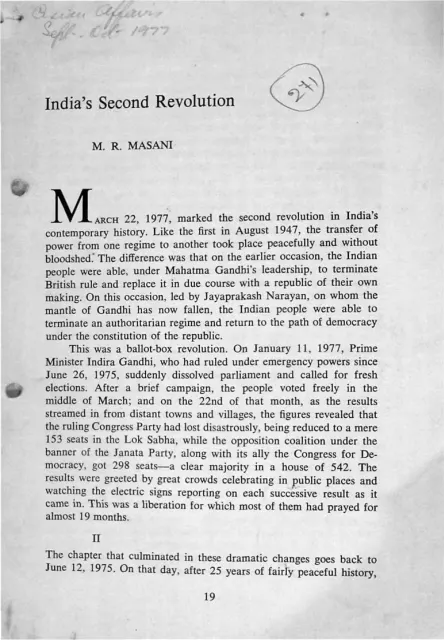
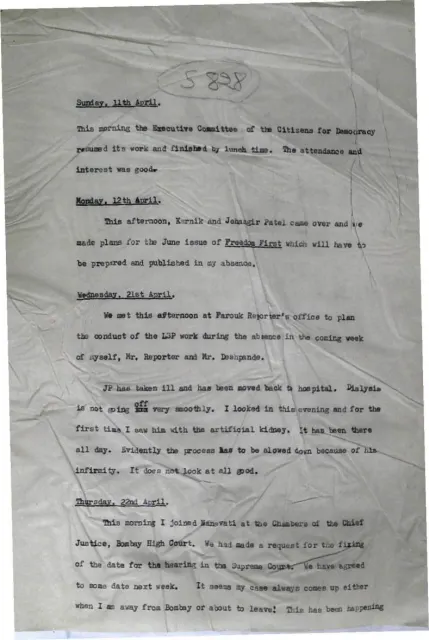
In the rendered pages, this emergency diary records the author’s political, editorial, legal, and personal activities during the period surrounding India’s 1975 Emergency. In the rendered pages, the entries move between planning the Citizens for Democracy’s work, preparing issues of Freedom First, arranging legal action, and visiting Jayaprakash Narayan in hospital. In the rendered pages, Jayaprakash Narayan’s deteriorating health, arrests of opposition leaders, newspaper restrictions, and the difficulty of finding printers and publishers willing to carry dissenting material form a continuous background to the diary’s daily observations.
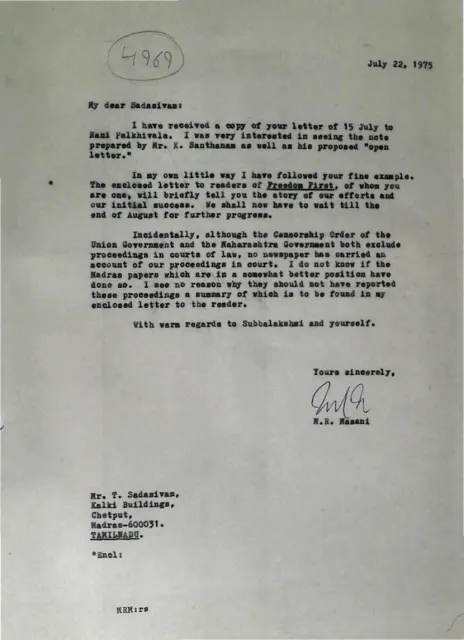
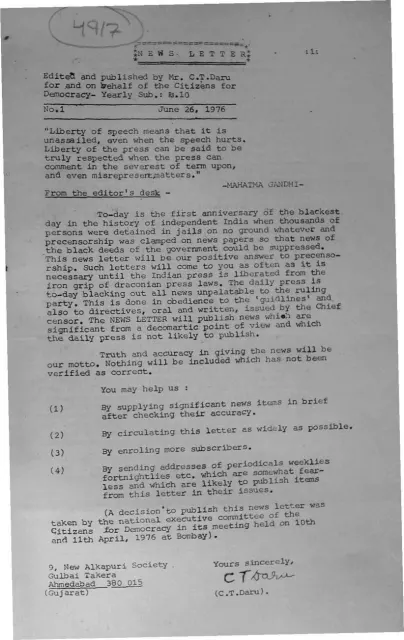
In the rendered pages, the diary becomes especially focused on censorship and the defence of press freedom. In the rendered pages, the author describes Delhi’s newspaper blackout, pre-censorship orders in Delhi and Maharashtra, negotiations with censors, and the decision to challenge restrictions in court. In the rendered pages, the author also records conversations with Nani Palkhivala, lawyers, journalists, and political figures about returning the Prime Minister’s brief, filing writ petitions, and sustaining Freedom First. In the rendered pages, the tone combines urgency, indignation, strategic calculation, personal loyalty, and occasional humour; the surviving pages end amid continuing efforts to litigate censorship and support imprisoned opposition leaders.
Key points
- The rendered pages document meetings of Citizens for Democracy and preparations for Freedom First during the Emergency.
- The rendered pages describe Jayaprakash Narayan’s serious illness, hospitalisation, and the author’s concern for his wellbeing.
- The rendered pages record arrests of Jayaprakash Narayan and Morarji Desai, the detention of opposition figures, and attempts to obtain news despite restrictions.
- The rendered pages describe newspaper censorship, deliberate disruption of newspaper publication, and pre-censorship orders in Delhi and Maharashtra.
- The rendered pages trace efforts to find printers and publishers willing to produce Soli Sorabjee’s book and Freedom First.
- The rendered pages show the author consulting Nani Palkhivala and other lawyers about court action against censorship and the Emergency.
- The rendered pages present the diary as a record of political resistance conducted through journalism, litigation, correspondence, and personal networks.
Metadata and summary are AI-extracted from the source PDF and reviewed for editorial accuracy. The original work is available via the Read PDF tab above (where present); paragraph-level citation inside the PDF is deferred to a future engagement.