essay
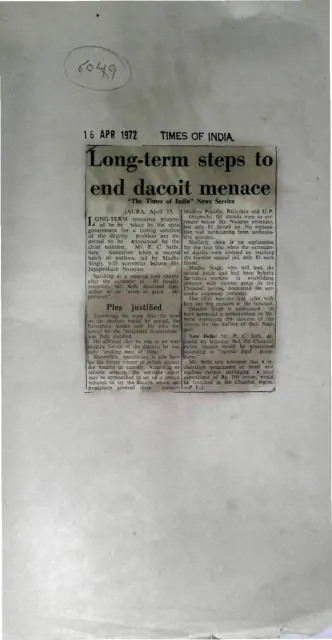
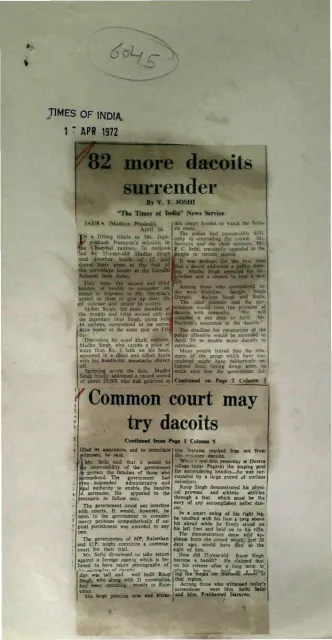
82 more dacoits surrender
TIMES OF INDIA · 1972
1 pages
Summary
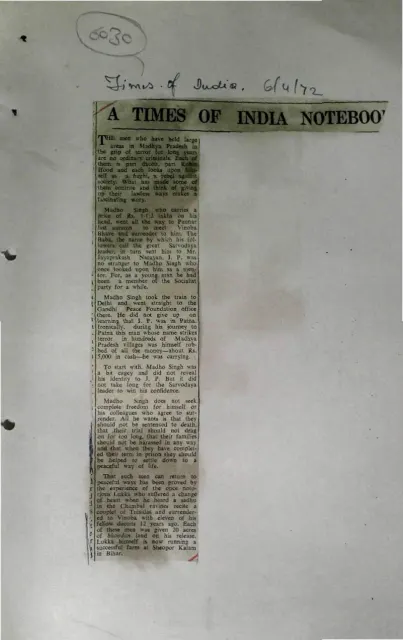
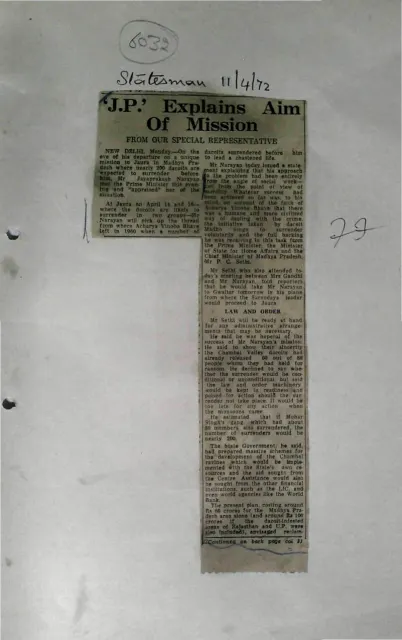
This Times of India news report, dated 1 April 1972, describes the surrender of 82 dacoits at Jaura in Madhya Pradesh as part of Jayaprakash Narayan’s campaign in the Chambal ravines. It says the surrender followed an earlier group of 70, including the prominent dacoit leader Madhosingh, and reports that the new group included figures such as Madho Singh, Janji Singh, Kalyan Singh and Rupa. The article presents the surrender as a response to appeals by Narayan and Madhya Pradesh Chief Minister Mr. P. C. Sethi, with the government promising fair treatment.
The continuation, headed “Common court may try dacoits,” reports that the Madhya Pradesh, Rajasthan and Uttar Pradesh governments might establish a common court to try the surrendered men. It also records assurances concerning legal aid, family visits and sympathetic consideration of mercy petitions, while noting that the government would not interfere with the courts. The report includes descriptions of Roop Singh’s physical abilities and of the public attention surrounding the surrender, but the clipping ends while the article is still continuing.
Key points
- Eighty-two dacoits surrendered at Jaura in Madhya Pradesh on 31 March or 1 April 1972, according to the report.
- The surrender is presented as part of Jayaprakash Narayan’s campaign in the Chambal region.
- The article identifies several surrendered dacoits, including Madho Singh, Janji Singh, Kalyan Singh, Rupa and Roop Singh.
- The government reportedly promised fair treatment and said the men would not be subjected to harsh conditions in prison.
- A common court involving Madhya Pradesh, Rajasthan and Uttar Pradesh was being considered for the trials.
- The report mentions legal aid, family visits and the possibility of sympathetic consideration of mercy petitions.
- The clipping ends before the full article is complete.
Metadata and summary are AI-extracted from the source PDF and reviewed for editorial accuracy. The original work is available via the Read PDF tab above (where present); paragraph-level citation inside the PDF is deferred to a future engagement.