essay
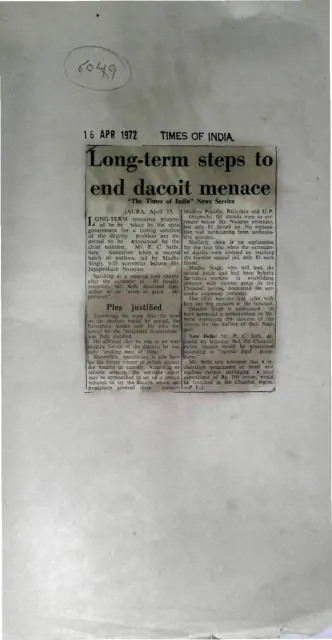
Long-term steps to end dacoit menace
TIMES OF INDIA · 1972
1 pages
Summary
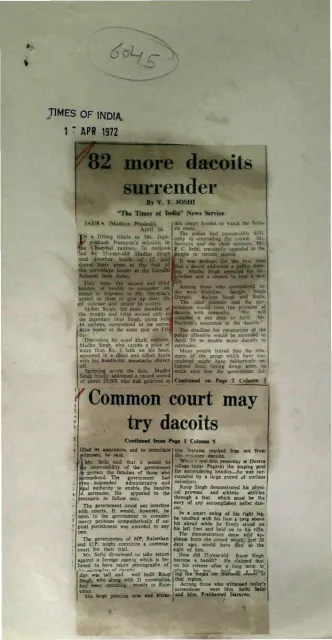
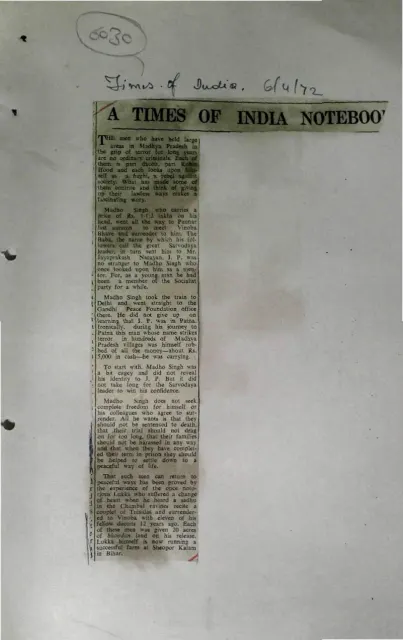
This Times of India News Service report, dated 16 April 1972 and datelined Javra, describes proposed long-term government measures to address the dacoit problem in Madhya Pradesh, Rajasthan and Uttar Pradesh. The immediate context is the surrender of 85 dacoits at Javra, led by Madho Singh, before Madhya Pradesh Chief Minister Mr. Jayaprakash Narayan. The report says the Chief Minister regarded the surrender as significant and argued that the rebels’ grievances were justified rather than treating them simply as criminals.
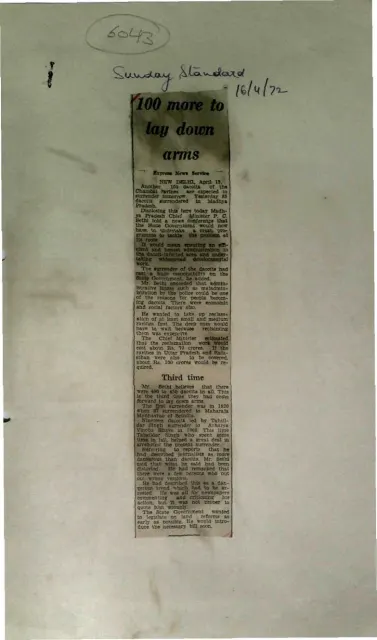
The article calls for a more durable response to dacoity, including examination of the rebels’ complaints, possible special tribunals for cases involving dacoits across the three states, and welfare assistance for surrendered dacoits and their families. It also reports discrepancies in surrender figures and describes plans for rehabilitation, including employment and a proposed Rs. 100-crore development programme for the Chambal region. The clipping does not identify an individual author; its credit is to the Times of India News Service.
Key points
- The report presents dacoity as a problem requiring long-term governmental measures rather than only immediate policing.
- It describes the surrender of 85 dacoits at Javra, led by Madho Singh, before Jayaprakash Narayan.
- Jayaprakash Narayan is reported to have said that the dacoits’ grievances were justified.
- The article discusses a possible special tribunal for dacoit cases spanning Madhya Pradesh, Rajasthan and Uttar Pradesh.
- It reports proposed rehabilitation and welfare measures for surrendered dacoits and their families.
- The article notes discrepancies between reported and confirmed surrender figures.
- A proposed Rs. 100-crore development programme for the Chambal region is mentioned.
Metadata and summary are AI-extracted from the source PDF and reviewed for editorial accuracy. The original work is available via the Read PDF tab above (where present); paragraph-level citation inside the PDF is deferred to a future engagement.