essay
The Right Road for India
FORTUNE · 1960
4 pages
Summary
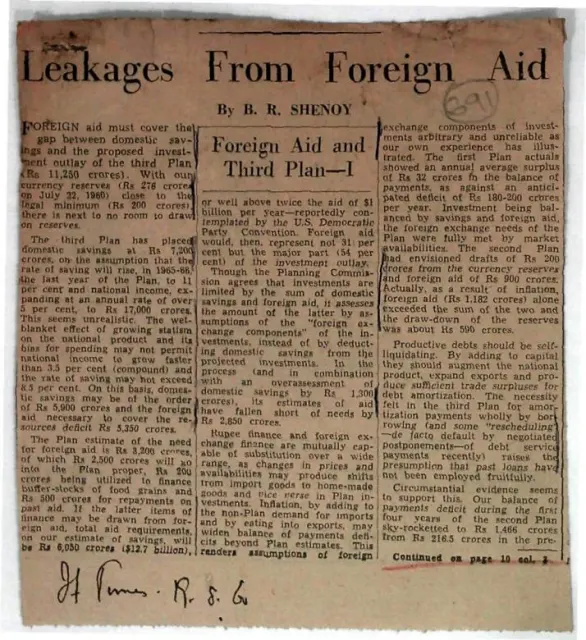
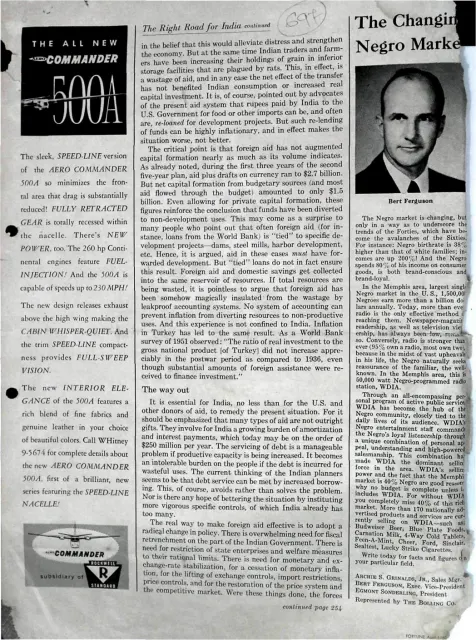
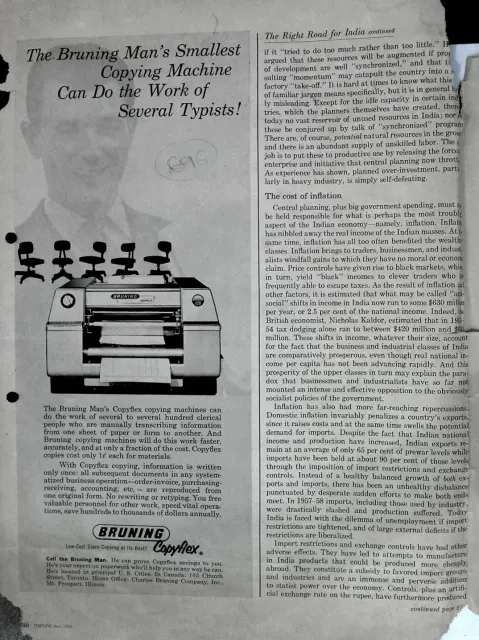
In the rendered pages, “The Right Road for India” argues that central planning, especially planned over-investment in heavy industry, has failed to mobilize India’s available resources and has instead intensified inflation. The article maintains that inflation has reduced the real income of the masses while benefiting sections of the business and industrial classes through windfall gains, black markets, tax avoidance, and other forms of income transfer. It presents these effects as evidence against the government’s socialist economic policies.
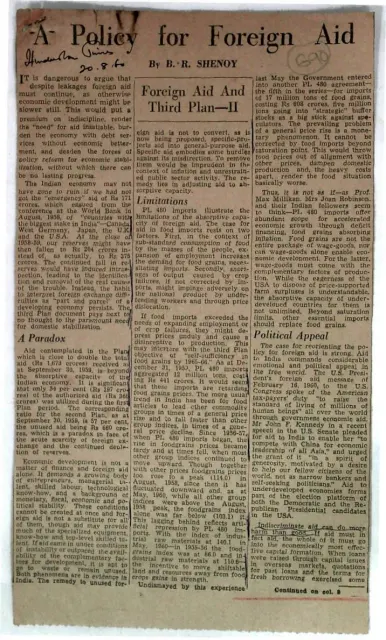
In the rendered pages, the article also criticizes import restrictions, exchange controls, and the resulting distortions between domestic and international prices. It describes black-market trading in import licences and smuggling, and argues that these controls have weakened exports, encouraged inefficient domestic production, and generated unemployment and external deficits. The discussion then turns to foreign aid: although aid has supported the economy and covered much of the balance-of-payments deficit, the article contends that it has often been diverted to non-developmental uses, including gold smuggling and consumer-goods demand, rather than productive capital formation. The article continues beyond the rendered excerpt, so its final recommendations are not visible here.
Key points
- Central planning and planned over-investment, particularly in heavy industry, are presented as self-defeating.
- Inflation is said to erode mass incomes while creating windfall gains for wealthier business and industrial groups.
- Price controls and import licensing are associated with black markets, tax avoidance, and smuggling.
- Import restrictions and exchange controls are linked to weak exports, distorted production incentives, unemployment risks, and external deficits.
- The article reports that India’s balance-of-payments gap widened sharply during the second Five-Year Plan.
- Foreign aid helped sustain the economy but is criticized for being diverted toward gold smuggling, inventories, and consumption rather than productive investment.
- The author argues for releasing enterprise and initiative from the constraints of central planning.
Metadata and summary are AI-extracted from the source PDF and reviewed for editorial accuracy. The original work is available via the Read PDF tab above (where present); paragraph-level citation inside the PDF is deferred to a future engagement.