Summary
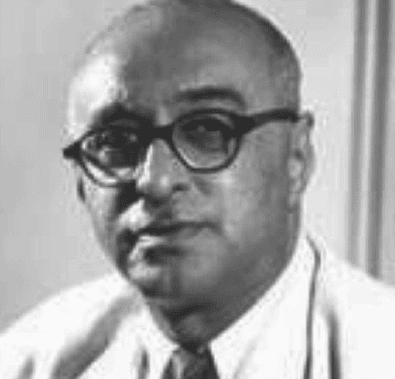
This short video discusses why B. R. Shenoy, one of the few Indian economists who opposed the socialist planning approach in post-independence India, was treated as a prophet without honour in his own country. The speaker — apparently Shenoy's child — recalls that Shenoy followed his own reasoned convictions rather than the prevailing orthodoxy, dismissing many well-known Indian economists as 'economic lawyers' who built arguments to fit politically dictated policy. Shenoy instead argued that since India was poor and unemployed, investment should flow to the activities that most efficiently generated employment, goods and services — an idea obscured by the era's fixation on Soviet-style heavy industry and central planning.
The speaker notes that entrepreneurship, business, profit and even the concept of a market were treated as dirty words at the time, so Shenoy's unpopularity was unsurprising. His ideas, and those of fellow Indian liberals, found partial political expression in the Swatantra Party, and — though never credited by name — informed the 1991 reforms that have been called India's 'second independence'.
Key points
- Shenoy followed his own reasoned convictions rather than prevailing economic orthodoxy, likened to the Buddha's injunction to test teachings against one's own critical intelligence.
- He was not picked up for public policy because the post-independence atmosphere treated entrepreneurship, business, profit, and the very concept of a market as dirty words.
- Indian policy at the time imitated the Soviet Union, emphasising heavy industry and central planning through the Planning Commission.
- Shenoy dismissed prominent Indian economists as 'economic lawyers' who constructed arguments to support whatever policy politicians handed them.
- His own framework was simple: India is poor and unemployed, so investment should flow to areas that most efficiently generate employment, goods, and services.
- He criticised the Planning Commission for using crude gross-output indices and offering 'a menu without prices'.
- Though unpopular in his lifetime, Shenoy's ideas reached partial political form via the Swatantra Party and — uncredited — shaped the 1991 reforms, India's 'second independence'.
Transcript
BR Shenoy - A Prophet Without Honour?
Source: https://www.youtube.com/watch?v=ij6KISXzIGM Duration: 221.8s
Speaker (00:09): One thing you could say about BRS is that he followed his own star. He followed his own opinion. We were sort of brought up with that as children. I mean, he he did not follow what other economists were saying unless it met the test of his own understanding. I mean, it’s a bit like Lord Buddha. Right? He said, do not follow me blindly, but unless it meets the test of your own critical intelligence. So it’s not surprising that he did not follow the existing party. I mean, party didn’t pick him up for public policy because the atmosphere at the time was very difficult to imagine now. Entrepreneurship was a dirty word. Business was a dirty word. Profit was a very dirty word. And the concept of a market was simply not there. The concept of competition and a market. So in those, in the, and and the whole thing was to imitate the Soviet Union and heavy industry and having a central planning mechanism and so on. And one of the things my father used to say is that he didn’t have much respect for the Indian well known economists who were what he called economic lawyers. He said a politician gives them a policy and then they formulate an argument to support that policy. So his early ideas was India is poor, India is unemployed, India needs employment. So therefore, you should invest in areas which generate employment and generate goods and services, in the most efficient way. This seems obvious, but not to the policymakers of the time. And they they just, one of the phrases which you used to describe the Planning Commission were just imitating the gross output index for economic growth and so on. This is, these people support a menu without prices. So yeah. As I said, it wasn’t surprising he was not popular and he continued to be unpopular until his ideas and those of others in the Indian liberal movement had some impact in the form of the Swatantra Party, which is sadly no more, but the idea spread. And then when the time came, without invoking his name, the idea were used in the 1991 reforms, which have been referred to as a second independence of India.
Notable passages
"he did not follow what other economists were saying unless it met the test of his own understanding. I mean, it's a bit like Lord Buddha. Right? He said, do not follow me blindly, but unless it meets the test of your own critical intelligence."
"he didn't have much respect for the Indian well known economists who were what he called economic lawyers. He said a politician gives them a policy and then they formulate an argument to support that policy."
"These people support a menu without prices."
"when the time came, without invoking his name, the idea were used in the 1991 reforms, which have been referred to as a second independence of India."
Metadata and summary are AI-extracted from the source PDF and reviewed for editorial accuracy. The original work is available via the Read PDF tab above (where present); paragraph-level citation inside the PDF is deferred to a future engagement.