Summary
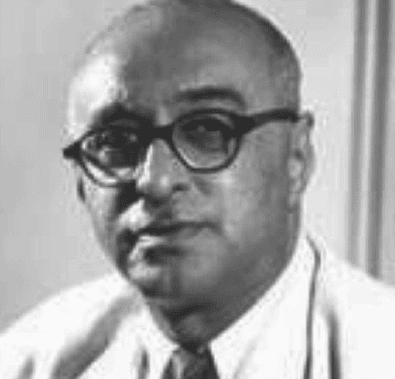
D. R. Pendse reflects on the meaning of being an Indian liberal, framing his answer almost entirely through the lens of economic policy. He places liberalism on a left-right spectrum and identifies himself with right-of-center economics, arguing that under the BJP government — at the time of recording — Indian policy had moved closer to mainstream global economic thinking than at any point in the previous several decades. From this vantage he challenges the framing of S. V. Raju as a 'lone warrior': in his view the liberal cause Raju championed has substantially prevailed and should be celebrated rather than mourned.
Pendse then sketches a typology of four figures he sees as anchors of the Indian liberal tradition: C. Rajagopalachari (Rajaji), Nani Palkhivala, Minoo Masani, and M. R. Pai. He distinguishes them by role rather than ideology — politician, jurist/ambassador, parliamentarian-publicist, and implementer-communicator — all broadly supportive of right-of-center economics. He singles out M. R. Pai's work through the Forum of Free Enterprise as a model for translating liberal ideas into public opinion. He concedes he never met Rajaji and knew Masani only slightly, but expresses deep respect for the project of building public opinion in favor of economic freedom.
Key points
- Pendse defines liberalism primarily in economic terms, equating it with right-of-center policy rather than a party label or philosophical creed.
- He argues that contemporary (post-2014 BJP) economic policy is closer to global liberal thinking than at any point in the previous 20-50 years.
- He pushes back on the 'lone warrior' framing of S. V. Raju, contending that the liberal cause has largely won and should be celebrated.
- He identifies four pillars of the Indian liberal tradition — Rajaji, Palkhivala, Masani, and M. R. Pai — distinguished by role, not ideology.
- He highlights M. R. Pai's Forum of Free Enterprise as a key vehicle for translating liberal ideas into public opinion.
- He admits personal distance from the figures discussed: never met Rajaji, knew Masani only slightly.
- He stresses the importance of public-opinion formation as the mechanism by which liberal ideas reach the people.
Transcript
D. R. Pendse on the Indian Liberal Tradition
Source: https://www.youtube.com/watch?v=z_7NoDmhvvA Duration: 391.2s
D. R. Pendse (00:09): In terms of economic policy or economic thinking, we can say there’s a center. Then there is a right of center, which is a — there’s a far right at the extreme end. Then there’s a left of center, which is a complete communist. And then there’s a center. Isn’t it? There is center. So somebody — are, are you a liberal? I mean, somebody asked me, are you a liberal? I would say, what is a liberal? Well, if you say, do you believe in a right of center policy? I say, yes. Now if you look at that, I’m talking mainly from the point of view of economic policy, as economy. So my approach is that at present, I find that liberal policy, or policies which the so-called liberals would have favored, are being favored. So although there are some — subject to some exceptions, but although never before in the last twenty, forty, fifty years, the policies have been so close to the world thinking. Because since last year, BJP government taking over, whatever broad orders we see as a policy, the government policy, seem to be broadly close to the world thinking. Not exactly equal to, but close to. They’re closer to the world thinking than ever before. So I’m going by that. So if I’m going by that, the — so, so then that I say, yes. I, I favor liberal — liberal — I, I definitely favor right of center economic policy. That is, if that is liberalism, yes, I am, I am liberal. But unless you define what is a liberal, or unless you say these are liberal party, and are you a member? I said, no, I’m not a member of any party. Well, I mean, that’s broadly what we have. You see, people say, lone liberal, lone warrior, Raju. But why lone warrior? Whatever he was aspiring, whatever he was fighting for is won. The liberal values are weak now. So we should celebrate whatever he was fighting for, whatever we all wanted — our present policies are close to that. They are not exactly equal, but are close, closer than ever before. So that is what I’m — saying, looking at it, unless you have a proper definition of a liberal — so unless you have a — I, I don’t think there is a definition of a liberal party. So if there is no — that is why I, I find it very difficult to answer the question when you use the word liberal, Indian liberal group. I mean, I can understand liberal group. So, anyway, with that, that is a broad thing. I’m definitely in favor of economic policy — on the whole, the government policies to be, let, right of center. At present, they are on the whole right of center. They are more — they are closer to what most liberals would have liked than ever before. So to that extent, liberals are winning, in my opinion, to that extent, and I’m happy about it. So with that, I’m — with that preface, I’m giving the answer to that. Now when you say Rajaji, I never met Rajaji, I do not really know. Isn’t it? He wanted to see how he can get across the laws and all that sort. That is also important. Palkhivala was not a politician. He was an ambassador and all that — that is a separate thing. But that is it. Then MRP, he was the implementer. He was the, what do you call, media man. So he knew what the things — knew the conclusions of this thing, he knew how to put them across. Forum of Free Enterprise was a model through which he used that, which is — which is also important. There’s no use having all the things in a book. They will be carried forward to the people. So Forum of Free Enterprise was one way of doing it. So he did extremely well. So I’m not — but there are four different categories. Rajaji, Palkhivala, Minoo Masani, and Vinaymar. They’re all important, but they are all in different categories, all generally favoring the right of center economic policy. And they all should be very happy about the present day. That’s what I’m saying. And I did not know Rajaji. I knew Minoo Masani only — to some extent I knew him. But, of course, I have the greatest respect for public opinion, developing public opinion, creating public opinion, and getting things done.
Notable passages
"if that is liberalism, yes, I am, I am liberal. But unless you define what is a liberal, or unless you say these are liberal party, and are you a member? I said, no, I'm not a member of any party."
"never before in the last twenty, forty, fifty years, the policies have been so close to the world thinking."
"Whatever he was aspiring, whatever he was fighting for is won. The liberal values are weak now. So we should celebrate whatever he was fighting for"
"Rajaji, Palkhivala, Minoo Masani, and Vinaymar. They're all important, but they are all in different categories, all generally favoring the right of center economic policy."
"Rajaji, Palkhivala, Minoo Masani, and Vinaymar. They're all important, but they are all in different categories, all generally favoring the right of center economic policy."
"There's no use having all the things in a book. They will be carried forward to the people. So Forum of Free Enterprise was one way of doing it. So he did extremely well."
Metadata and summary are AI-extracted from the source PDF and reviewed for editorial accuracy. The original work is available via the Read PDF tab above (where present); paragraph-level citation inside the PDF is deferred to a future engagement.