essay
Evils of Child Marriage
4 pages
Evils of Child Marriage
Summary
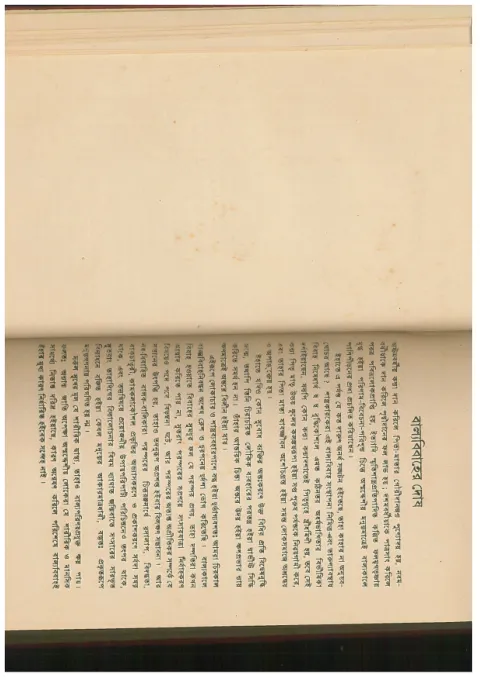
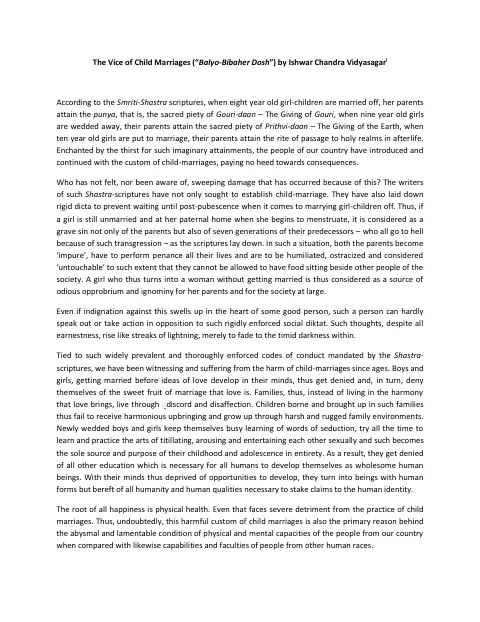
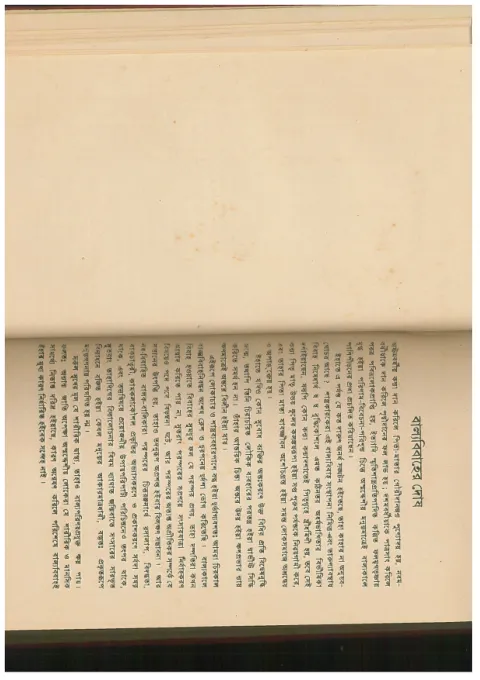
Evils of Child Marriage (বাল্যবিবাহের দোষ) is a Bengali reform essay printed across pages 3 to 9 of a volume whose running head reads বিদ্যাসাগর রচনাসংগ্রহ (Vidyasagar Rachana Sangraha). It opens by setting out the merits the smriti literature promises to parents who give a daughter away young: an eight-year-old earns the parents the merit of gauridan, a nine-year-old the fruit of prithividan, and a ten-year-old handed to a groom secures the holy world hereafter. Beguiled by these imagined rewards, the essay argues, the people of this country took up infant marriage without weighing its consequences, while the shastrakaras hardened the custom from the other side by warning that a girl who reaches puberty in her father’s house becomes a stain on both her parents’ lineages, sends seven generations to hell, and leaves her father and mother lifelong impure and untrusted in all society. Even a sensible man who resents the rule is bound fast by long usage, and his inner protest rises and dissolves within him like a flash of lightning.
The bulk of the essay is a catalogue of the harms that follow. Union of minds is the root of love, and that union rests on age, condition, appearance, quality, character and disposition; but child couples never learn each other’s intentions, never have the chance to sound each other’s minds, never even exchange a glance beforehand, and are matched instead on the persuasive falsehoods of an indifferent, chattering ghatak, so that the parents’ preference becomes the unbreakable limit of the couple’s happiness. The result, the author writes, is that genuine love is scarcely seen in married life here: the husband becomes merely a provider and the wife a household servant. Physicians learned in the science of the body are cited to the effect that where a child is conceived by a wife and husband who have not passed childhood, calamity usually strikes in the pregnancy itself; if the child is born alive it commonly passes from the nurse’s lap back into the earth’s womb, and any survivor is weak in body, constantly ill, and departs early. From this the essay draws its causal claim: the physical and mental feebleness of Indians compared with other peoples traces back to child marriage, since a strong effect cannot arise from a weak cause, just as good seed sown in barren ground, or poor seed in fertile ground, yields no good crop. It presses the comparison two ways, noting that in the western provinces, where bride and groom marry at a greater age, men are valiant enough to enlist in the royal army or serve as doorkeepers rather than sink into idleness, whereas no Bengali is ever seen in the royal army, and that in Utkala, where child marriage prevails as it does here, the people are reckoned still more timid than Bengalis.
Education and widowhood carry the closing arguments. Newly married boys and girls, taken up with witty talk, accomplishment and display, lose the one season fit for study and are left mere human in shape; and where respectable families do educate their daughters, the wedding day arrives before the girl has finished her varnaparichay, after which pot, pan and ladle drive out what letters she knew. The author answers the standard objection, that without early marriage the young would fall into bad conduct, by arguing that a mind fixed early on learning sharpens conscience and leaves no occasion for bad desire to arise. On widowhood he observes that the probability of death is greatest from birth to twenty, so marriage after twenty would leave fewer widows; and since widow remarriage is firmly forbidden, a widow’s life is only a load of sorrow, the pitiless rule denying her even a mouthful of water or medicine on a fast day when she is dying of thirst or disease. A girl widowed young may in ignorance stray from chastity and, in fear of public scandal, be driven to acts as heinous as infanticide, so giving a girl in marriage in childhood is called an exceedingly cruel and inhuman act. The essay ends by requesting the educated gentlemen of the country to be as zealous in uprooting child marriage as they are in educating women, and notes that what has been written in today’s periodical is only a beginning, with many reasons, arguments and examples still to be published in turn.
Key points
-
The essay traces child marriage to the rewards promised in the smriti literature: gauridan for giving away an eight-year-old daughter, the fruit of prithividan for a nine-year-old, and the holy world hereafter for a ten-year-old handed to a groom.
-
It argues the shastrakaras enforced the custom by threat as well as promise, holding that a girl who reaches puberty in her father’s house stains both parents’ lineages, sends seven generations to hell, and renders her parents lifelong impure and outcast.
-
Because the match rests on the word of an indifferent, chattering ghatak rather than on any acquaintance between the couple, the essay finds almost no genuine love in married life here, only a husband who provides and a wife who serves the household.
-
Physicians learned in bodily science are cited to show that children conceived by parents who have not passed childhood usually miscarry, die in infancy, or survive weak, sickly and short-lived.
-
The physical and mental feebleness of Indians is attributed to the practice, on the principle that a strong effect cannot come from a weak cause, illustrated by seed sown in barren ground and by untimely sowing generally.
-
The comparison is pressed geographically: in the western provinces, where marriage comes at a greater age, men are valiant enough for army service, while in Utkala, where child marriage prevails, the people are reckoned even more timid than Bengalis.
-
Girls’ schooling is cut short by the wedding day before they finish their varnaparichay, and the essay urges educated gentlemen to work as hard at abolishing child marriage as at educating women, since the second cannot succeed without the first.
-
Because widow remarriage is forbidden and a widow is denied even water or medicine on fast days, the author calls early marriage an exceedingly cruel and inhuman act, and closes by saying this instalment in the periodical is only a beginning.
Metadata and summary are AI-extracted from the source PDF and reviewed for editorial accuracy. The original work is available via the Read PDF tab above (where present); paragraph-level citation inside the PDF is deferred to a future engagement.