periodical issue
Freedom First
By V. B. KARNIK, P. M. KAMATH, SHOBHA DEANE, SAUMYA BALSARI, R. V. MURTHY, SHIREEN VAKIL, RAMNI TANEJA, K. V. PADMANABHAN, K. BALASUBRAMANIYAN, Major M. P. VORA
Published for the Democratic Research Service by J. R. Patel, Associate Editor, Freedom First at 127, Mahatma Gandhi Road, Bombay 400 023 (Phone: 273914) and printed by him at Kaiser-E-Hind Publishers & Printers, 300, Perin Nariman Street, Bombay 400 001 · Bombay · 1980
16 pages
Freedom First
Summary
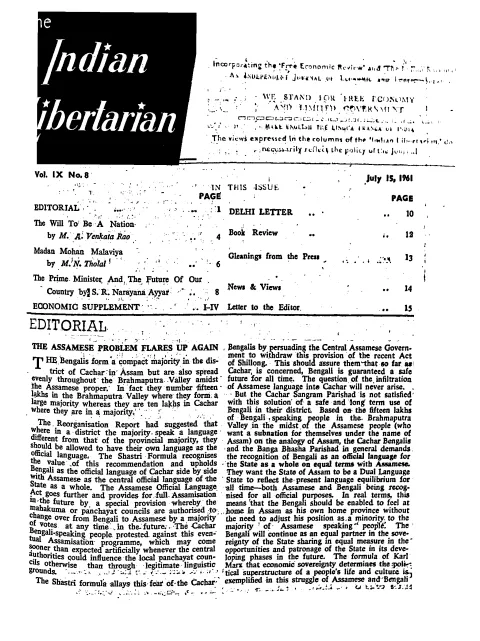
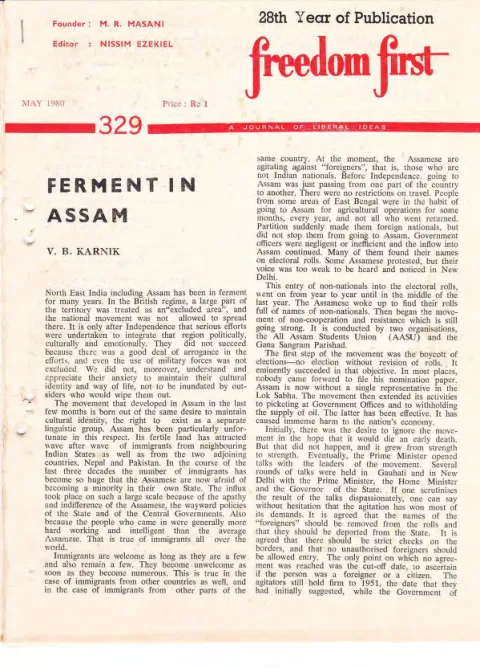
V. B. Karnik surveys the causes of the Assam agitation of 1979-80, arguing that decades of unchecked immigration from East Bengal and neighbouring states, combined with government negligence in policing electoral rolls, left Assamese residents fearing minority status in their own state. He describes the AASU- and Gana Sangram Parishad-led movement’s tactics (poll boycotts, picketing, an oil-supply blockade) and the resulting talks with the Prime Minister, noting that most agitators’ demands had been conceded except the contested 1951 cut-off date for identifying ‘foreigners’.
Key points
-
Colonial-era policy treated Assam as an ‘excluded area’, delaying its political and cultural integration after Independence.
-
Decades of immigration from East Bengal/Nepal/Pakistan, aided by lax electoral-roll administration, made Assamese fear becoming a minority in their own state.
-
The movement is led by the All Assam Students Union (AASU) and the Gana Sangram Parishad.
-
Tactics included an election boycott (no election without electoral roll revision), picketing of government offices, and withholding oil supplies.
-
Talks between the Prime Minister and movement leaders conceded most demands except the cut-off year for identifying foreign nationals (agitators want 1951; the state government’s position differs).
Generated by the v1.5 extraction pipeline. Awaiting editorial review.
Metadata and summary are AI-extracted from the source PDF and reviewed for editorial accuracy. The original work is available via the Read PDF tab above (where present); paragraph-level citation inside the PDF is deferred to a future engagement.