Summary
This short IL Explainer episode introduces Begum Rokeya's 1905 feminist utopian novella *Sultana's Dream*, set in a fictional land called Ladyland where women move freely in public life while men are confined indoors, and the society is free from purdah, domination, and war. The narrator traces the dialogue between the protagonist Sultana — initially convinced that women are a 'naturally weak sex' deserving of seclusion — and her guide, who reframes the practice of locking women indoors as caging the victims of social deviance rather than its perpetrators. The episode situates Rokeya as a liberal thinker, educator, and author whose work predates Charlotte Perkins Gilman's *Herland* by a decade and stands as an early articulation of women's claim to a voice in their own social affairs.
Key points
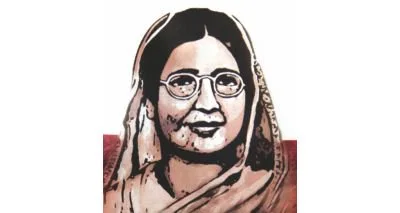
- Begum Rokeya is presented as a liberal thinker, educator, and author central to feminist thought in Bengal.
- *Sultana's Dream* (1905) imagines Ladyland, a utopia free of purdah, male domination, and war, where women govern social affairs.
- The novella's literary device is an unconvinced protagonist, Sultana, who must be argued out of her own internalized patriarchy.
- Sultana initially justifies seclusion by calling women a 'naturally weak sex', illustrating the social conditioning of the era.
- The guide reframes purdah as caging victims of social deviance rather than the men capable of harming women.
- Rokeya's text predates Charlotte Perkins Gilman's *Herland* by roughly a decade, marking its global precocity in feminist utopian writing.
- The episode highlights women's exclusion from the management of their own social affairs as the core injustice the novella attacks.
Transcript
IL Explainer - Ep 2 | Sultana’s Dream by Begum Rokeya
Source: https://www.youtube.com/watch?v=7eGt-oaFcvU Duration: 163.8s
Narrator (00:01): Begum Rokeya is a popular name in feminist circles. She was a liberal, a thinker, an educator, and an author. Among her most popular works is Sultana’s Dream. This is a feminist utopian novel that talks of a world called Ladyland. Now Ladyland is a place free from seclusion of women and purdah. It’s a place free from the domination of men over women, and it’s also a place that is filled with virtue. It’s a place where women roam free and have a say in their social affairs. The literary brilliance of this text, however, is rooted in its unconvinced protagonist, Sultana, who must then be convinced that seclusion of women from their own social affairs is an absurdity. When the confused protagonist is told that in Ladyland men are kept indoors and women roam free, she’s perplexed and she almost interprets this as a joke. She laughs at the absurdity of locking men indoors, an idea that was more than normalized for women at the time. Sultana’s guide to Ladyland then urges her to think about how unfair it was to lock harmless women indoors. To which Sultana, her response, we are nat— we have a naturally weak sex. It’s nothing but natural for us to be locked indoors. This was also reflective of women’s social conditioning at the time and the internalization of patriarchal seclusion. After some back and forth, the guide gets Sultana to question whether it’s fair to cage social deviance or to cage the victims of social deviance. The guide then says, as a matter of fact, in your country, this very thing is done. That is, caging victims of social deviance is what is done in your country. Men who do or are at least capable of doing harm to women roam free while innocent women are locked up. The guide then says, we have no hand or voice in the management of our own social affairs. In India, man is lord and master. He has taken to himself all powers and privileges and shut up women. Begum Rokeya’s Sultana’s Dream was published in 1905, a decade before American author and feminist Charlotte Gilman’s Herland, a similar utopian text that talks about a world where women are in power or are in charge, and it’s a world free of dominance, conflict, and war.
Notable passages
"Among her most popular works is Sultana's Dream. This is a feminist utopian novel that talks of a world called Ladyland."
"we have no hand or voice in the management of our own social affairs. In India, man is lord and master. He has taken to himself all powers and privileges and shut up women."
"a similar utopian text that talks about a world where women are in power or are in charge, and it's a world free of dominance, conflict, and war."
Metadata and summary are AI-extracted from the source PDF and reviewed for editorial accuracy. The original work is available via the Read PDF tab above (where present); paragraph-level citation inside the PDF is deferred to a future engagement.