edited volume · anthology
Indian Legacy of Freedom
By Centre for Civil Societyorganisation
Centre for Civil Society · New Delhi · 2022
84 pages
Part of CCS Publications
Summary
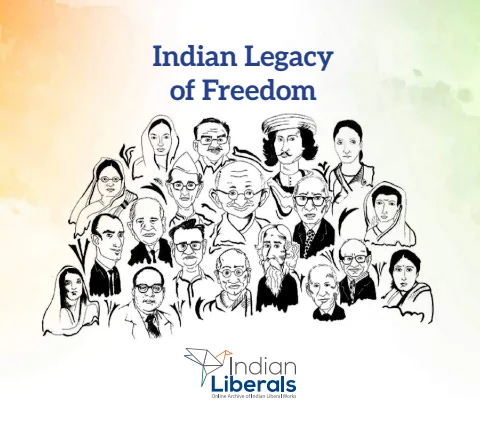
A short anthology assembled by the Centre for Civil Society in 2022 to show that the demand for liberty in India is neither recent nor imported. It reprints eight essays and speeches written between 1956 and 1998, and adds four profiles of women reformers, arranged under three headings: economic freedom, political freedom and personal freedom.
The economic section opens with A. D. Shroff writing in The Times of India in 1956, at the moment the government adopted the socialist pattern of society as the philosophy of the Second Five Year Plan, on what private enterprise had already contributed to Indian development. M. A. Sreenivasan follows in 1960 on controls and freedom, M. A. Rangoonwala in 1982 on the market economy as the key to progress, and Manu Shroff in 1993 on what still stood in the way of liberalisation after the reforms had begun.
The political section turns from the economy to the constitution. Minoo Masani writes on the essence of democracy in 1989, Nani Palkhivala takes stock of forty-three years of independence in 1990 and returns in 1998 on education and leadership, and Mayurdwajsinhji Meghrajji III writes in 1967 on fundamental rights as the citizen’s protection against tyranny.
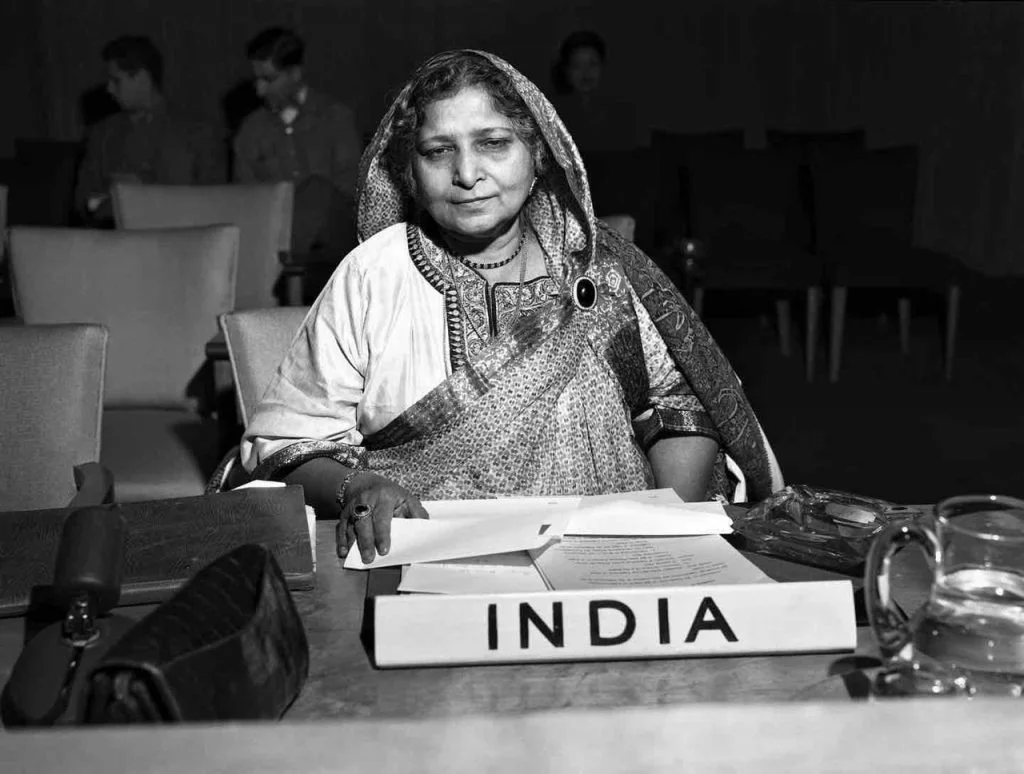
The third section is biographical rather than documentary. It profiles Shareefa Hamid Ali as a pioneer of intersectional feminism, Mithan Tata Lam as an Indian suffragist, Ramabai Ranade as a feminist and educationist, and Babytai Kamble as a resolute feminist, placing the claim to personal freedom alongside the economic and political claims that make up the rest of the book.
Key points
- The volume gathers demands for economic, political and personal liberty made by Indian liberals across a century, compiled by Anushka Das Sharma and Paavi Kulshreshth and edited by Rachita Pant.
- A. D. Shroff’s 1956 essay defends the record of private enterprise at the moment the Second Five Year Plan committed India to a socialist pattern of society.
- M. A. Sreenivasan, M. A. Rangoonwala and Manu Shroff carry the economic argument from 1960 through 1982 to 1993, ending after liberalisation had begun.
- Minoo Masani and Nani Palkhivala supply the political section, Palkhivala twice: on the balance sheet of independence in 1990 and on education and leadership in 1998.
- Mayurdwajsinhji Meghrajji III writes in 1967 on fundamental rights as the citizen’s defence against tyranny.
- The personal freedom section profiles Shareefa Hamid Ali, Mithan Tata Lam, Ramabai Ranade and Babytai Kamble, four women whose work belongs to the same liberal tradition.
- The book is issued for non-commercial reuse with attribution, under identical terms.
Metadata and summary are AI-extracted from the source PDF and reviewed for editorial accuracy. The original work is available via the Read PDF tab above (where present); paragraph-level citation inside the PDF is deferred to a future engagement.