pamphlet
ON RISING PRICES AND BLACK MONEY
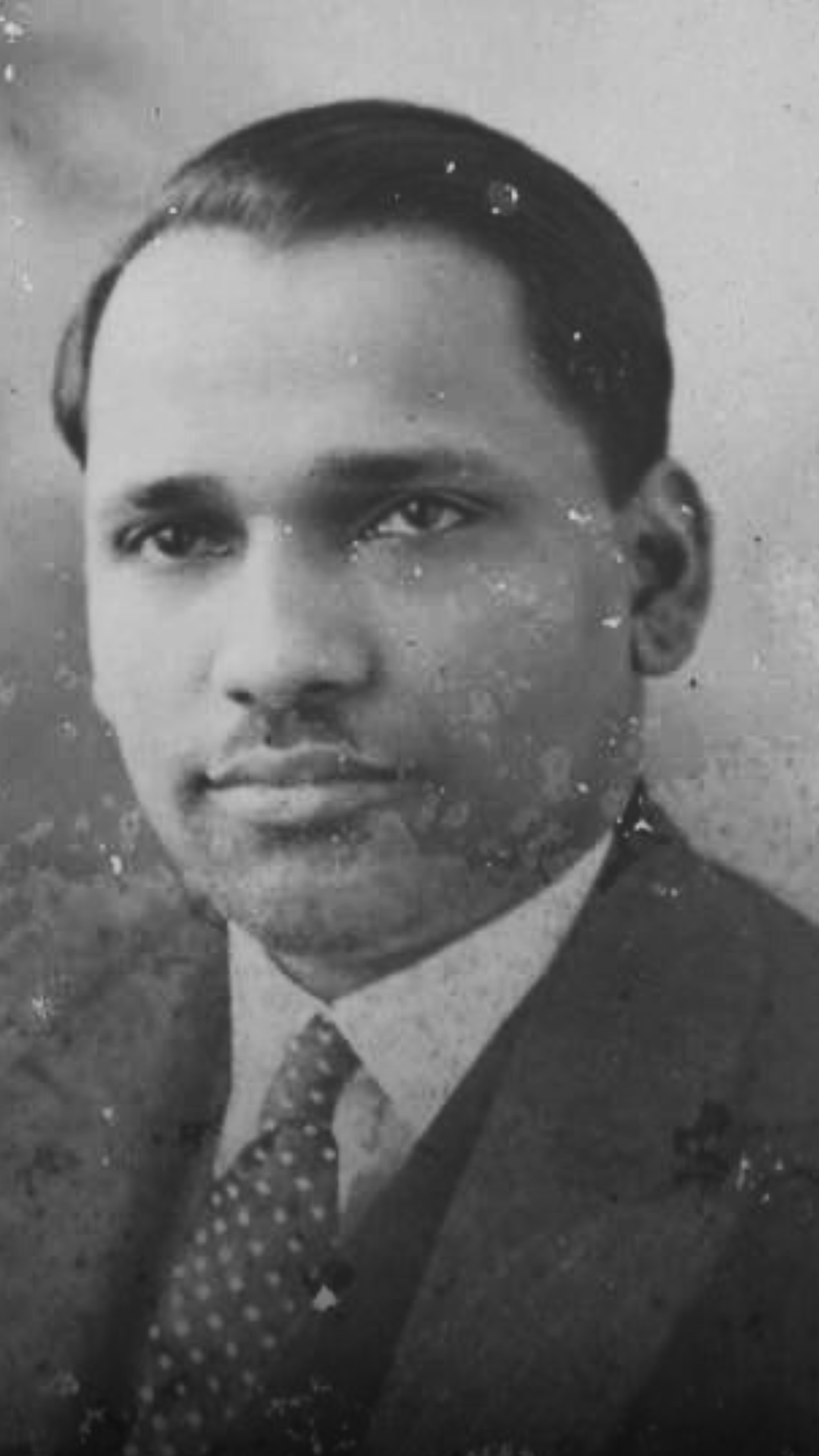
By B. R. Shenoy
FORUM OF FREE ENTERPRISE, SOHRAB HOUSE, 235 DR. D. N. ROAD, BOMBAY-1 · Bombay · 1971
32 pages
ON RISING PRICES AND BLACK MONEY
By Dr. A. K. Sur, B. R. Shenoy
Summary
This Forum of Free Enterprise booklet pairs two thematic clusters of contemporary Indian economic anxiety — rising prices and black money — in a uniform editorial format: a short publisher’s “Introductory Note” framing each problem in plain language for a general reader, followed by a scholarly contribution from a named economist. The first half opens with an unsigned editorial diagnosis of inflation as a problem of Government mismanagement (heavy taxation, public-sector losses, bank nationalisation, deficit financing by the back-door through the RBI) and then reproduces a long article by Dr. A. K. Sur, “A Study in the Growth and Causes of Inflation in India” (originally in Economic Affairs, March 1971), which traces Indian price history from the idyll of the 1930s through wartime shortage, Partition, the Korean War, the second-plan spurt, the 1962 emergency and the “alarming” rise from 1970. The second half, introduced on the last rendered page, turns to black money and the “parallel economy” admitted by the Union Finance Minister, and is to be developed in an article by Prof. B. R. Shenoy that lies beyond this 20-page chunk.
Key points
-
The booklet pairs a short editorial note with a scholarly article on each theme, credentialing Dr. A. K. Sur by his Calcutta Stock Exchange tenure and Prof. B. R. Shenoy by his Gujarat University and IMF posts.
-
An unsigned introductory note frames fifteen years of continuous inflation as harming fixed-income groups, citing a currency-value index that ranks India at 56 against Switzerland’s 74 and the USA’s 79.
-
The note reports India’s price level rising three and a half times the world average over eight years and tabulates Bombay household-staple price increases for salt, tea, kerosene, and tur dal between 1961 and 1971.
-
It attributes inflation to Government mismanagement, noting money supply roughly tripled from Rs. 2,026 crores in 1951 to over Rs. 7,000 crores in 1971 while national income only doubled.
-
Nationalised banks borrowing from the Reserve Bank of India to fund deficits is identified as ‘deficit financing by the back-door’, alongside heavy taxation and public-sector losses.
-
Dr. A. K. Sur’s article, reprinted from Economic Affairs of March 1971, traces Indian price history from the cheap 1930s through wartime shortage, the 1943 Bengal famine, Partition, and the Korean War.
-
Sur links inflation to deficit financing across successive plans, rising from Rs. 333 crores in the First Plan to a proposed Rs. 800 crores in the Fourth, and to mounting public-sector losses.
-
The pamphlet’s second half turns to black money and the ‘parallel economy’ admitted by the Union Finance Minister, to be developed in an article by Prof. B. R. Shenoy beyond the rendered pages.
Essays
INTRODUCTION
A single-page editorial introduction signed implicitly by the Forum of Free Enterprise. It announces the booklet’s two-part design — an introductory note plus a scholarly analysis on each of the two named issues — and supplies short biographical paragraphs on the two contributors. Dr. A. K. Sur is described as M.A., D.Sc. (Econ), Economic Adviser to the Calcutta Stock Exchange for 34 years until 1969 and now Director of the Institute of Company Affairs; Prof. B. R. Shenoy is described as the former Director and Professor of Economics at Gujarat University’s School of Social Sciences (1954–68), India’s Alternate Executive Director at the IMF and World Bank (1951–53), President of the Indian Economic Association in 1957, and currently Director of the Economics Research Centre, New Delhi. The note closes with the hope that the booklet will help “give a clear picture of rising prices and black money and evolve suitable policy measures to tackle these national problems.”
- Booklet pairs two editorial notes with two named scholarly articles on rising prices and black money.
- Dr. A. K. Sur is positioned by his long Calcutta Stock Exchange tenure and Company Law authorship.
- Prof. B. R. Shenoy is positioned by his Gujarat University, IMF/World Bank, and IEA credentials.
- FFE’s stated aim is policy-evolution, not partisan polemic.
I. RISING PRICES — AN INTRODUCTORY NOTE
An unsigned editorial introductory note that frames inflation as a fifteen-year continuous rise in Indian prices that has hurt fixed-income groups — the middle class “backbone of any democracy”, the urban poor and the landless labourer — far more than comparable inflation in affluent countries. It backs the comparative claim with a country-by-country index of currency value (India 56 against Switzerland 74, USA 79, West Germany 78, etc.) and a Bombay family-budget table showing decadal price increases for salt, tea, kerosene, tur dal, detergent and coconut between 1961 and 1971. The diagnosis is squarely political: the Government has mismanaged the economy, expanded money supply (from Rs. 2,026 crores in 1951 to over Rs. 7,000 crores in 1971) without matching real output, financed loss-making public-sector enterprises through taxation, and let the nationalised banks become a back-door channel for deficit financing as they borrow from the RBI. The note ends on a reformist note: inflation is not inevitable and can be curbed by a realistic policy.
- Indian price level has risen 3½ times the world average over the last eight years, against a c. 20% world rise.
- Currency-value index puts India at 56 (1969, 1959=100), behind almost every comparator country listed.
- A Bombay family-budget table tracks the doubling and tripling of household-staple prices between 1961 and 1971.
- Money supply roughly tripled between 1951 and 1971 while national income only doubled; the gap is the price rise.
- Public-sector losses (Rs. 3.4 crores against Rs. 3,300 crore investment) tax citizens twice — through lost output and through subsidising losses.
- RBI lending to nationalised banks is identified as “deficit financing by the back-door”.
- Closes with a reformist claim that inflation is not inevitable and is curable by realistic policy.
II. A STUDY IN THE GROWTH AND CAUSES OF INFLATION IN INDIA
By Dr. A. K. Sur
Dr. A. K. Sur’s long scholarly article (reproduced with permission from Economic Affairs, March 1971) sets out a chronological history of Indian inflation since the 1930s and then turns to causal analysis. The historical narrative runs from the “idyllic” cheap-price 1930s through the disruption caused by the Second World War — the fall of Rangoon on 8 March 1942, the closing of the Burma rice supply, the Bengal famine of 1943 — through Partition (production collapse, money supply spurt), the Korean-War scramble of 1950–51, the second-plan rise of 30 per cent against a first-plan fall of 18.4 per cent, the 1962 Chinese border emergency, and the “alarming” tempo of 1970 onward despite the publicised “green revolution”. Sur’s causal account converges on official policy: deficit financing across successive plans (Rs. 333 crores in the First Plan rising to a proposed Rs. 800 crores in the Fourth), unproductive expenditure, mounting public-sector losses, gaps between resources and outlays, and the inflationary use of bank nationalisation. He criticises high preference- and debenture-capital costs (9.3% and 7.75%) and warns that monetary tightening will only raise the cost of production further. In the closing pages he engages the international cost-push versus demand-pull debate, citing Machlup on the proliferation of inflation definitions and Harris on the empirical inability to tie growth episodes cleanly to either falling or rising prices, and presents Indian per-capita-income/price-index tables for 1950–55 to argue that inflation is not a necessary price of growth. He concludes that inflation is a complex phenomenon, with rising wages and imported-raw-material prices set outside the normal supply-and-demand mechanism, and that economists “know more about its results than about its causes.”
- Chronologically reconstructs Indian inflation from the 1930s through 1971, with named turning points (Burma fall, Partition, Korean War, 1962 emergency, post-1970 “alarming” rise).
- Detailed deficit-financing ledger across the five-year plans, culminating in a proposed Rs. 800 crore Fourth-Plan figure.
- Faults the Planning Commission’s diagnosis of post-1970 inflation and rejects “green revolution” optimism as falsified by behaviour of prices.
- Reads the Reserve Bank’s strict-credit policy as part of the cost-push problem rather than its solution.
- Engages Machlup and Harris to argue that the cost-push/demand-pull dichotomy is largely spurious.
- Uses 1950–55 price-index vs per-capita-income tables to deny that inflation is a necessary by-product of growth.
- Closes with an epistemic concession: economists know inflation’s results better than its causes.
III. BLACK MONEY — AN INTRODUCTORY NOTE
Only the opening paragraph of this unsigned editorial note on black money is visible in the rendered chunk. It dates the Indian black-money problem to the Second World War, characterises its growth over the last fifteen years as having reached “menacing proportions”, and registers that the Union Finance Minister has now had to publicly concede the existence of a “parallel economy” arising from black money in circulation. The substantive treatment, and the Shenoy article that the Introduction said would follow this note, lie beyond the 20-page chunk.
- Dates Indian black money to the Second World War.
- Characterises the post-1956 growth of black money as “menacing”.
- Notes the Union Finance Minister’s admission of a “parallel economy”.
Generated by the v1.5 extraction pipeline. Awaiting editorial review.
Metadata and summary are AI-extracted from the source PDF and reviewed for editorial accuracy. The original work is available via the Read PDF tab above (where present); paragraph-level citation inside the PDF is deferred to a future engagement.