Population Causes Prosperity
By Sauvik Chakraverti
Summary
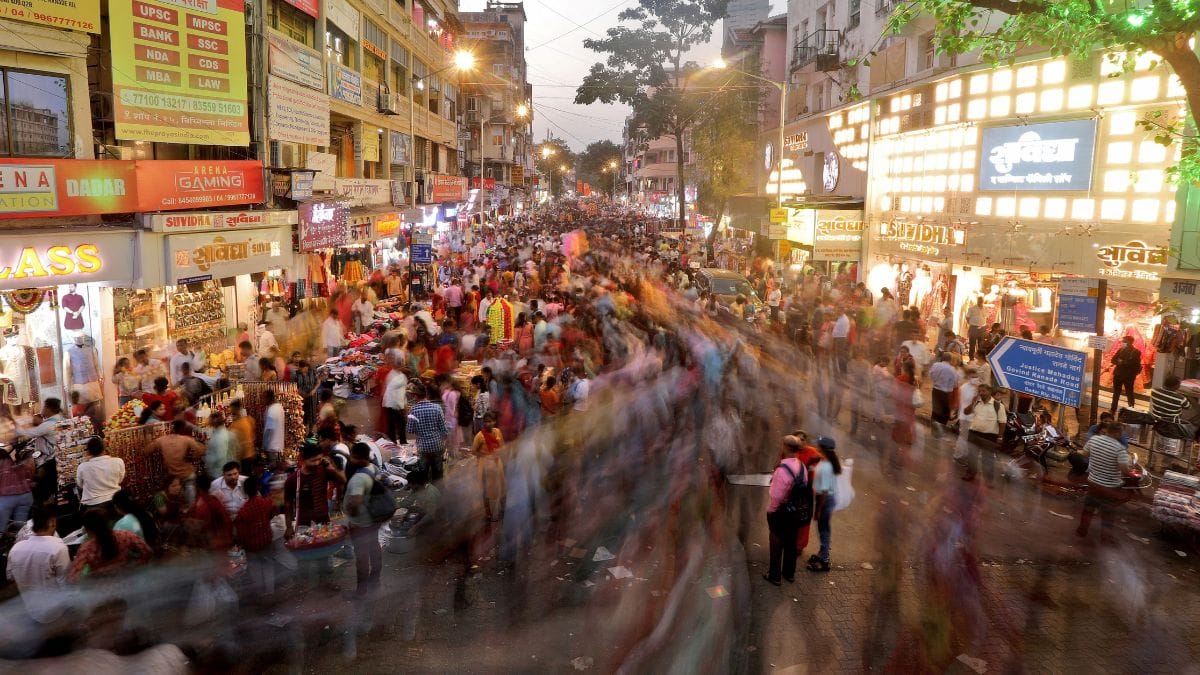
In this Centre for Civil Society ‘Viewpoint 2’ essay, Sauvik Chakraverti inverts the orthodox Indian view of population, arguing that ‘population causes prosperity’ rather than poverty. He observes that the world’s densely populated cities — Hong Kong, Singapore, Tokyo, New York, London — are precisely where wealth, cars, cellphones and millionaires concentrate, and that urbanisation is also the cure for high birth rates because urban dwellers find small families ‘economic.’ On this basis he calls for a radical rethink of the ‘population problem’ that government-approved economics textbooks teach schoolchildren, condemning the coercive ‘cure’ (Sanjay Gandhi’s forced sterilisations) as anathema in a free society and as resting on a false premise.
The core of the argument is economic. In the ‘Homo Economicus’ section, Chakraverti follows Adam Smith’s ‘propensity to truck, barter and exchange’ to claim that only human beings have an ‘economy’ because only they trade and specialise; population density is therefore a precondition of the division of labour and of wealth creation, making cities ‘the ant hills of human colonists’ whose purpose is wealth creation. He attacks ‘socialist development economics’ — associated with Gunnar Myrdal — for what Peter Bauer called ‘the denial of the economic principle’: treating the poor as an irrational problem rather than as skilled, rational traders and as a resource.
The later sections (‘Urbanisation,’ ‘Primacy and Delhi’s state-sponsored markets,’ ‘The economics of abundance’) argue that India’s urban squalor is not caused by numbers but by state-directed, mal-integrated cities: an absent road and transport network, a botched Delhi Mass Rapid Transport System that serves students and bypasses the working masses, and the failure to reinvest public-good assets. He contends that connecting villages to towns by tramway would release vast land and lower prices, citing Japan, West Germany, Holland and Belgium as denser yet unburdened by India’s overcrowding. The essay closes by reframing economics as the study of abundance, not scarcity, with the market as an ‘eco-system,’ and appends a References section (Clark, Lal, King, Hall).
Key points
-
A CCS Viewpoint essay by Sauvik Chakraverti arguing that population density and urbanisation cause prosperity, not poverty.
-
Points to dense, wealthy cities (Hong Kong, Singapore, Tokyo, New York, London) as evidence and calls urbanisation the real cure for high birth rates.
-
Attacks the textbook ‘population problem’ and condemns coercive remedies such as Sanjay Gandhi’s forced sterilisations as unjustified and premise-false.
-
In ‘Homo Economicus,’ grounds the case in Adam Smith’s propensity to exchange: only humans trade and specialise, so density enables the division of labour and wealth.
-
Frames socialist development economics (Gunnar Myrdal) as guilty of Peter Bauer’s ‘denial of the economic principle’ — treating the poor as a problem, not a resource.
-
Blames India’s urban squalor on state-directed, poorly integrated cities: missing roads, a misdesigned Delhi MRTS, and failure to reinvest public assets.
-
Argues connecting villages to towns (e.g. by tramway) would free up land and lower prices; cites Japan, West Germany, Holland, Belgium as denser yet less overcrowded.
-
Closes by recasting economics as the study of abundance, the market as an ‘eco-system,’ and appends a References list (Clark, Lal, King, Hall).
Generated by the v1.5 extraction pipeline. Awaiting editorial review.
Metadata and summary are AI-extracted from the source PDF and reviewed for editorial accuracy. The original work is available via the Read PDF tab above (where present); paragraph-level citation inside the PDF is deferred to a future engagement.