classical liberal
Adam Smith
1723–1790
How Adam Smith is discussed in this archive
Referenced in 18 other works , including An Auxiliary for Historians: The Contribution of Older Austrians , Liberalism in South Asia , and Defence & Development with Stability .
In An Auxiliary for Historians: The Contribution of Older Austrians : Cited as the 'father of our science' and a key precursor in the lineage of thinkers analysing grown social formations via historical comparison.
In Embracing Corporate Social Responsibility : Aga invokes Adam Smith as a founding authority for the compatibility of ethics and commerce, specifically citing his Theory of Moral Sentiments alongside The Wealth of Nations to argue that CSR is not in tension with classical economics.
In IS THERE A MIDDLE WAY? : Mehta enlists Adam Smith as a Middle-Path ancestor by pointing out Smith's true target was the 'Right Wing, Mercantile Lobby' rather than the State as such — re-reading Smith against the laissez-faire caricature to support a complementary role for the Welfare State.
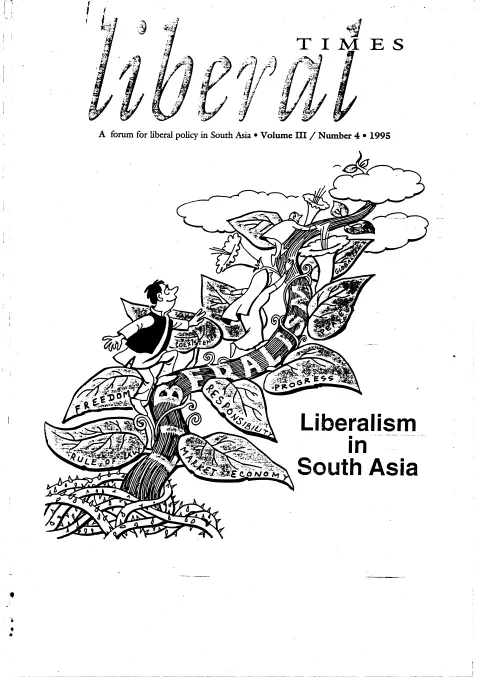
In Liberalism in South Asia : Doering credits Adam Smith and the Physiocrats with developing the 'market economy' as a practical application of liberal principles — positioning Smith as the figure who translated liberal philosophy into political economy.
In A PHILOSOPHY OF BUSINESS : Adam Smith's laissez-faire is invoked as one of the two extremes Kanoria explicitly rejects, positioning his philosophy of socially accountable private enterprise between classical liberalism and state ownership.
Mentioned in (65)
Primary works (56)
Show all 56
- An Auxiliary for Historians: The Contribution of Older Austrians · 2003
- "Adam Smith, as we know, the father of our science, such as it is." · Placing Smith in the lineage leading to Menger
- "And those three, of course, he takes pre he takes from Adam Ferguson and Adam Smith." · On Mises's debt to Smith and Ferguson for division of labour, reason, language
- Embracing Corporate Social Responsibility · 2003
- "She invokes Adam Smith (the author of A Theory of Moral Sentiments as well as The Wealth of Nations) and Gandhi's trusteeship model to argue that ethical conduct and commercial success have always been intertwined" · Smith cited to give the CSR case classical-liberal intellectual authority
- IS THERE A MIDDLE WAY? · 1995
- "Adam Smith's true target (the 'Right Wing, Mercantile Lobby' rather than the State as such)" · Smith is re-claimed by Mehta as a Middle-Path forerunner rather than an anti-State purist
- Liberalism in South Asia · 1995
- "He then notes that Adam Smith's Physiocrats and the Scottish philosophical tradition developed a new approach to economics — the market economy — and that Montesquieu contributed the concept of division of power." · Doering names Smith as the source of the market-economy concept in his liberal intellectual history
- "Adam Smith and the Physiocrats developed the 'market economy' concept as a practical application of liberal principles." · key-points reprise reasserts Smith's role as the practical-economics arm of the liberal tradition
- A PHILOSOPHY OF BUSINESS · 1972
- "He rejects two extremes: the laissez-faire of Adam Smith and the Manchester School, which he calls 'as dead as the dodo', and full state ownership and centralised planning" · Smith's laissez-faire represents the extreme Kanoria distances his own position from
- Economic Democracy · 1969
- "Drawing on Adam Smith's argument from self-interest, Mahatma Gandhi's distrust of concentrated power, J. F. Kennedy's defence of the dispersed free market" · Smith's self-interest argument is one of three philosophical authorities marshalled for the economic-democracy argument
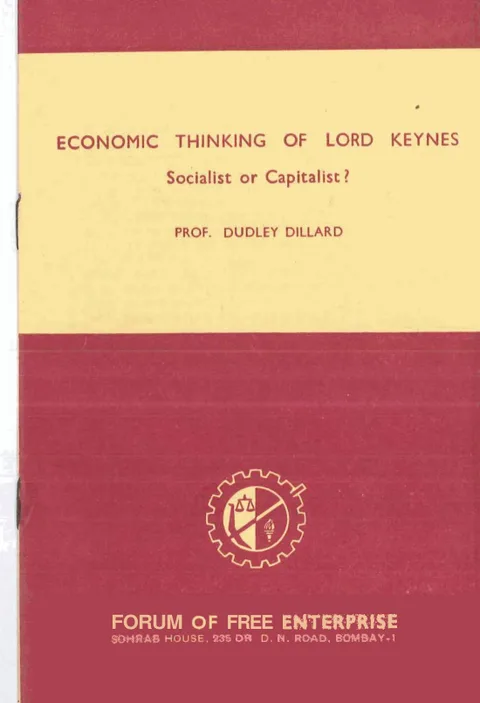
- ECONOMIC THINKING OF LORD KEYNES · 1968
- "Dillard situates Keynes alongside Adam Smith, Ricardo, John Stuart Mill, Karl Marx and Alfred Marshall as a classical-rank figure and compares his disruption of economics to Einstein's of physics." · Dillard's placement of Keynes in the classical tradition to establish the significance of his theoretical break
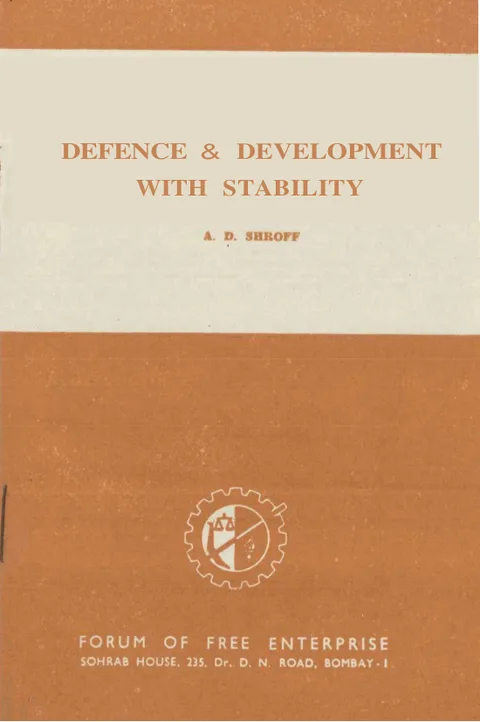
- Defence & Development with Stability · 1965
- "Drawing on Adam Smith, Friedrich List, Hamilton, Jefferson, Clausewitz and the military commentator Edward Mead Earle, he argues that defence is the prior condition of liberty and prosperity" · Smith is one of several Western classical authorities invoked to frame the defence-development nexus
- "Invokes Adam Smith, Friedrich List, Hamilton and Jefferson to argue that defence is the precondition of liberty, property and prosperity" · Smith's authority is deployed to embed national defence within the classical-liberal tradition of political economy
- Conditions for Economic Growth · 1964
- "Hutt cites Mises's 'omnipotent government' and Adam Smith's never-refuted critique of import-tariff protection" · Smith cited alongside Mises to frame the theoretical case against protectionism
- "Protective tariffs for infant industries are rejected with Adam Smith's never-refuted arguments" · Smith's authority is invoked to dismiss infant-industry protection
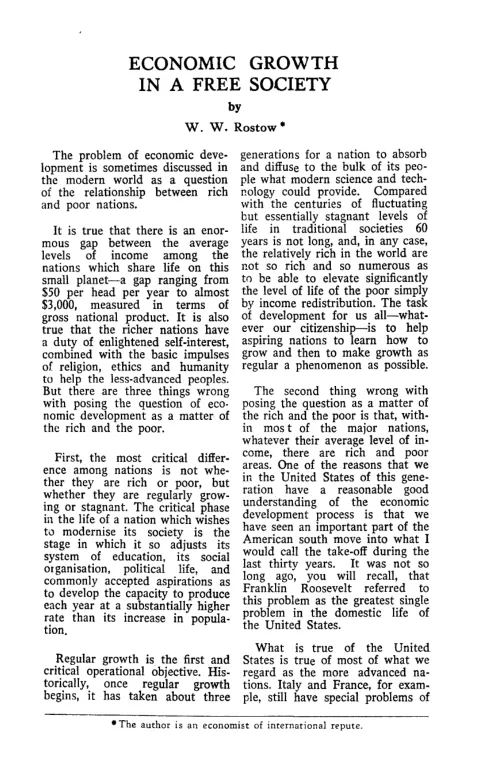
- Economic Growth in a Free Society · 1963
- "he cites Adam Smith's prescription for eighteenth-century underdeveloped Britain to underline that national programming and government provision of social overhead capital — schools, irrigation, highways, land tenure reform — are preconditions for a vital private sector" · Rostow invokes Smith to rebut the false antithesis between national planning and private enterprise

Excerpts (8)
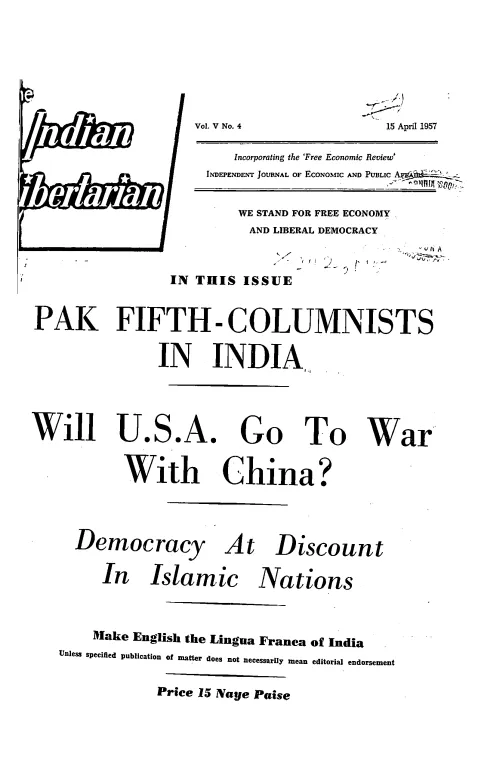
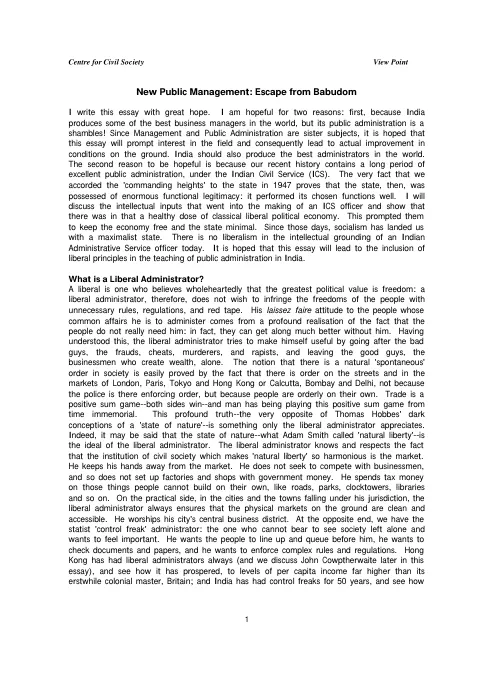
- Bureaucracy and the Liberal Administrator
- "it may be said that the state of nature--what Adam Smith called 'natural liberty'--is the ideal of the liberal administrator." · Smith's 'natural liberty' serves as the normative benchmark against which the liberal administrator's conduct is measured
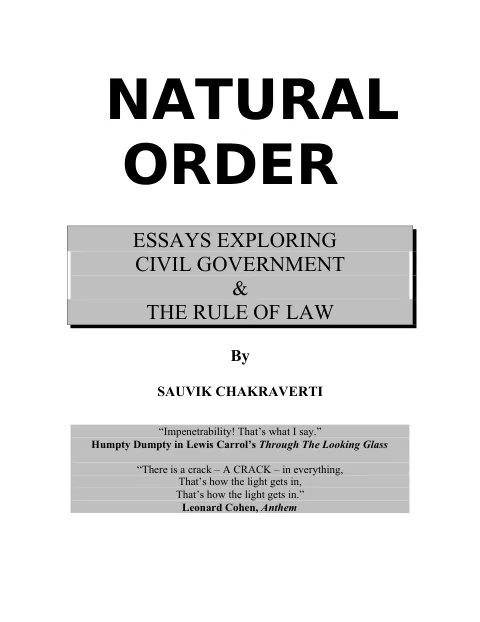
- Government and Society in a Free and Prosperous Commonwealth
- "Chakraverti engages with classical liberal thinkers such as John Locke and Adam Smith" · Smith is one of the two classical liberal anchors for the book's argument
- "Frederic Bastiat, a great free trader who Richard Cobden and the Masnchesterites inspired, gave us the best way to answer this question through a thought experiment" · Bastiat's thought experiment on wealth creation is deployed to illustrate the Smithian case for free trade
- Is There A Middle Way? - Dr F. A. Mehta
- "Adam Smith when he called for an attack on the powers of the State over two centuries ago was, in fact, attacking what in modern terminology would be called "The Right Wing, Mercantile Lobby"" · Smith's original anti-statism is recontextualised by Mehta to show that today's free-market vs state debate has deeper historical roots than the left-right binary suggests
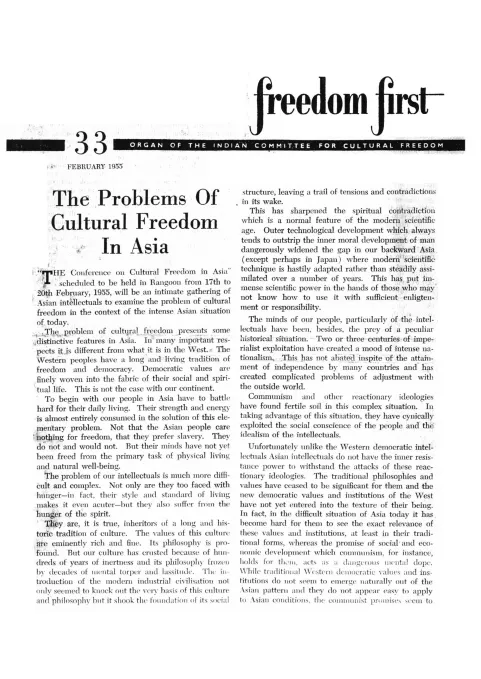
- The Mission of Libertarianism
- "Adam Smith and Mill are both put into the shade. They have become “Gods that failed”." · closing lament that classical liberal economics has been displaced by collectivism
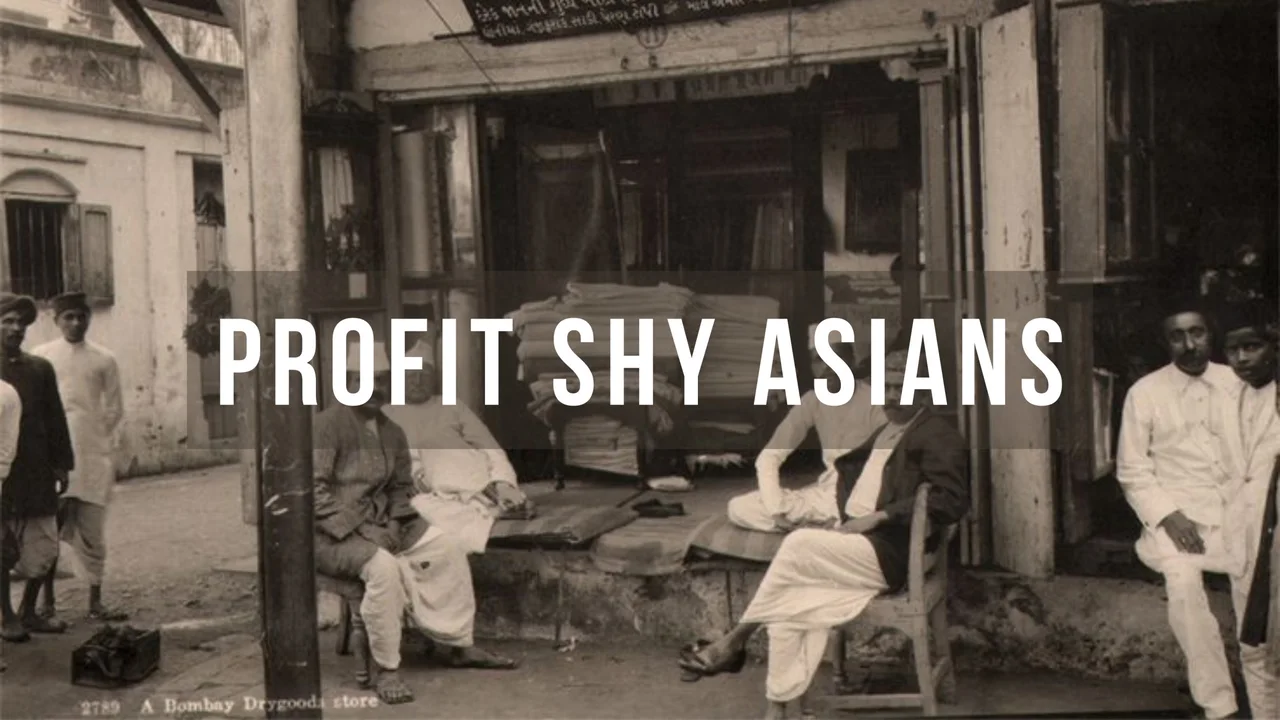
- Profit-Shy Asians
- "In the anti-mercantilist epoch, its champion was Adam Smith." · closing genealogy of libertarian struggle; Smith named as the movement's first-epoch standard-bearer
- Replace the GDP
- "Adam Smith said that the final measure of an economy is the well-being of the people. Yet this is the one question that the policy establishment never asks." · Smith's dictum serves as the philosophical foundation against which GDP's failures are measured
- Sharad Joshi on Liberalism in India
- "In their writings, they trace the beginnings of liberalism to J.S. Mill and Adam Smith and of Indian liberalism to Dadabhai Naoroji, Gokhale, Raja Rammohan Roy, Narmad, Phule, Agarkar, et al." · Joshi critiques liberal writers for rooting the tradition in Western thinkers rather than pre-colonial Indian soil
- THE MISSION OF LIBERTARIANISM
- "Adam Smith and Mill are both put into the shade. They have become "Gods that failed."" · Smith invoked as a foundational figure whose legacy has been displaced, requiring libertarian renewal