lecture
An Auxiliary for Historians: The Contribution of Older Austrians
2003
Summary
Sudha Shenoy delivers a lecture arguing that the 'older Austrians' — Menger, Mises, and Hayek — developed economic theory as an auxiliary discipline for the study of history, namely the concrete actions of human beings in particular historical contexts. She contrasts two illustrative households: a Californian family whose weekly shopping reflects a vast, internationally interlocked capital structure with millions of final goods, and a Malian family whose autarkic production of millet porridge depends on a short capital structure, household labour, and status-based access to land through lineage heads.
From these contrasts she draws the broader claim that the developed capital structure is historically exceptional, took centuries to build (in England roughly from the fifteenth century onward), and is inseparable from the parallel transformation of legal order from status to 'ends-independent, instrumental' grown law — the English common law, Roman law, and Japanese merchants' law. She emphasises that the capital structure is a social formation: fixed and circulating capital combinations at every stage, an intricate network rather than a linear flow, and one that by the nineteenth century crossed political borders to constitute a worldwide economic order.
She closes by placing the Austrians in a long lineage — Coke, Hale, Mandeville, Hume, Smith, Burke, Ferguson, Jones, Humboldt, Stewart — all of whom treated language, law, custom, and economic activity as cognate 'grown' social formations to be analysed through individual action. Hayek's 'catalaxy' and Mises's account of society as a product of the division of labour, reason, and language are the culmination of this tradition.
Key points
- The older Austrians (Menger, Mises, Hayek) framed economics as an auxiliary to history — the study of concrete human action in context.
- A short, autarkic capital structure (illustrated by a Malian household producing millet porridge) is humanity's historical norm; the developed long capital structure is the exception.
- Developed capital structures combine fixed and circulating capital in specific combinations at every stage and form an intricate non-linear network producing millions of final goods.
- Economic development is inseparable from a shift from status-based legal rules to ends-independent, instrumental grown law — English common law, Roman law, Japanese merchants' law.
- By the late nineteenth century production processes routinely crossed political borders, making foreign-trade ratios of 40–50% of output normal outside the anomalous US case.
- Capital structure, common law, language, custom, and society are cognate social formations — grown, rule-governed, historical — and must be analysed as the actions of individuals.
- The Austrian lineage runs back through Coke, Hale, Mandeville, Hume, Smith, Burke, Ferguson, Jones, Humboldt, and Dugald Stewart, culminating in Menger's catalaxy and Hayek's pricing system as a whole.
Transcript
An Auxiliary for Historians: The Contribution of Older Austrians
Source: https://www.youtube.com/watch?v=R5dXcOx98LU Duration: 2769.6s
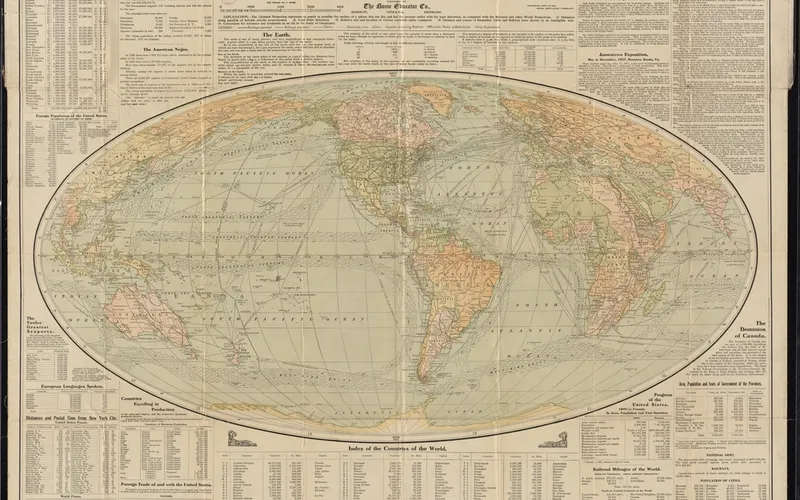
Sudha Shenoy (00:04): Thank you, Mr. Chairman. I hope you will excuse my sitting down. I hope you can hear me, even if you can’t — all that you see is a sort of bit of hair sticking up or something. Right. Now, I said I’d be talking about an auxiliary for historians, the contribution of the older Austrians. Auxiliary is something which is auxiliary to a primary activity. The primary activity for which the older Austrians, that is to say, Menger, Mises and Hayek, were developing their work. That primary activity was history, history. The study of history because that is the actions of human beings, the actual actions of human beings, concrete actions of human beings in a particular historical context, the actions which actually create that context. And in developing this, the as we’ll see, the older Austrians, in fact, came at the end of a long line of previous people who also worked in the same field, starting with Edward Coke back in the early seventeenth century and then continuing on from there. Now before I actually get into all that, I thought what I might do is illustrate the points practically. Because after all, we are looking at the, quote, the real world, historical world. I thought, therefore, that I might begin by simply looking at a couple of example, a couple of fairly simple, relatively simple historical facts, and then working through to see exactly what lies under the surface to show how that auxiliary works with the material to be studied to bring out particular points which otherwise would simply not be accessible. Okay. I’m starting out there with family in California, two adults, two children, and one invisible cat, who, of course, actually owns the family. And that’s their weekly shopping. Okay. What’s immediately visible, of course, is that there’s very large quantities of the stuff. They’re all industrial consumer goods, manufactured consumer goods. There’s a large range, large variety, and superior quality. Okay. We now go to the other extreme, And we now have a family in Mali in West Africa. Now if you want to find Mali on the map, you first find the Sahara Desert, and then you move south until you hit Timbuktu. Because Timbuktu is, in fact, in Mali, surrounding it is Mali. Okay. Now, if we have a look at the, you know, what’s, again, what’s immediately visible, if we just have a look. First of all, there seems to be rather a lot of them. There’s, in fact, four adults, young adults and about nine children. The second thing, of course, is that there’s very much less weekly shopping or whatever it is, is very much less than for the Californian family. Also, you’ll notice that much of it consists of basically raw materials. As you’ll see, it consists of things like millet, rice, dried onions, a few tomatoes, etcetera. Okay. So, what I’ll now do is put up a list which shows us a comparative list which allows us to see the difference between the two. Okay. As I said, the cat refused to be in the photograph, but the humans were there. Okay. Now, you go through that list, it’s something which is familiar to all of us. We’re all living in a developed country in the late twentieth century. And when I showed this list to my husband in Australia, he said, well, what we buy isn’t all that different from what those Californians buy. Now, we have a look now with the family in Mali. We’ve got there 30 kilos of corn, 20 kilos of rice, 20 kilos of millet, oil, onions, etcetera. In other words, to repeat raw materials which have to be worked up further. And I thought I might add there, as simply an account of what they actually eat, the breakfast which consists of millet porridge with tamarind juice or, alternatively, rice porridge with sour milk. And lunch, which consists of that stew of tomatoes, onion, salt, and if they have money, they actually buy some dried fish. And supper, again, millet and corn or griddle cakes, okra soup, etcetera. Okay. Now what I’ll do is start asking the next question. What are the production processes that go into the production of what the family in Mali consume. And we have a look there. Sorry. Okay. The I’ll have a look at the millet porridge with tamarind juice. Now I don’t know if any of us have actually eaten millet or products made with millet. But believe you me, it is not easy to eat. It’s very heavy. It’s not tasty, but just feel good. Okay. Now the final bit, as I said, millet porridge with tamarind juice. So what are the production processes, the capital structure which produces this? Well, you’ve got your cooking vessels. You’ve got your pounded millet, and we’ll come to that in a minute. We’ve got a low earthen platform on the floor, which has a u shaped hole in it. And that’s where you have your fire, and you’ve got twigs and sticks and so on, which you send the kids out to collect. And you’ve got well water and a hand fan of reeds because you have to keep fanning the thing to keep it going. It’s going to boil your your porridge for you. The pounded millet, hand pounded several times daily. You’ve got a staff, a wooden staff about that big, and you’ve got a mortar, a wooden mortar about that high. And you put in your handfuls of millet, and you take your pestle your staff and you go thud, thud, thud until the wretched thing gets pounded. And then you do that several times daily. So as soon as you’ve had breakfast, you start pounding the millet for lunch, and so it goes. Okay. And I hope the ladies here are beginning to feel contented with their life. Okay. And there again, it’s a household which has to do it. No one else is going to do it. Your soaked tamarind. Now a tamarind is a fruit which is sort of flat and sort of u shaped almost. And you have a large tree which is rather spready, and you get the fruit by throwing stones at the tree. Or alternatively, you climb it or you get a pole and try and shake the the fruit down. And that, again, someone has to do. Again, you send the kids out to do it. Well water, which you use, you have to go out and get it. And, again, you carry the urn on your head and you store it. And in other parts of the underdeveloped world where there’s more water than in Mali, if you have if you’re an upper income person in the village, you actually have the well inside the house. So that you all have to do is drop the bucket out the kitchen window and you get your your water. You don’t have to go all the way down to the bottom of the street to the well to get the water. Okay. You then have to thresh the millet, which you pound every day. And the threshed millet is stored in sacks in the house. If you had a look at if you remember the photograph, everything was in sacks. And that’s because you buy the thing at harvest and store it in the house and keep it until the next harvest. Okay. The fresh millet has to be picked over and winnowed, and I’ve done this sort of thing. And believe me, it is labor intensive. You have winnowing baskets, which are made of flat of reeds. You winnow the thing by shaking it up and down. Again, you have household labor. You’ve got harvested millet. You’ve got a threshing floor. You’ve got donkeys to tread the crop. I forgot to say that most many households in Mali also have a working donkey. This particular one doesn’t, but other families do. Okay. Now, that household is autarkic. It produces its own millet. You have a small piece of land for each wife, and the land is obtained from the lineage head. Hubby belongs to a particular lineage. The head of that lineage gives him a bit of land for his wife, each wife, as he gets one. And then she grows the food for the household. Okay. So you’ve got seeds and you have pointed sticks in which you dig and put in the seeds. And then you have hoes. And throughout the season, you’ve got to put in your own labor, the household labor, sickles for harvesting. And you’ve got baskets and sacks and, of course, your donkey to transport the millet. Now, you only go outside the household now when you start getting your utensils, pottery utensils, pounding staffs, baskets, fans, etcetera. You’ve got a craftsman with hand tools, and you’ve got the things that come in, the wooden, the clay, and the reeds, and so forth. The pottery is sometimes fired out in the open. You have branches which you put on top of the pottery. You fire the branches, and then you get some sort of pottery. Alternatively, you’ve got a furnace which is much more expensive, and then you put in coal and coal or charcoal or whatever. And again, it’s a craftsman’s household who puts in the labor. Again, donkeys and sacks and so forth. Now, you’ve got a woodcutter then and a donkey with a rope for transporting the wood. The clay has to be dug out. It’s transported in baskets again on poor donkey’s back. And finally, we’ve got a blacksmith who makes all these tools, and he has hand tools and a shed and a furnace and iron bars and bellows. He does have an apprentice and, of course, again, your donkey for transport. Okay. Now I’ll put that picture back up again because now we see something which we didn’t see before. What we’re looking at here is a production unit. It is not the same as that Californian family. The Californian family just consumes, if you want. This is a production unit. That’s why you have all these people there. They’re all helping in the production process. And I should add that the two ladies in the picture on either side of the of the gentleman, confided to the photographer that they hoped Hubby would get a third wife. The reason for this is they wanted some additional labor to help in the household production. Okay. So, when you’ve got autarkic production, you enlarge the household. That’s the only way you’re going to get the additional output. Alright. Now some further observations if we have a look at the oops. Where are we? Yep. Here we go. If you have a look at that capital structure, if you want, the one which produces your millet porridge every morning for breakfast. First point to note is that it’s a relatively short production process. You’re thinking in terms of one harvest to the next, one season to the next. It doesn’t take very long to establish that production structure, and it doesn’t take very long to turn out whatever you’re producing. What you’re producing in the end, the final goods that you get out, small in quantity, poor in quality, uncertain because you don’t know what the weather is going to be like and you’re completely dependent on the weather, and very limited in range. Okay. Again, if we have a look at that production structure there, we notice that we have extremely limited division of labor, extremely limited division of labor, a small group involved, small number of people, and we have, therefore, limited small groups, limited amount of interdependence. The bulk of the labor goes into the autarkic segment of the production process. Now, a broader point, which emerges when you have a look at the historical record. This is the way things have always been. This is the norm for humanity, the normal way that things are for all human beings, the way it’s been since time began, the way it is for the bulk of the population of this planet. Short production processes, considerable autarky, and all that goes with it. The other point which also comes out is that what you have is a status based legal system. Chief major production asset is the land. And you get the land or get access to the land because of your status as a member of a particular lineage. And then you’re allocated the land by the head of that lineage. There is where does the status legal system stop? And that stops when you start exchanging goods. You’ve got to pay the craftsman, and therefore, the exchange there is a different set of rules, a different kind of rule. That is your ends-independent commercial rule. It’s a commercial exchange, whereas, of course, within the household, it’s autarkic exchange. And you have very much well, it’s central planning, basically. Each wife manages what she’s going to produce. Okay. So you have, therefore, largely what you might call status based legal rules and a certain number of independent instrumental legal rules for the limited amount of exchange that you’ve got with the craftsman and so on and so forth. Okay. Now, you remember that Californian family complete with not not complete with cat and so on. We’ll now use the example of one single item, which was there, which we all remember in in the photograph, and that is the bread. Your investments now, first order investments, you’ve got foodstuffs in the pantry or the larder or kitchen cupboards or whatever. Bread and other foodstuffs are there ready to go. You get that from the supermarket, the supermarket building fixtures and fittings, trolleys, etcetera, labor power and transport, kinds of labor that you’d need for producing whatever you produce in that stage of production. Okay. You then go on to get to the bakeries, which take in flour of various kinds. You’ve got yeast and salt and other ingredients, etcetera, etcetera. You can fill in those blanks. Or if you want, you can continue reading that. You’ve got a flour mill, again, with wheat or grains and so on, machinery, sacks and labor, power, transport, etcetera, distributors for the bakery equipment, warehouses for the grain, factories producing the flour mill machinery, factories producing stuff for the bakeries. And how far have you got? And it isn’t until we finish going through there that we actually get to the farms. The farms, again, have seeds and fertilizers and pesticides and so forth, agricultural machinery, factories there producing the agricultural machinery, producing fertilizers and pesticides, separate farms which produce the seeds, steel mills, mines, and the factories who produce the mining machinery, and so on and so forth. Okay. Now as we go along through there, a couple of comments again. First comment, of course, is that in addition to everything else, we’ve got legal and insurance services at every stage. We’ve got certain loops in the flow. It’s not a linear flow. We’ve got steel which goes into fifth, sixth, seventh, and tenth stages of production or whatever. Key point is that this is the way in which people use the goods. That’s what the classification tells us. Okay. The other point, of course, is that what we have there is only the barest sketch the barest sketch of the kind of capital structure which you’ve got in developed countries in the late twentieth century. And even as we look at this very crude representation, we find that clearly that capital structure is going to produce millions upon millions of final products. In trying to find out how much the supermarket locals Woolworths supermarket carried, I went in there and trustingly asked them, can you tell me total number of items that you have on your shelves? They were scandalized. They accused me of being a spy for a rival grocery chain. Instead, it’s a commercial secret. We can’t tell you. But, again, you know, I mean, from from our daily experience in the developed shopping in a developed area, we can we know. We’re talking about millions of items being turned out by this given this capital structure. And bread is being one item. But once you start going through it, what you find is that you’ve got a capital structure which in fact produces all these millions of items. And again, what you’ve got therefore is the stage of final production, whatever the range of goods are that come out in that stage. And then whatever other investments that you’ve got in stages further removed. Okay. Now let me make a few observations there on the capital structure that we’ve got here. Is there any way we can put both of those up? Let me try and put up both together if we can. Or it can rate, if saw it. Is it all there? Excellent. Good. Okay. First point I’d like to make is that at all stages of production, you’ve got both fixed and circulating capital. So that we’re not talking about fixed capital by itself or circulating capital by itself. You need both. And there in every stage of production, you’ve got both fixed and circulating capital or what is known as that. You also got in all stages, everywhere you’ve got a range of capital combinations. This is one of the things which Menger noticed very early on. Capital combinations, and they have to be available in the right capital combination if they’re going to have further production. Okay. The other point to note is the time taken from the time you start producing your mining machinery to the time when you finally turn out your millions upon millions of final consumer goods at the other end. Okay. Again, a point I want to emphasize, we are not simply saying inputs at one end plus t for time plus outputs at the other end. You have to have all of these things specifically if you’re going to produce the final goods and services that you’re producing. Okay. Another point. This capital structure did not drop from the sky overnight. It took time to develop. In fact, if we say take the example, say, of England or even of America, England, it started this sort of thing started to build it up to that level. You had to start you did start back in eleventh century or earlier, twelfth century, and so on. So this capital structure took time to develop. And another point, this is exceptional. Developed countries are exceptional. I said for most of mankind sorry. Politically incorrect. For most of humanity. For most of humanity, it is your shorter capital structure, which is what we are familiar with, what we live with. And even in in underdeveloped areas, even with higher income groups, you’re still dependent very much on what is essentially a short capital structure. Structure. You’re buying this year’s harvest of grain. You’re storing it, and you’re using it you’re using eat actually eating last year’s harvest because grain is supposed to improve with keeping. And a lot of the final stages of production, in other words, are still within the household. Every time the harvest comes in, you hire women to come along and help you to winnow and pick over the grain, oil it down, store it in these great zinc drums with little bowls of insecticide for the legs to stand in so you don’t get insects in the in the grain. The zinc, of course, means the rats can’t get at the grain. And then it is still true, certainly in India, that you don’t buy flour ready made. When you’re ready to have, you know, some sort of grain food in the house, the grain is then taken down to the flour mill to be turned into flour and then brought back and stored in for three or four days, and then you the whole process starts again. Okay. And, of course, the bulk of your foodstuffs consists still of grain, not of the other foodstuffs which require much longer production processes before they turned out. Okay. Now, you notice that in all of the this longer production process, the capital structure in the developed countries, late twentieth century, we do not have any sort of status exchange a status system. Everything there, the title is through exchange. In other words, an ends independent and instrumental legal order. And another thing to notice, the developed countries are the common law countries, the English common law countries. Western Europe has Roman law. Roman law is like English common law, a grown law. And not legislation. It is not status either. It ends independent. It is instrumental. The more developed parts of the underdeveloped world are the ones in which English common law has become more widely absorbed and used. Roman law has become more widely absorbed and used. The Anglophone areas of the underdeveloped world or the francophone areas. Japan, the other developed area, has had similarly grown law, Japanese merchants law, which has been going since at least the sixteenth century, if not earlier. And again, in the Japanese case, the samurai, the ruling classes, simply concerned with themselves. They couldn’t be bothered with, you know, such people beneath their notice like the merchants or farmers or whatever. And therefore, the Japanese economic order developed over centuries again with grown law rather than any sort of imposed legislation or status. It also was exchange based law, you might say. Okay. Next point. We’ve been talking about the capital structure here. It’s a social formation. Again, what we’re looking at, the investments in each firm are, as it were, small bits in the capital structure. They don’t stand independently. They cannot. They’re all part of capital structure. Okay. Now the other the question, therefore, which emerges from looking at things like in terms of the capital structure is, with any investment, what is the final good or service to which it contributes, which it helps to produce? Where does it stand in relation to that final good or service? In other words, every investment is really only part of the whole network of investments. Okay. We’re looking here at a social formation which involves millions upon millions upon millions of people. The other point is that, except for The US, which is always odd man out, in the other developed countries you find that as early as fifteenth century, what you had were production processes which are already crossing political boundaries. And so if we are looking at a capital structure like this, we’re looking at something which is already international. That’s why Mises said, of course, that the market economy’s field is the world. Okay. I’ll put up now a little diagram. That’s the stage furthest removed. Then you have the other stages, standard Hayekian triangle or what you want to call it. Okay. Now that, of course, is not really an en bloc. What you’ve got is an intricate, very intricate network of investments. And again, it’s so complex that as Hayek said, you can state the principle on which it’s formed, but you can’t really describe each and every investment that goes into it. So you have to think of it as a sort of highly intricate sort of network like that. Okay. Now you’ve got your regular production processes then which turn out your final goods and services, but you’ve also got political boundaries. And what happens is that your political boundaries in relation to the production processes are completely random. So when you look at your export and import statistics, what you’re really picking up, of course, are simply the flows from one stage to the next or within a stage or whatever. Okay. Now, for The US, for most of your history, your exports and imports, foreign trade has been about 10% or less of total aggregate output, however you measure it or define it. For all other developed countries foreign trade which is today exports and imports combined has always equaled 40 to 50% of total output. And in countries like France which don’t like foreign trade very much it’s still 35. And of course it goes up higher. Now that is simply another way of saying that the production processes that you’ve got here don’t simply end there because you’ve got a political boundary. They continue on. And what you’ve really got there for is really by the time you get to the late nineteenth century, it’s been growing for, you know, for centuries. By the time you get to the late nineteenth century you really have an international economic order worldwide economic order in which what you’ve got is say the Australia sector, the British sector, the German sector and so on. So, if you start studying economic history of any one country, you soon find that by the time you get to the sixteenth, seventeenth centuries or later, you’re really very conscious, find that you are looking at only one part of a very much bigger, very much bigger picture. Okay. Now, as I said, that capital structure which I put which I, you know, very crudely put up, did not develop recently. What you had was a switch, a change from the status based economic activity, status based legal system, as you found in poor old Mali, gradually changing over time in the course of centuries to become what we see today. Now, the story is different in different countries. Being British I only know English, of course, complete monoglot. And I can tell you that so far as England is concerned, the switch changeover started, you might say, about roundabout the the fifteenth century. And what you notice if you compare the economic and the legal changes is that the substantial legal changes occur in the same period in which you’ve got your substantial economic changes. The major period of transformation of the English common law, and this is done by legal historians who haven’t a clue as to what is happening in the economy even economic activity. Major changes were in the period 1450 to 1550. And you had a complete transformation. And that is the legal order which still continues. And you’ve got changes that still continues today in the common law countries. The autarkic restricted range of exchange, restricted range of goods being produced stage, if you want, circumstance, in England, at any rate, was certainly during the Anglo Saxon period and earlier periods. And after William the Conqueror came around, he then got a change for various reasons. And you got you can see in particular areas of England. Interestingly, those areas of England where you have what is known as a weak lordship. The lord didn’t particularly know what was going on in his estates. Those are the areas where you start getting quite definite indicators of economic growth, of extension of the capital structure, and then the whole thing sort of merging eventually after the Black Death and then developing thereafter. Okay. Again, another point I want to emphasize. This is also in a very real sense an historical process. You started with the specific kinds of rules that you had in eleventh, twelfth century England, and then you started gradually changing those until you reached the kind of legal system, broader legal system, the ends independent instrumental rules that you’ve got today. If Mali were the country that were doing it, then Mali’s rules would have changed. It would have been a specifically Malian sort of process. Okay. Some further observations. The difference between what we’ve seen for Mali and what we’ve seen for the developed areas, it cannot be summed up by the term industrialization. What Mali lacks is not just a few factories. Maybe you plunk down a few factories, it isn’t going to help matters. You have to start with what you’ve got there in Mali, and then gradually transform it until it becomes developed, if you want. Okay. Now I’ll put up that picture again, because there are a few indicators there of I can find my copy of the picture. Okay. Now, yes, now there are a few indicators of wider exchange. Where do we see see those? I don’t know if it’s very clear, but the young man there actually has a watch. He’s wearing a watch from Taiwan or Japan or, you know, a very cheap watch. He’s also wearing a shirt and trousers, factory made shirt and trousers, not the handmade hand woven clothing that the rest of the family are wearing. And if you can just see the young lady is obviously wearing a pair of manufactured slippers. Okay. Now that means that they are in contact with a wider international economic order, and they bought their things more cheaply than they would have bought otherwise. What Mali exports are livestock, ground nuts, or what you would call peanuts, and cotton. Obviously, all very poor quality. It is surrounded by countries like Nigeria, Ghana, and so on, which produce cocoa, which is obviously an internationally traded good. And so therefore, what you’ve got is part of this great multilateral exchange through Ghana, Nigeria, the cocoa production. You’ve got Mali also, the people in Mali also participating in and obtaining these international goods if you want, and therefore, obviously, somewhat better off than if they didn’t have this sort of contact. Okay. Now, historically speaking, the greatest development of the international economy or the international economic order is in the nineteenth century. It’s one of the most remarkable centuries that the world has seen. There were no major wars between 1815 and 1914. In fact, when 1914, the war broke out, the Royal Navy didn’t know what to do. So they commissioned a report on how the Battle of Trafalgar had been fought back in the twelfth, whenever it was. It as I said, it’s it’s also the period in which you had greatest peaceful movement of people, 43 odd million people moving for no reason at all except to improve their conditions. From the areas in which you had large numbers of people, perhaps not quite as much capital, to places, of course, like The US, Canada, Argentina, Australia, New Zealand, South Africa, and so on. Okay. That is also the period. Now, the other point to note is that, of course, you also have population growth along with the extension of the capital structure. Population in sixteenth century England was around 5,000,000 people. By the time you get to the late nineteenth century, it is in the region of 50,000,000 people or somewhat less 45,000,000 people or so. Enormously more prosperous, obviously, in living in proper brick houses, etcetera. And with much larger output. Okay. Have we reached the end of our time? Another fifteen minutes? Okay. I shall stop. Well, I won’t stop there abruptly. What I will do now, I have one last handout to put up. And that is, of course, to tell you that how do we get this picture? What do we do here? What we’ve been doing here is, of course, looking at historical materials. And we’ve been using an auxiliary, which is our friend, the capital structure. That is not the only social formation that we got. In addition to the capital structure, similar social formations are, of course, the English common law, Roman law, private law, language as a whole, society itself, habits, customs, ways of doing things, and so on. They all belong in the same category. And what I’ve got there are, as it were, is as it were the where are we? Where’s my copy of this thing? Here we are. The the list the the line which we have culminates, of course, in our the three that I mentioned, Menger, Mises, and Hayek. The first social formation of the kind which we’ve been looking at ends independent, growth over time, historical, rules based, etcetera, with the English common law. And Sir Edward Coke is, of course, the name there. Sir Matthew Hale also famous for his debate with Hobbes, Hobbes being the legal positivist, Matthew Hale trying to explain how the common law developed. Matthew Hale was a legal historian as well. Hale also mentioned that law was like language, but he hadn’t any no further investigation after that. Mandeville, customs, habits, and economic activity, analyzed the develop the production of a piece of scarlet, scarlet being a kind of cloth. And what he showed there was not only the regional division of labor, but also the extent to which by this time, late seventeenth century, you were already getting in, say, dyestuffs from Russia, from Brazil, and all over the place. And he anticipated Menger by pointing out that the fixed investments or investments in the dye dyeing vats, the weavers’ product production goods and so on was also a part of the total story. Okay. He saw that the division of labor is the foundation of society. And that, piece of analysis was then picked up by Mises later on. Hume wrote a history of England and, legal analyst as well as, economic activity. Adam Smith, as we know, the father of our science, such as it is. And if you read the Wealth of Nations, what you find is extensive historical comparisons. China, France, etcetera. Add Edmund Burke. Edmund Burke wrote an unfinished history of England and an unfinished history of the common law. Again, a legal thinker. Important because it is through Edmund Burke that the analysis of the common law reached Menger. Menger points out that Edmund Edmund Burke’s historical analysis is at opposite poles from that of younger German historical school. They both historically says but in totally opposite senses. Adam Ferguson language again, the first to notice the development of the international economic order and, again historical sociologist wrote a history of the Roman Republic. Sir William Jones, the founder of historical linguistics, and it is by this time that you start to see language as something that belongs in the same category as economic activity, say, customs and so on and the common law. Humboldt, again, legal sorry, a linguist. Again, important because, again, through him reached Menger. And Dugald Stewart, again, law, mathematician, a philosopher, and an economist, and therefore totally impractical. And finally, of course, our great founder, Carl Menger. And you’ll notice that he also he analyzes the common law and he adds another economic formation, which I’ve not mentioned yet. And that is the what Hayek later called the catalaxy. If you look at his appendix on national economy, you’ll see he discovers that we have here an a formation which is much larger than your economic than your individual firm. It is analogous to what I’ve just drawn here, the capital structure with each firm being only an element in something much bigger. Okay. Mises. Again, the point about Mises here is that he analyzed the development of society. It’s very, very interesting how he does it. He says that society is not an invention. It is not a large thing in itself. It is not the result of a social instinct, because that is not an explanation. It is not God given and therefore mysterious. It is the result of the division of labor. Division of labor, reason, and language, he says, are the three things which distinguish humanity from other beings. And those three, of course, he takes pre he takes from Adam Ferguson and Adam Smith. Okay. And finally Hayek, culminate culmination, you might say, who gives the name the catalaxy. Capital structure we have through from Menger, through Mises, and Hayek. All three contributed to, obviously, to what I’ve been saying here. And, also analyze the common law. Right. So that what we have here, a range of social formations which all belong in the same category and which all have to be analyzed as actions of individual people. Now I’ll gallop through, Mr. Chairman, another minute or so. I won’t go into the economics or whatever. I’ll simply say what how linguists analyze language. It’s something which people already do. They’ve been doing it for ever since they came out of the stage of being just ordinary primates. Complex set of rules on which people act, which they don’t even know that they’re acting on, developed historically over time. And so that is what the linguists are analyzing scientifically, systematically. The same sort of thing for all these other formations that I’ve mentioned, capital structure, common law, other economic phenomena. And finally, a point which I think I want to stress, and that is that both Mises and Hayek always talked about the pricing system as a whole. They did not talk about isolated prices or isolated markets. And Hayek in particular points out that it is only the economist’s imagination which breaks up the economic system into individual markets. In fact, the whole thing is one interrelated social formation. Okay. Well, I think I’ll stop there. Thank you very much.
Notable passages
"The primary activity for which the older Austrians, that is to say, Menger, Mises and Hayek, were developing their work. That primary activity was history, history."
"What we've been doing here is, of course, looking at historical materials. And we've been using an auxiliary, which is our friend, the capital structure."
"He says that society is not an invention. It is not a large thing in itself. It is not the result of a social instinct, because that is not an explanation. It is not God given and therefore mysterious. It is the result of the division of labor."
"both Mises and Hayek always talked about the pricing system as a whole. They did not talk about isolated prices or isolated markets."
"as Hayek said, you can state the principle on which it's formed, but you can't really describe each and every investment that goes into it."
"Hayek in particular points out that it is only the economist's imagination which breaks up the economic system into individual markets. In fact, the whole thing is one interrelated social formation."
"And if you read the Wealth of Nations, what you find is extensive historical comparisons. China, France, etcetera."
"If you look at his appendix on national economy, you'll see he discovers that we have here an a formation which is much larger than your economic than your individual firm. It is analogous to what I've just drawn here, the capital structure with each firm being only an element in something much bigger."
Metadata and summary are AI-extracted from the source PDF and reviewed for editorial accuracy. The original work is available via the Read PDF tab above (where present); paragraph-level citation inside the PDF is deferred to a future engagement.