speech
The Union Budget 1990-91
The Kaliyug Clock and the Rain Dance
Published by M. R. PAI for the Forum of Free Enterprise, "Piramal Mansion", 235, Dr. D. N. Road, Bombay-400 001. and printed at TATA PRESS Ltd., 414, Veer Savarkar Marg, Prabhadevi, Bombay 400 025. · Bombay · 1990
18 pages
Part of The Union Budget
The Union Budget 1990-91
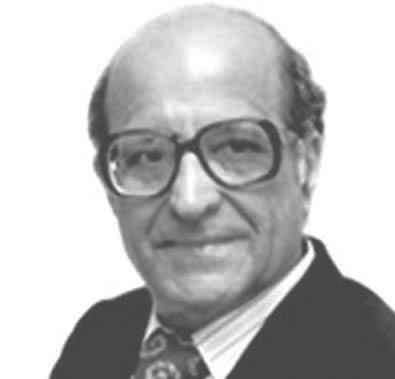
By Nani A. Palkhivala
Summary
In this Forum of Free Enterprise booklet, reproducing a public talk delivered in Bombay on 23 March 1990, the jurist N. A. Palkhivala dissects the 1990-91 Union Budget presented by Finance Minister Madhu Dandavate. Palkhivala opens with measured praise for Dandavate’s integrity and intellect, calling the budget ‘that of an honest humanist’ and ‘a good Budget in bad times,’ before turning to a sustained critique of India’s fiscal condition. He warns that the gravest threat to the economy is mounting national indebtedness: net Central Government liabilities of roughly Rs. 260,000 crore against a Rs. 17,000 crore annual interest burden, with debt set to rise by another Rs. 40,000 crore in the coming year.
The heart of the talk is an indictment of the government as a ‘compulsive borrower’ living beyond its means, financing a runaway revenue-account deficit by transferring sums from the capital account, and treating crores of public money with casual indifference. Palkhivala extends the argument to tax administration, contending that under-estimation of income is a worldwide phenomenon and that India would do better to frame fair, reasonable laws for honest taxpayers rather than obsessing over the tax evader. He illustrates the point with the labyrinthine drafting of a deduction for handicapped dependents as an example of self-defeating legal over-elaboration.
Under the heading ‘Breach of Faith,’ Palkhivala frames the budget as the annual accounts of a partnership between government and people, insisting that good faith and a sense of honour are indispensable to mutual confidence. The talk closes on a note of lost opportunity, invoking Lee Kuan Yew’s image of India as a ‘sleeping giant’ and lamenting that, true to a ‘forty-year hallowed tradition,’ the budget would not disturb the giant’s slumber.
Key points
-
Reproduces Palkhivala’s public talk on the 1990-91 Union Budget, delivered in Bombay on 23 March 1990 and repeated in other cities.
-
Credits Finance Minister Madhu Dandavate’s integrity and competence, calling the budget that of ‘an honest humanist’ and ‘a good Budget in bad times.’
-
Identifies national indebtedness as the gravest danger: ~Rs. 260,000 crore in net Central liabilities and a Rs. 17,000 crore annual interest burden.
-
Attacks the government as a ‘compulsive borrower’ running an out-of-control revenue-account deficit, plugged by transfers from the capital account.
-
Argues tax law should be framed fairly for honest taxpayers rather than fixated on the evader, citing under-estimation of income as a worldwide phenomenon.
-
Uses the convoluted deduction for handicapped dependents as a case study in self-defeating legal over-drafting.
-
Frames the budget as a partnership’s annual accounts requiring good faith (‘Breach of Faith’ section).
-
Closes with Lee Kuan Yew’s ‘sleeping giant’ image, lamenting that the budget leaves India’s potential undisturbed.
Generated by the v1.5 extraction pipeline. Awaiting editorial review.
Metadata and summary are AI-extracted from the source PDF and reviewed for editorial accuracy. The original work is available via the Read PDF tab above (where present); paragraph-level citation inside the PDF is deferred to a future engagement.