speech
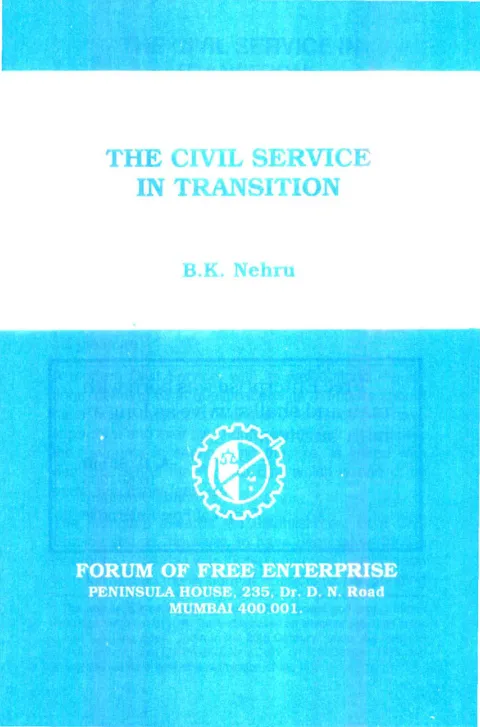
The Civil Service in Transition
By BK Nehru
Forum of Free Enterprise, Peninsula House, 235, Dr. D. N. Road, Mumbai 400 001. · Mumbai · 2000
24 pages
The Civil Service in Transition
By B. K. Nehru
Summary
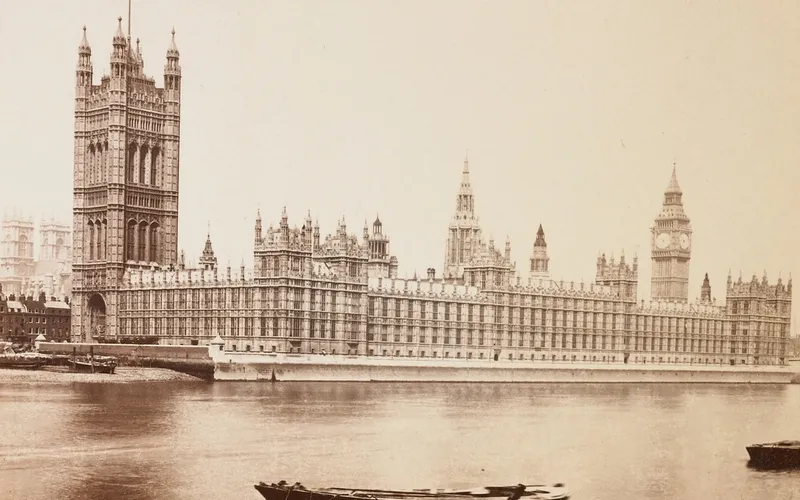
In this Forum of Free Enterprise booklet, B. K. Nehru — a distinguished former civil servant and former Indian Ambassador to the United States — traces the rise and decline of the civil service as an institution of the modern state. Originally delivered as a lecture in the India International Centre’s “Looking Back: India in the 20th Century” series on 15 October 1999, the text begins with the historical emergence of a professional bureaucracy under the Bourbons and Napoleon, then narrates the making of the Indian Civil Service from the East India Company’s College of Fort William and Haileybury through the opening of competitive examination in 1853.
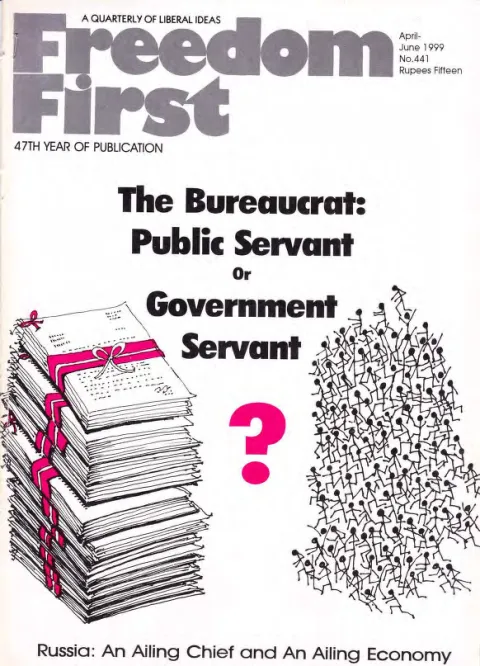
The heart of the lecture is an argument that the Indian Civil Service, conceived as an instrument of the Rule of Law accountable to the law rather than to rulers, has been progressively destroyed by political interference. Nehru illustrates this with cases of ministers demanding unquestioning obedience and duty-free passage for personal goods, and contends that the chief weapon used to bend civil servants is the threat of frequent, arbitrary transfers. He argues corruption descended from the political world downward into the services, and that the constitutional ideals of democracy, equality, secularism and the Rule of Law remain at odds with an older Indian tradition of absolute royal power (“Raja and Praja”).
Nehru extends his critique to the Indian Police Service, which he says has in places become “the private army of the Chief Minister,” and laments that successive reform reports — the Administrative Reforms Commission under Morarji Desai, the Sarkaria Commission, and the Dharma Vira Commission on police — have gathered dust without action. He closes the rendered pages by noting that the failure to provide liberty, justice and equality has bred discontent, and that restoring the machinery to implement the law requires a political will that does not yet exist.
Key points
-
Reprint of a B. K. Nehru lecture in the IIC ‘Looking Back: India in the 20th Century’ series, delivered 15 October 1999.
-
Traces the civil service from the Bourbons and Napoleon to the Indian Civil Service via Fort William, Haileybury and the 1853 opening of competitive examination.
-
Argues the civil service is an instrument of the Rule of Law, accountable to law rather than to rulers.
-
Contends political interference — especially the threat of arbitrary transfers — has bent and corrupted civil servants (the minister’s ‘Category A/B/C’ anecdote).
-
Holds that corruption descended from the political world downward; the ICS resisted dishonesty far longer despite meagre salaries.
-
Locates the conflict in a clash between the Constitution’s imported ideals (democracy, equality, secularism, Rule of Law) and an indigenous tradition of absolute royal power.
-
Criticises the politicisation of the Indian Police Service as the Chief Minister’s ‘private army’.
-
Notes major reform reports (Administrative Reforms Commission under Morarji Desai, Sarkaria Commission, Dharma Vira Commission) have been ignored.
Generated by the v1.5 extraction pipeline. Awaiting editorial review.
Metadata and summary are AI-extracted from the source PDF and reviewed for editorial accuracy. The original work is available via the Read PDF tab above (where present); paragraph-level citation inside the PDF is deferred to a future engagement.