
edited volume · anthology
Unemployment in India
By BK Nehru
Published by M. R. Pai for the Forum of Free Enterprise, 235, Dr. Dadabhai Naoroji Road, Bombay 1 and Printed by S. J. Patel, at Onlooker Press, (Prop. Hind Kitabs Ltd.) Sasoon Dock, Colaba, Bombay-5 · Bombay · 1971
15 pages
Unemployment in India
Summary
This Forum of Free Enterprise booklet gathers three 1971 lectures on unemployment, each reprinted from a separate address, under an editorial introduction that frames unemployment of the illiterate and the highly educated alike as ‘the most pressing problem of the Indian economy today.’ B. K. Nehru argues that employment can only follow from increased production, not from currency expansion or make-work relief; Prof. K. B. Suri analyses the distinct character of rural under-employment and calls for a massive public-works programme to convert idle rural labour into capital; and S. N. Lal concentrates on the educated unemployed, urging a reorientation of the education system toward employment, encouragement of self-employment and small-scale ancillary industry, and vocational guidance. The contributors share a common diagnosis of urgency and a constructive, market-leaning bias, stressing productivity and entrepreneurship over state pension or subsidy schemes.
Key points
-
B. K. Nehru, then Governor of Assam, Meghalaya, and Nagaland, argues unemployment reflects low returns from employment and that increased production, not currency expansion, must be the nation’s first priority.
-
The same address distinguishes mere “employment” from genuinely productive “gainful employment,” warning that paying people without producing goods and services is a monetary illusion that simply pushes up prices.
-
Nehru cites Lenin’s New Economic Policy after the October Revolution to argue that ideological objectives must yield to the imperative of production, justifying pragmatic concessions to private enterprise and capital.
-
Prof. K. B. Suri, Reader in Demography at the Indian Institute of Population Studies, Bombay, distinguishes rural under-employment, largely seasonal and disguised, from open urban joblessness, noting roughly three-quarters of India’s unemployment is rural.
-
The same lecture criticises official measurement as unreliable, citing inconsistent Planning Commission man-year estimates, National Sample Survey discrepancies, and a Reserve Bank of India figure placing the backlog at 12.6 million by 1969.
-
Suri proposes a massive labour-intensive public-works programme in irrigation, roads, market centres, and warehousing to convert idle rural manpower into durable capital, citing Dandekar and Rath’s estimate of Rs. 822 crores in supplemental income.
-
S. N. Lal, Director of E.I.D. Parry Ltd. and Chairman of the Employers’ Federation of Southern India, projects educated unemployment rising from 8.9 lakhs in 1966 to 16.3 lakhs in 1970.
-
The same address calls educated unemployment the most socially dangerous form, citing unrest in West Bengal and the Naxalite movement, and rejects pensions in favour of reorienting education toward employment.
-
Lal points to the ancillary-supplier networks of Tata, Voltas, and Kirloskar, alongside the Apprentices Act and expanded vocational guidance, as models for absorbing educated youth into self-employment and small industry.
Essays
The First Priority
By B. K. Nehru
B. K. Nehru, then Governor of Assam, Meghalaya and Nagaland, contends that unemployment reflects low returns from employment and that the first national priority must be increased production. He distinguishes ‘employment’ from genuinely productive ‘gainful employment’, warning that putting people on the payroll without producing goods and services is mere monetary illusion that pushes up prices. Drawing an extended analogy to Lenin’s New Economic Policy after the October Revolution, he argues that ideological objectives must be subordinated to the imperative of production, and that private enterprise and concessions to capital, however unwelcome to socialist theory, were and are necessary to raise output and thereby create real employment.
- Unemployment is fundamentally a problem of insufficient production, not of money or payroll.
- Creating purchasing power without matching output simply raises prices.
- ‘Gainful employment’ must mean productive employment, not work for its own sake.
- Cites Lenin’s New Economic Policy as proof that ideology must yield to the need to increase production.
- Private enterprise and concessions to capital are justified pragmatically by their productive results.
A Massive Programme of Public Works Needed
By K. B. Suri
Prof. K. B. Suri, Reader in Demography at the Indian Institute of Population Studies, Bombay, distinguishes rural from urban unemployment, arguing that the rural problem takes the form of seasonal under-employment and disguised unemployment among the self-employed and family labour rather than open joblessness. He surveys the data difficulties that plague measurement — the Planning Commission’s Western-derived ‘man-year’ estimates, National Sample Survey inconsistencies, and Reserve Bank figures placing the backlog at over 12 million by 1969 — and notes that roughly three-quarters of unemployment is rural. His central proposal, echoing estimates by Dandekar and Rath, is a massive labour-intensive public-works programme (irrigation, roads, market centres, warehousing) to convert idle rural manpower into durable capital, financed by an annual outlay of several hundred crores.
- Rural unemployment is largely seasonal under-employment and disguised unemployment, not open joblessness.
- Roughly three-quarters of India’s unemployment is rural.
- Official measurement is unreliable: Planning Commission man-year estimates, NSS inconsistencies, RBI’s 12.6 million figure for 1969.
- Proposes a large labour-intensive public-works programme to turn idle rural labour into capital.
- Cites Dandekar and Rath’s estimate that public works could supply Rs. 822 crores of supplemental income.
The Problem of Educated Unemployed
By S. N. Lal
S. N. Lal, Director of E.I.D. Parry Ltd., Madras and Chairman of the Employers Federation of Southern India, addresses the educated unemployed, whom he calls the most serious aspect of the wider problem because it breeds acute social and political pressures — citing West Bengal, the Naxalite movement and recent violence. He projects unemployment rising from about 8.9 lakhs in 1966 to 16.3 lakhs in 1970 among the educated, and argues that relief pensions are no answer: the education system must be reoriented toward employment, vocational guidance expanded, and self-employment and small-scale ancillary industry actively encouraged. Pointing to the Tata, Voltas and Kirloskar networks of ancillary suppliers, the Apprentices Act, the Dantwala and Kothari reports, and Japanese entrepreneurship education, he calls for institutional inducements, in-plant and management training, and a curriculum modernised to meet the requirements of industry.
- Educated unemployment is the most socially dangerous form, feeding unrest such as the Naxalite movement.
- Educated unemployed projected to rise from 8.9 lakhs (1966) to 16.3 lakhs (1970).
- Pensions and subsistence allowances are rejected as solutions; education must be reoriented toward employment.
- Self-employment and small-scale ancillary industry (Tata, Voltas, Kirloskar networks) are key remedies.
- Calls for expanded apprenticeship, vocational guidance, and management training drawing on Japanese and ILO models.
Generated by the v1.5 extraction pipeline. Awaiting editorial review.
Metadata and summary are AI-extracted from the source PDF and reviewed for editorial accuracy. The original work is available via the Read PDF tab above (where present); paragraph-level citation inside the PDF is deferred to a future engagement.
People in this work
Related across the archive
 Primary workUrban and Rural Unemployment in India
 Primary workINDIA REQUIRES INDICATIVE PLANNING
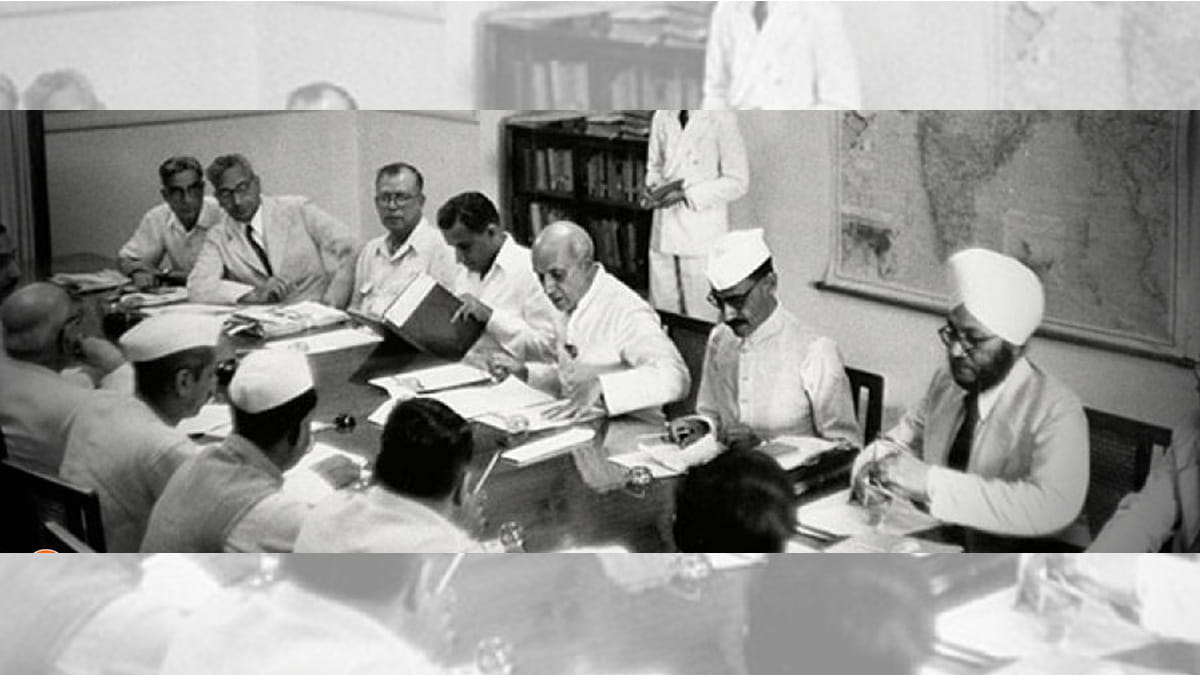 ThePrintSocialist planners aggravated unemployment problem
 Primary workRevised draft amendments to the Motion on the Fourth Five Year Plan given notice of by the Prime Minister in the Lok Sabha
 ThePrintCapitalism isn’t responsible for mass unemployment. Look at Japan, Singapore: BS Iyer