classical liberal
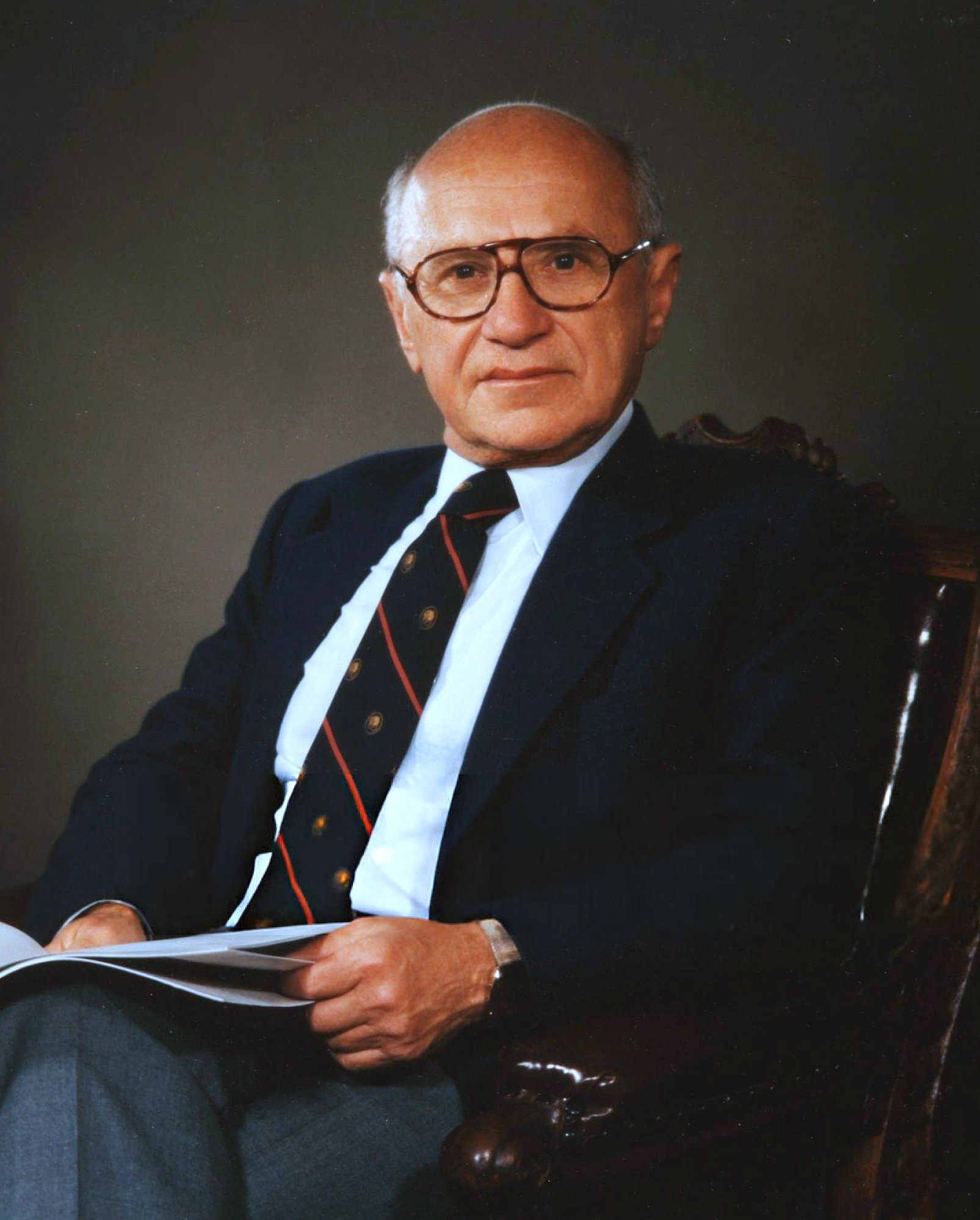
Milton Friedman
1912–2006
How Milton Friedman is discussed in this archive
Authored 7 works in the archive.
Referenced in 12 other works , including Economic Reforms and the Relevance of Prof. B. R. Shenoy , Corporate Governance , and Economic Prophecies .
In Centre for Civil Society : A Journey in Time : Shah opens by invoking Milton Friedman's joint autobiography with Rose Friedman as a touchstone for his own sense of fortune.
In S. Divakara on Nani Palkhivala's Union Budget Commentaries : Friedman is invoked as a Forum collaborator and external validator of the extraordinary audience size at Palkhivala's lectures.
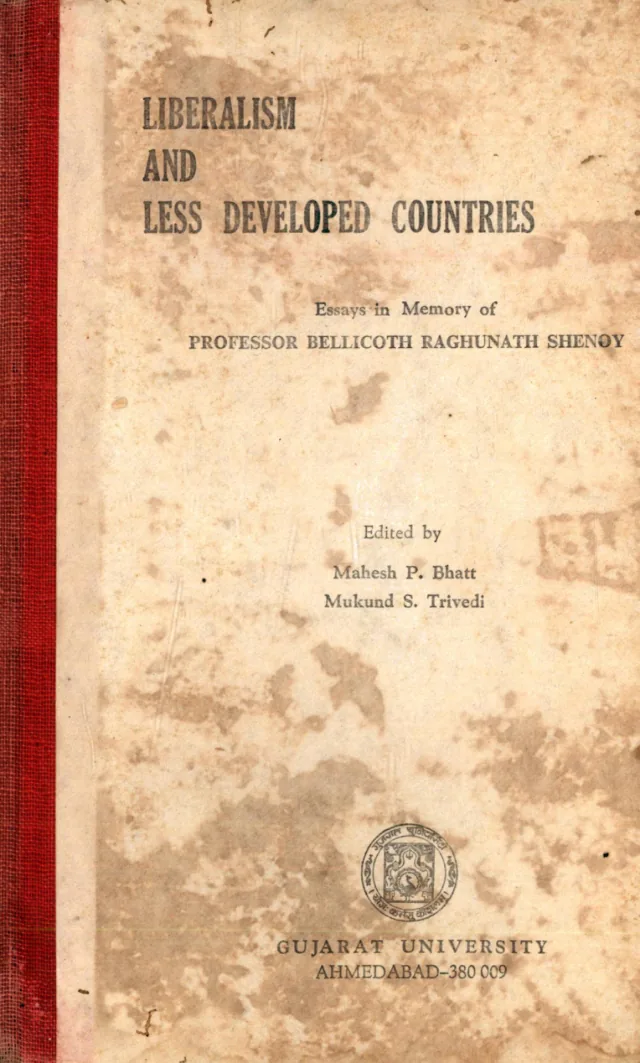
In Economic Reforms and the Relevance of Prof. B. R. Shenoy : Friedman's tribute to Shenoy is marshalled as authoritative external testimony to underscore how little India has acknowledged Shenoy's contribution even compared to international recognition.
In Corporate Governance : Godrej explicitly rejects the narrow shareholder-wealth definition associated with Milton Friedman, using Friedman as the named foil against which to define his own broader stakeholder-centred conception of corporate governance.
In Economic Prophecies : Friedman supplies the title and the canonisation: he had identified Shenoy as a 'prophet unhonoured in his own country' as early as 1963, and Amin's editorial frame uses Friedman's Nobel authority to vindicate Shenoy's career-long dirigisme critique.
By Milton Friedman (7)
Showing 7 of 7
-
Friedman on India
2000 · edited volume
-
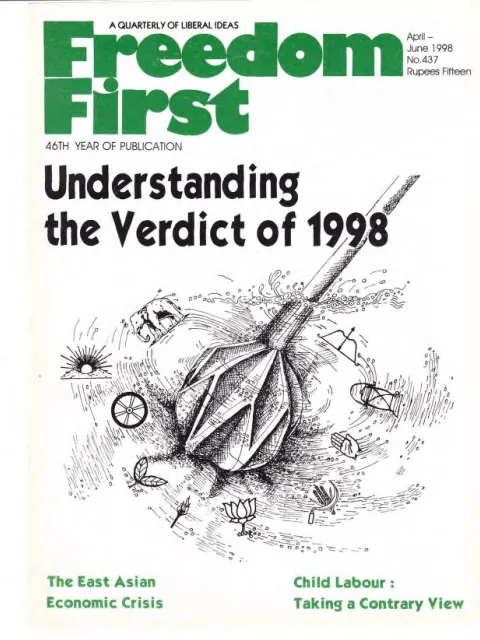
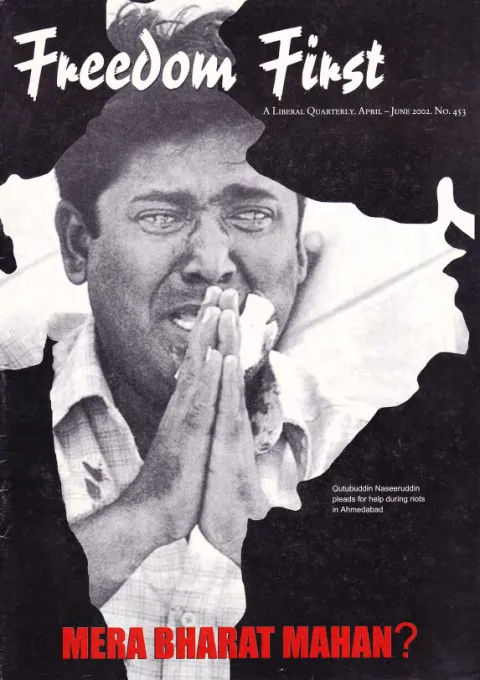
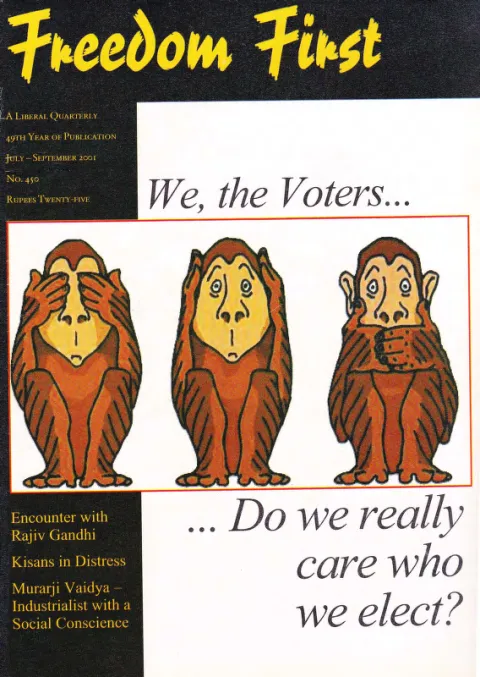
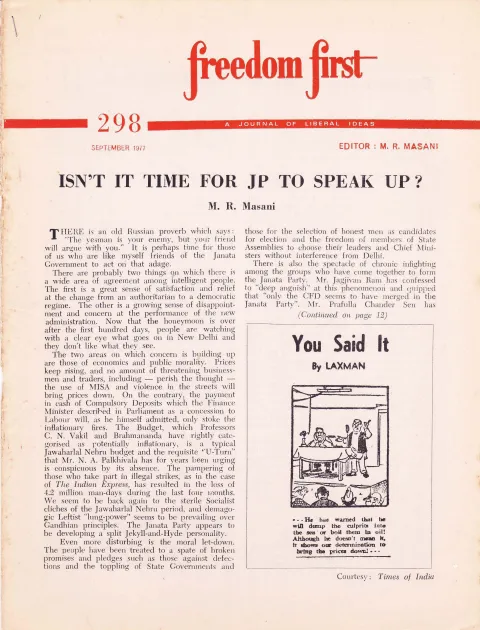
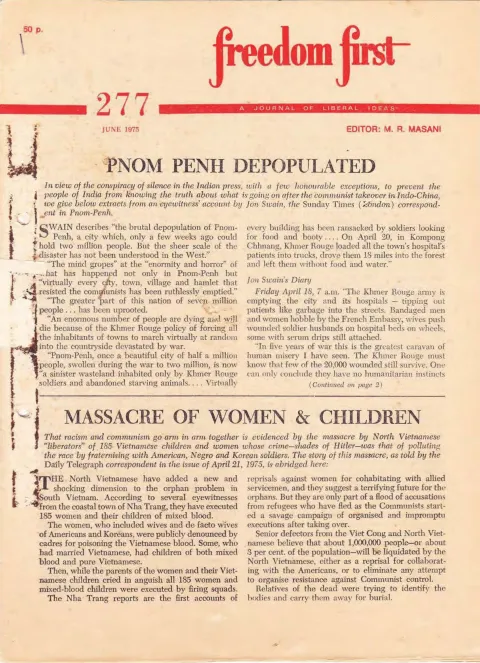
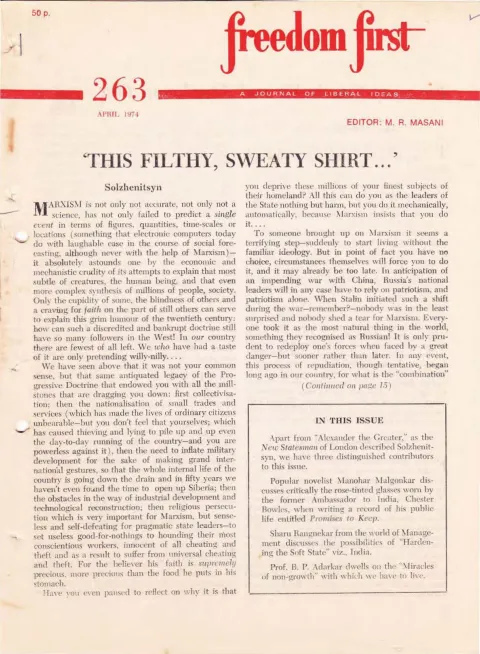
Freedom First
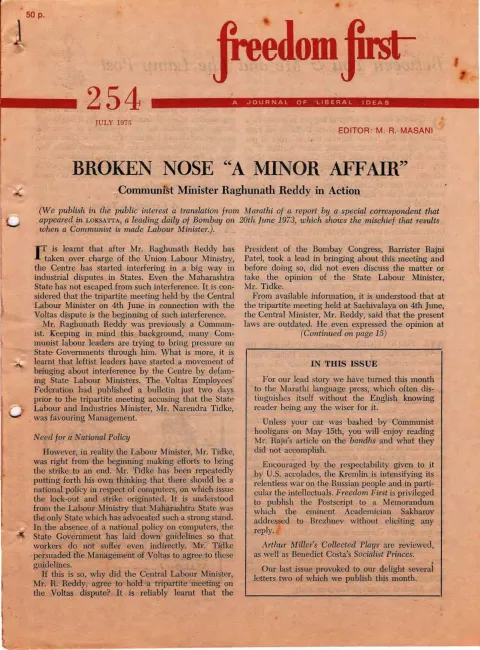
1998 · periodical issue
-
The Economic Thinking of Prof. Milton Friedman
1977 · edited volume
-
Essays by Foreign Economists
1971 · edited volume
-
MYTHS THAT KEEP PEOPLE HUNGRY
1968 · essay
-
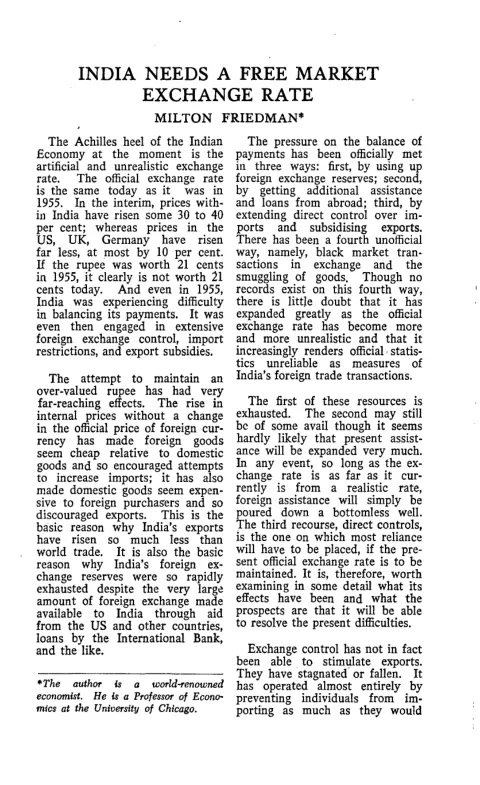
INDIA NEEDS A FREE MARKET EXCHANGE RATE
1963 · pamphlet
-
Central Economic Planning
n.d. · pamphlet
Nothing here matches. Clear the search or remove some filters.
Matches inside Milton Friedman's works and pages
Mentioned in (40)
Primary works (38)
- Centre for Civil Society : A Journey in Time · 2020
- "I really like the biographical book, autobiographical book, of Rose and Milton Friedman. It's Two Lucky People." · Opening reflection framing Shah's own journey.
- Jagdish Bhagwati on Milton Friedman · 2018
- "I heard him actually in the Planning Commission, and he was bold enough to say in the in the Planning Commission that my main advice is that you people should be wound up." · Bhagwati recalling Friedman's address to the Planning Commission
- "Friedman went a little too far, and he said there was not a single instance where a public sector enterprise had ever been successful." · Friedman's blanket claim on public sector failure
Show all 38
- S. Divakara on Nani Palkhivala's Union Budget Commentaries · 2015
- "we used to be very closely in touch with Professor Milton Friedman, because we had the privilege of having him on our platform a couple of times earlier, we have also published his booklets" · Friedman's long-standing association with the Forum of Free Enterprise
- Economic Reforms and the Relevance of Prof. B. R. Shenoy · 2007
- "Marshals testimony from Rakesh Mohan, Parth Shah and Milton Friedman to underline how little official acknowledgement Shenoy still receives even in the post-reform consensus." · Friedman cited as a calibrating external witness to Shenoy's prophetic standing
- "quotes Milton Friedman's tribute" · closing section deploying Friedman's words as part of the vindication
- Corporate Governance · 2004
- "Godrej rejects the narrow shareholder-wealth definition associated with Milton Friedman" · Friedman's shareholder-primacy doctrine is the position Godrej argues against in defining his own governance philosophy
- "Godrej rejects Milton Friedman's narrow shareholder-wealth definition and proposes his own: governance is efficient supervision that protects the long-term interests of the company" · Friedman is invoked as the canonical counter-position to Godrej's stakeholder model
- Economic Prophecies · 2004
- "it recalls Shenoy's forecast, validated by Nobel Laureate Milton Friedman and Peter Bauer, that India's socialist dirigisme would fail" · preface establishes Friedman as one of the two international validators of Shenoy's prophetic stance
- "It opens with Milton Friedman calling Shenoy 'a prophet unhonoured in his own country' and Peter Bauer describing him as 'a hero and a saint.'" · Friedman's epithet supplies the volume's title — 'Economic Prophecies' — and its opening rhetorical move
- The Challenge of Poverty · 2002
- "drawing on the Fraser/FNF 'Economic Freedom of the World' index (originally masterminded by Milton Friedman) and Jagdish Bhagwati's defence of WTO-led liberalisation, Lambsdorff argues that economic freedom correlates with growth, higher life expectancy, less corruption and lower income inequality" · Friedman's intellectual authorship of the EFW index is cited as empirical ballast for the classical-liberal case against poverty
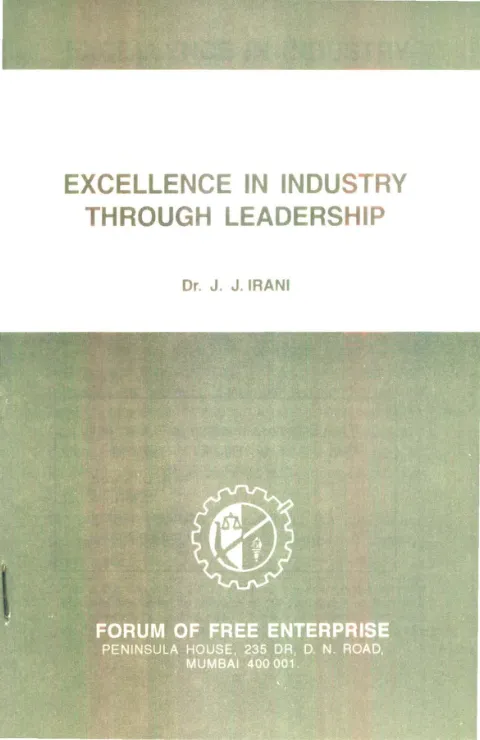
- EXCELLENCE IN INDUSTRY THROUGH LEADERSHIP · 2001
- "Irani uses the occasion to argue against the orthodoxy, most famously expressed by Milton Friedman, that "the business of business is business."" · Friedman is named as the standard-bearer of the doctrine the lecture is built to refute
- "Frames the lecture against the Friedman doctrine that "the business of business is business," arguing that single-minded profit maximisation is short-termist and ultimately self-destructive." · key-points restatement treating the Friedman doctrine as the lecture's central counter-position
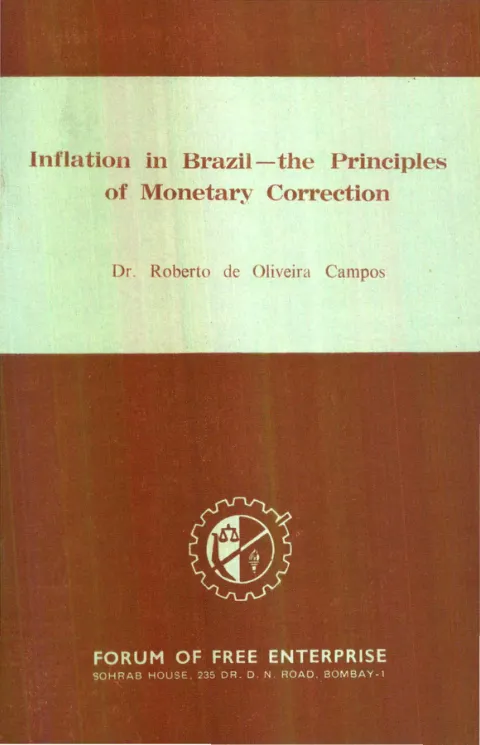
- Inflation in Brazil—the Principles of Monetary Correction · 1975
- "Traces the intellectual ancestry of indexation through William Fleetwood, Joseph Lowe, Jevons, Marshall, Irving Fisher and Keynes, citing Milton Friedman's IEA Occasional Paper 41 as a contemporary reference." · places Friedman as the modern theoretical anchor in Campos's lineage of monetary-correction thinkers
- CENTRAL PLANNING AND ECONOMIC DEVELOPMENT · 1970
- "ranging Milton Friedman alongside himself as a dissenter and pointing to Japan, Hong Kong, Malaysia, Thailand and parts of West Africa as cases of substantial material progress achieved without comprehensive planning" · opening section establishing the intellectual landscape; Friedman is explicitly named as a co-dissenter from the planning orthodoxy Bauer is challenging
- FIFTEEN YEARS OF INDIAN PLANNING · 1966
- "Throughout he draws on Milton Friedman's contrast between centrally planned societies and the free-pricing systems of West Germany, Italy, Japan, Malaya, Singapore, Hong Kong and Formosa" · Friedman's comparative framework is the organising empirical backbone of Shenoy's lecture
Opinion pieces (1)
- B.R. Shenoy : India's First Neoliberal?
- "effusive praise from the likes of Milton Friedman, Friedrich Hayek, Peter Bauer, Henry Hazlitt" · listing Friedman among the Western neoliberal validators of Shenoy's work
Excerpts (1)
- A Rule of Law Society!
- "As Milton Friedman famously remarked, "If you give the Sahara Desert to the government, there will be a shortage of sand in 5 years!"" · Friedman's aphorism anchors the essay's critique of state ownership of natural resources