
Summary
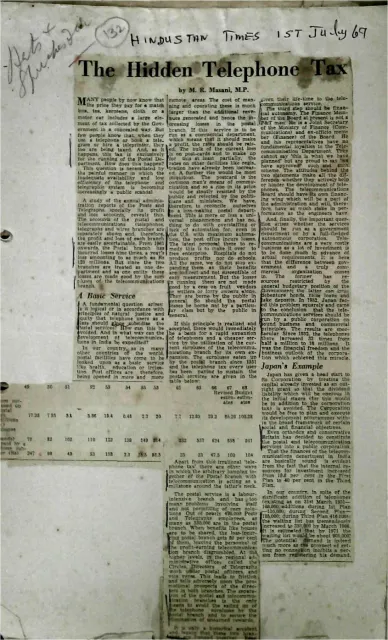
In the rendered page, M. R. Masani argues that telephone users bear a concealed tax through the Post Office’s operation of telecommunications. He begins by comparing this hidden burden with indirect taxation on everyday goods, then uses annual administrative reports to argue that postal and telegraph accounts obscure the actual profitability and losses of individual services. The article presents telephone service as a basic public service whose expansion should be judged by demand, cost, and efficiency rather than by continued bureaucratic administration.
In the rendered page, Masani criticises the Post Office’s monopoly and cross-subsidisation, especially the use of profitable telephone revenues to support loss-making postal operations. He argues that the telecommunications branch should be separated from the postal department and converted into an autonomous public corporation, with commercial accounting and freedom to raise capital. Japan is offered as an example of a more productive institutional arrangement, while the article closes by noting the growth of telephone demand and the inadequacy of existing investment and service provision.
Key points
- Telephone charges contain an indirect or hidden tax arising from the Post Office’s wider financial structure.
- The Post Office’s consolidated accounts conceal the profitability and losses of separate services.
- Profitable telephone operations are presented as subsidising loss-making postal services.
- Masani calls for telecommunications to be separated from the postal department and run as an autonomous public corporation.
- Commercial accounting, independent borrowing, and investment are presented as necessary for expanding telephone service.
- Japan is cited as an example of a telecommunications corporation benefiting from a different capital and institutional framework.
- The article links inadequate telephone capacity to rising demand and insufficient investment.
Metadata and summary are AI-extracted from the source PDF and reviewed for editorial accuracy. The original work is available via the Read PDF tab above (where present); paragraph-level citation inside the PDF is deferred to a future engagement.
People in this work
Related across the archive
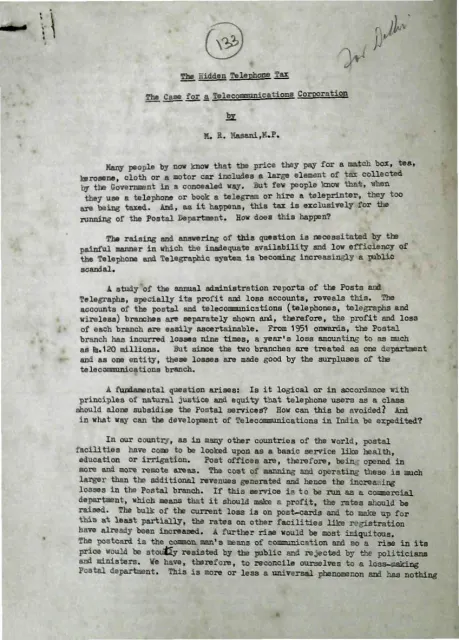 Primary workThe Hidden Telephone Tax
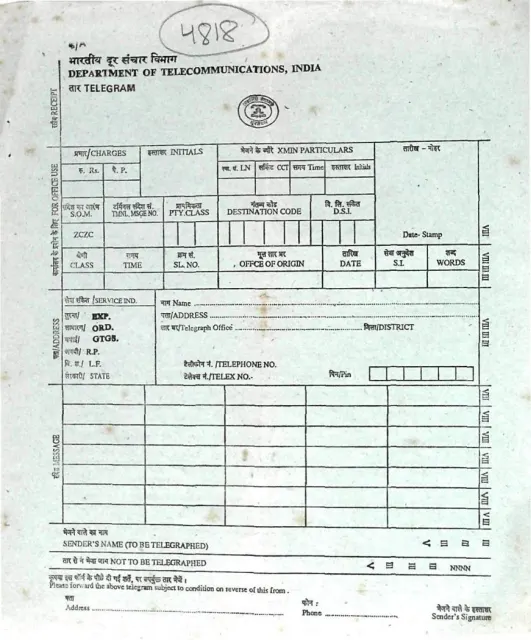 Primary workDepartment of Telecommunications
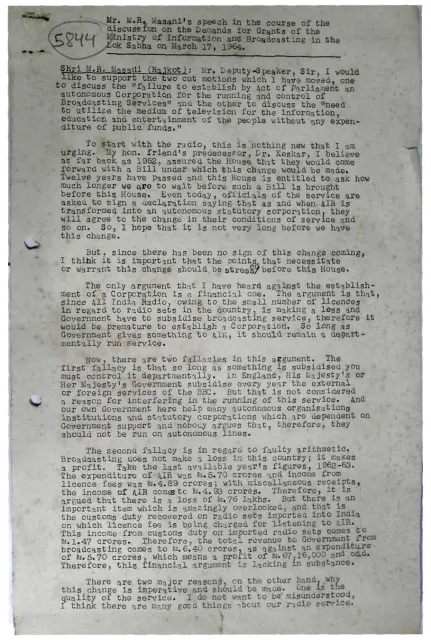 Primary workMr. M.R. Masani's speech in the course of the discussion on the Demands for Grants of the Ministry of Information and Broadcasting in the Lok Sabha on March 17, 1964.
 ExcerptEconomic Reforms In India: Where Are We And Where Do We Go?
 ExcerptThe Budget Versus The People