Summary
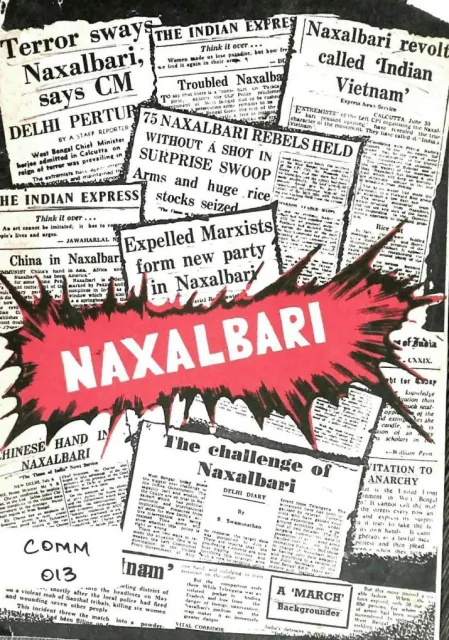
N. Dandekar and D. N. Patodia present this report as a Swatantra Party investigation into the 1967 Naxalbari disturbances in northern West Bengal. The introduction frames Naxalbari not as a spontaneous land-reform movement but as a strategically chosen base for communist insurgency, allegedly aided by Maoist China and facilitated by the region’s proximity to Nepal, Pakistan, and East Pakistan. The authors describe their report as a non-exhaustive account intended for the general reader and explicitly aimed at exposing what they call communist “double-talk” and coercive methods.
The report describes the geography and social structure of the area, including its tea estates, tribal population, jotedars, and sharecroppers. It argues that the agitation was largely unrelated to unresolved land-reform grievances, claiming instead that Communist organisers planned a three-stage campaign of propaganda, forced land occupation, intimidation, looting, and violence from March to July 1967. Case studies involving a cultivator and a tea estate are used to illustrate alleged coercion, while the discussion of Chinese involvement concedes that direct evidence was limited but points to Chinese literature, flags, and red books as signs of encouragement. The report names four alleged ring leaders and criticises the West Bengal Government and police for inaction, political complicity, and failure to protect citizens.
In its later pages, the report broadens the argument from Naxalbari to industrial unrest and alleged “gherao” tactics across West Bengal. It presents examples of intimidation, robbery, assault, and disruption, and links these developments to a wider Communist strategy of creating insecurity and converting trade unions and poorer social groups to communist politics. The authors conclude that the first round of agitation had created a climate of lawlessness, damaged cultivation and industry, and left the state vulnerable to renewed unrest, especially around the Puja season.
Key points
- The report interprets Naxalbari as an organised communist insurgency rather than a movement principally arising from land-reform grievances.
- It stresses the strategic importance of Naxalbari’s location near Nepal, Pakistan, East Pakistan, and China-linked routes.
- The account describes the agitation as unfolding through propaganda, forced land occupations, looting, threats, arson, and violence between March and July 1967.
- The authors use cases involving cultivators and tea-estate workers to illustrate alleged Communist coercion and police inaction.
- Chinese involvement is presented as possible and indirect, with limited direct evidence but visible Chinese propaganda materials.
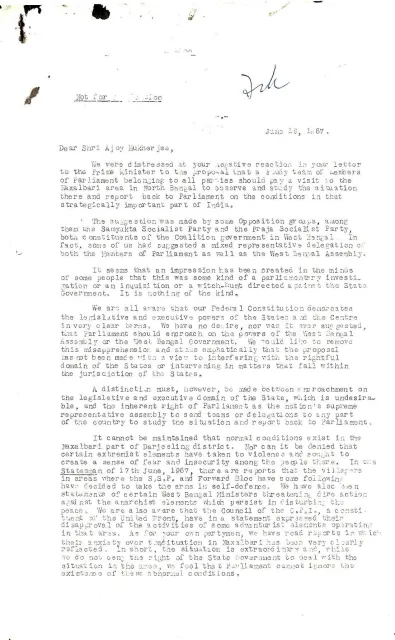
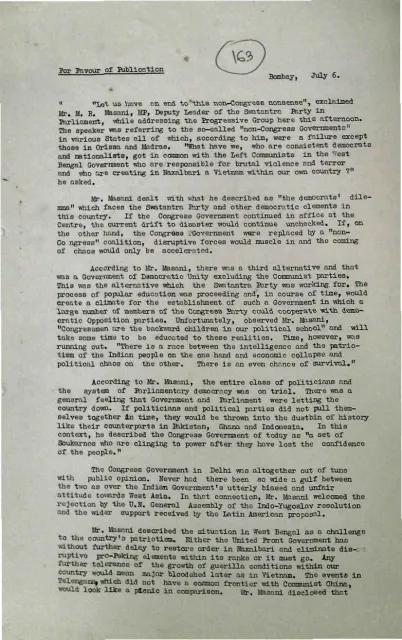
- The report criticises the West Bengal Government for tolerating disorder and failing to prosecute alleged ring leaders.
- The later discussion connects Naxalbari to industrial gheraos, urban insecurity, economic damage, and a broader Communist political strategy.
Metadata and summary are AI-extracted from the source PDF and reviewed for editorial accuracy. The original work is available via the Read PDF tab above (where present); paragraph-level citation inside the PDF is deferred to a future engagement.