
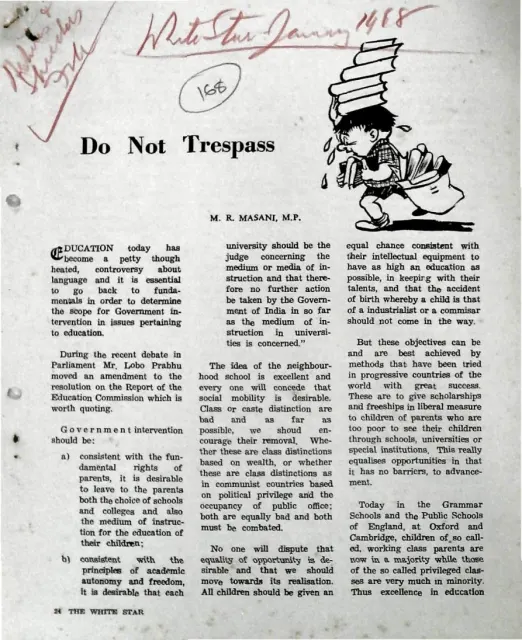
Summary
In the rendered pages, M. R. Masani argues that government intervention in education must respect parents’ fundamental rights, academic freedom, and university autonomy. He rejects the Education Commission’s proposed neighbourhood-school system as compulsory and therefore inconsistent with meaningful equality of opportunity: families should be able to choose schools, and educational institutions should be free to determine their teaching methods and medium of instruction.
Key points
- Government intervention in education should remain consistent with parents’ fundamental rights.
- Parents should retain the choice of schools and the medium of instruction for their children.
- Academic autonomy and freedom should protect universities’ decisions about teaching and institutional affairs.
- The compulsory neighbourhood-school proposal is presented as incompatible with freedom of choice and genuine equality.
- Article 30 of the Constitution is invoked to defend minorities’ rights to establish and administer educational institutions.
- Parliament and the Union Government are criticized for interfering in university education and the medium of instruction.
- Masani objects to political patronage, politicized textbook nationalisation, and the appointment of politicians to educational bodies.
Metadata and summary are AI-extracted from the source PDF and reviewed for editorial accuracy. The original work is available via the Read PDF tab above (where present); paragraph-level citation inside the PDF is deferred to a future engagement.
People in this work
Related across the archive
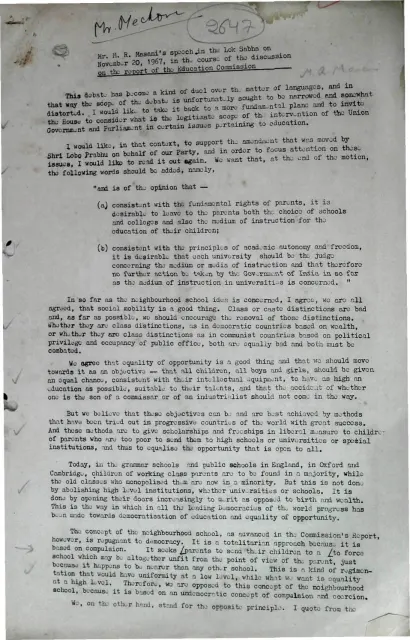 Primary workMr. M. R. Masani's speech in the Lok Sabha on November 20, 1967, in the course of the discussion on the report of the Education Commission
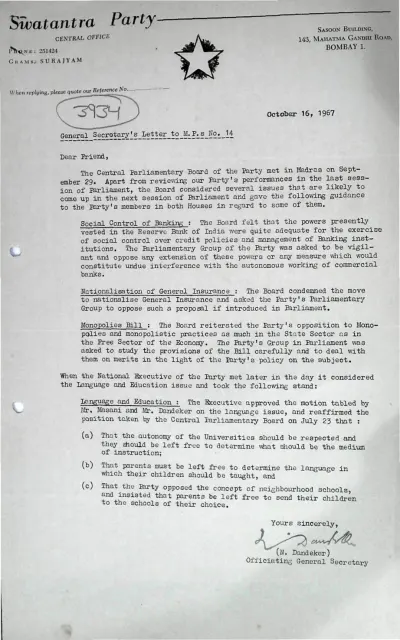 Primary workGeneral Secretary's Letter to M.P.s No. 14
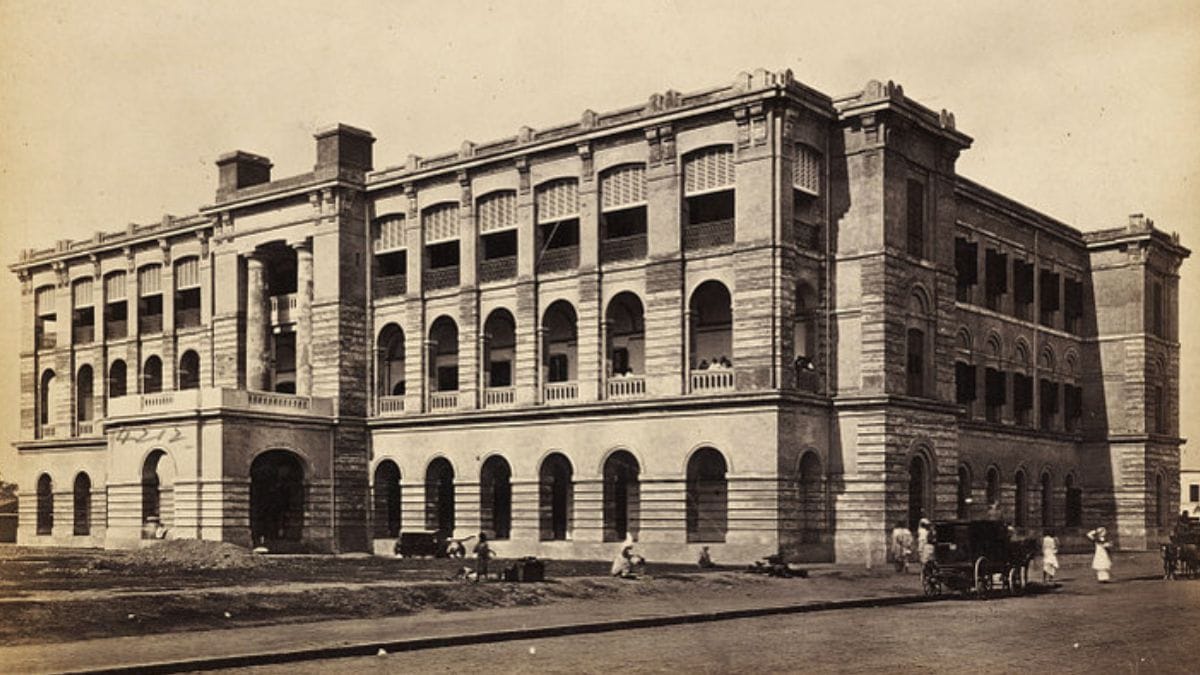 ThePrintGovt should respect the autonomy of higher education institutes: GD Parikh
 ExcerptDemocracy in India