essay · position paper
NATIONALISATION
The third suggested remedy
1 pages
Summary
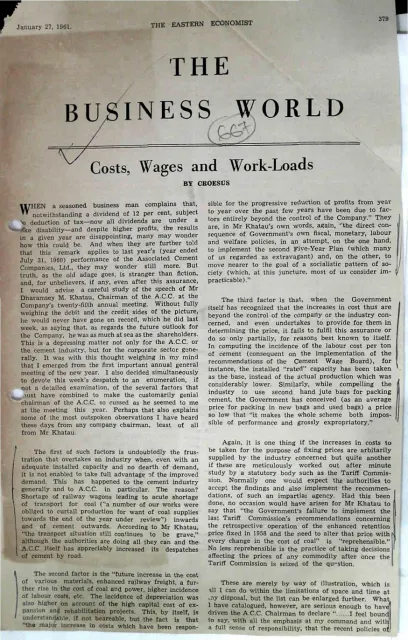
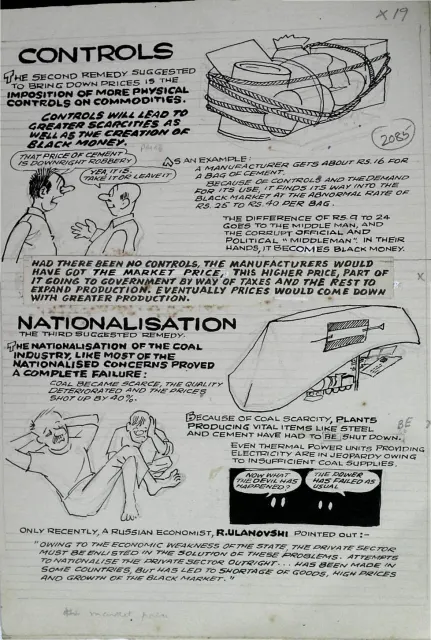
The page presents “controls” and nationalisation as proposed remedies for high prices and shortages, but argues that both measures produce damaging unintended effects. It claims that commodity controls create scarcity and widen the gap between official and black-market prices, using cement as an example: a manufacturer receiving about Rs. 16 per bag is said to see cement sold for Rs. 25 to Rs. 40, with the difference accruing to corrupt officials and political middlemen as black money. The page contrasts this with an uncontrolled market, in which higher prices would generate tax revenue and encourage expanded production, eventually bringing prices down.
Key points
- Commodity controls are presented as a cause of scarcity and black-market activity.
- The cement example attributes the spread between official and abnormal market prices to officials and intermediaries.
- Without controls, higher prices are said to raise tax revenue and encourage increased production.
- The page describes coal nationalisation as a complete failure.
- Coal scarcity is linked to deteriorating quality, a reported 40 percent price increase, and shutdowns in steel and cement production.
- Insufficient coal supplies are said to place thermal power generation and electricity supplies in jeopardy.
- The page invokes a Russian economist’s argument that the private sector must help solve problems caused by the state’s economic weakness.
Metadata and summary are AI-extracted from the source PDF and reviewed for editorial accuracy. The original work is available via the Read PDF tab above (where present); paragraph-level citation inside the PDF is deferred to a future engagement.