
essay
THE PUBLIC SECTOR:- CONSOLIDATION OF -
1 pages

Summary
The visible page argues that government-owned businesses, industries, and utilities should be consolidated before receiving further public investment, with a target of at least 10% profitability. It cites more than Rs. 7,000 crores invested in state electricity boards, none of which is operating at a profit, and attributes transmission losses of up to 27% to inefficient management. Referring to the Sixth Finance Commission, it argues that reducing losses to 15% could increase state revenues by Rs. 55 crores and release power for industry and agriculture.
The proposed policy measures include selling 49% of public-sector shares to the public while retaining a controlling interest with the government, listing the shares on the stock exchange, making units autonomous, and selling part of the employee stake to workers. Public-sector units are also urged to compete with private or cooperative enterprises, borrowing from financial institutions rather than the government. The page’s subsequent section on planning and resources calls for planning within available genuine resources, ending central and state deficit budgets, and stabilising the rupee so that small investments can outperform larger investments in an inflationary economy. Only this visible page—printed page 22—was read; the surrounding document is unavailable.
Key points
- Public-sector investments should be consolidated before further funds are committed.
- The page sets a minimum target of 10% profit for consolidated public-sector investments.
- State electricity boards are presented as a major example of publicly funded but unprofitable enterprises.
- Transmission losses of up to 27% are attributed to inefficient management.
- The proposed reform combines partial public share sales with continued government control.
- Public-sector units should become autonomous, involve employees as shareholders, and compete with private or cooperative enterprises.
- Planning should remain within available resources, while central and state deficit budgets should end.
- A stable rupee and smaller investments are presented as preferable to large investments in an inflationary economy.
Metadata and summary are AI-extracted from the source PDF and reviewed for editorial accuracy. The original work is available via the Read PDF tab above (where present); paragraph-level citation inside the PDF is deferred to a future engagement.
Related across the archive
 Primary workTHE AMOUNT INVESTED IN PUBLIC SECTOR UNDERTAKINGS HAVE NOT PROVED TO BE PRODUCTIVE BUT HAS RESULTED IN AGGRAVATING INFLATION
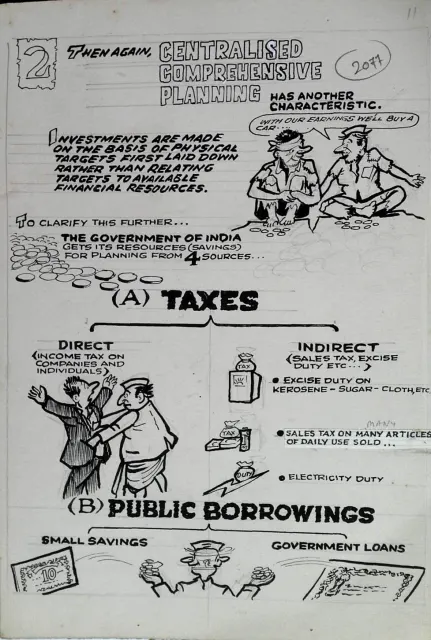 Primary workWhen Again, CENTRALISED COMPREHENSIVE PLANNING HAS ANOTHER CHARACTERSTIC.
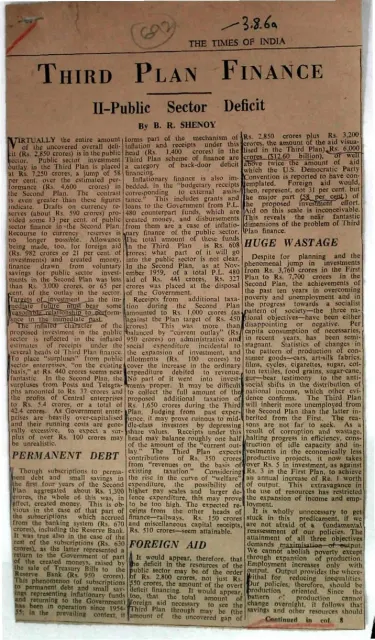 Primary workTHIRD PLAN FINANCE
 ExcerptSocialism or State Capitalism
 ExcerptEconomic Reforms In India: Where Are We And Where Do We Go?