press note
For Favour of Publication
SWATANTRA PARTY Bombay Region Tel.No. 253085 · BOMBAY-1. · 1963
2 pages
Summary
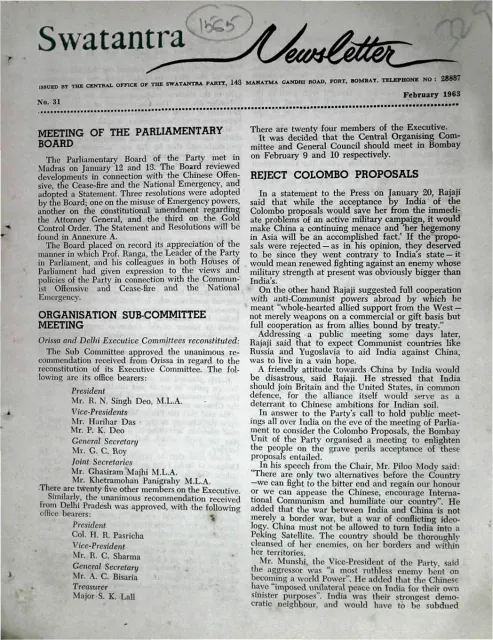
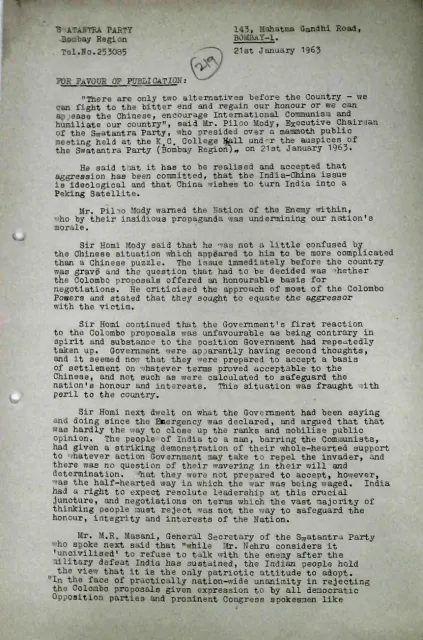
This two-page Swatantra Party press note, issued from the Bombay Region on 21 January 1963, reports speeches at a public meeting at K. C. College Hall concerning India’s response to Chinese aggression and the Colombo proposals. Piloo Mody presents the conflict as ideological, warning that China seeks to turn India into a “Peking Satellite” and that enemy propaganda is undermining national morale. Sir Homi Mody argues that the Government’s apparent willingness to negotiate conflicts with its earlier position and risks compromising India’s honour and interests.
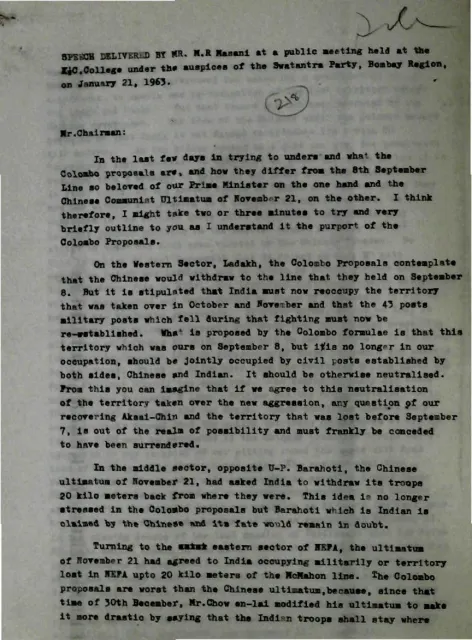
M. R. Masani makes the most detailed case against accepting the Colombo proposals as a basis for negotiations after India’s military defeat. He invokes Parliament’s earlier unanimous resolution, criticises what he describes as a return to appeasement, and cites Nikita Khrushchev’s 1959 statement that conferences reflect the established balance of forces produced by victory or capitulation. The note closes by recording the participation of K. M. Munshi and Madhu Mehta, with Mehta proposing a vote of thanks. The document is a press note rather than a formally titled or authored essay.
Key points
- Piloo Mody frames the India-China conflict as ideological and accuses China of seeking to make India a satellite.
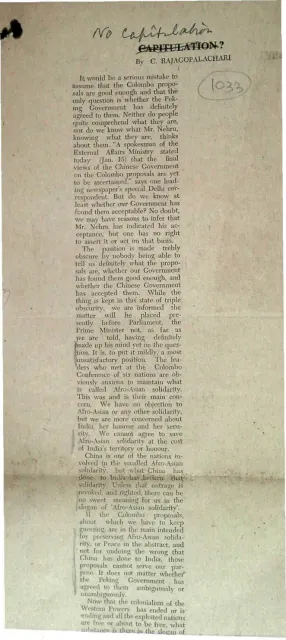
- The speakers oppose accepting the Colombo proposals as a basis for negotiations under the circumstances described.
- Sir Homi Mody argues that the Government’s reported change of position threatens India’s honour, integrity, and interests.
- M. R. Masani links negotiations after military defeat to a loss of national resolve and a return to appeasement.
- Masani cites Parliament’s November 14 resolution and the Government’s earlier refusal to negotiate until Chinese withdrawal.
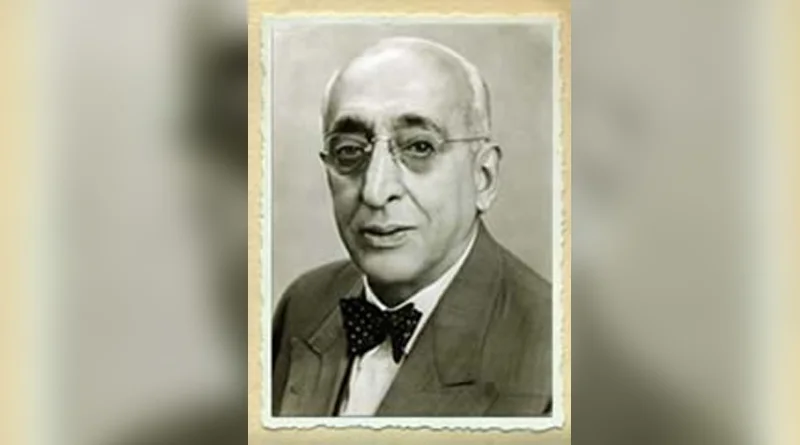
- The meeting is presented as having broad opposition support, including speakers from the Swatantra Party and named Congress figures.
Metadata and summary are AI-extracted from the source PDF and reviewed for editorial accuracy. The original work is available via the Read PDF tab above (where present); paragraph-level citation inside the PDF is deferred to a future engagement.