essay
Role of Swatantra
4 pages
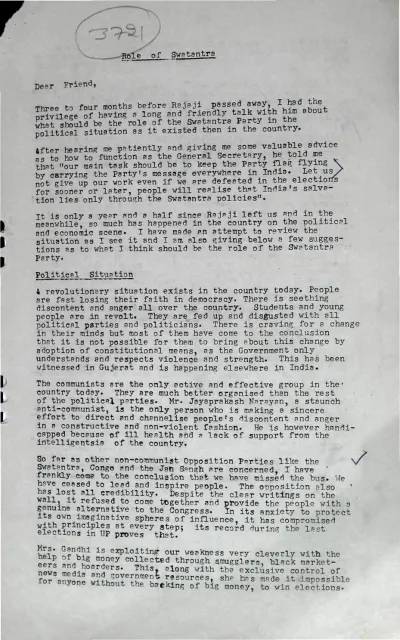
Summary
In this four-page document, Madhu Mehta reflects on a conversation with C. Rajagopalachari (Rajaji) shortly before Rajaji’s death and asks what role the Swatantra Party should play in India’s deteriorating political situation. Mehta describes widespread public anger, declining faith in democracy, student unrest, and the perceived organisational strength of the communists. He criticises the Congress for using money, influence, blackmail, and control of government resources, while also faulting the non-communist opposition for division, loss of credibility, and failure to offer a common alternative.
Key points
- Mehta recalls Rajaji’s advice that Swatantra must keep its flag flying and continue communicating its message across India, even after electoral defeats.
- The document portrays India as experiencing revolutionary discontent, with students and young people losing faith in existing parties and democratic methods.
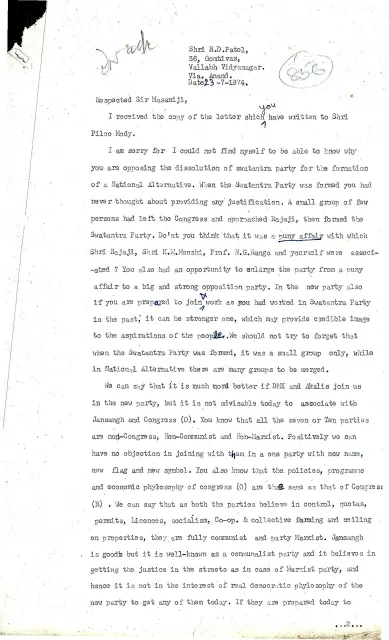
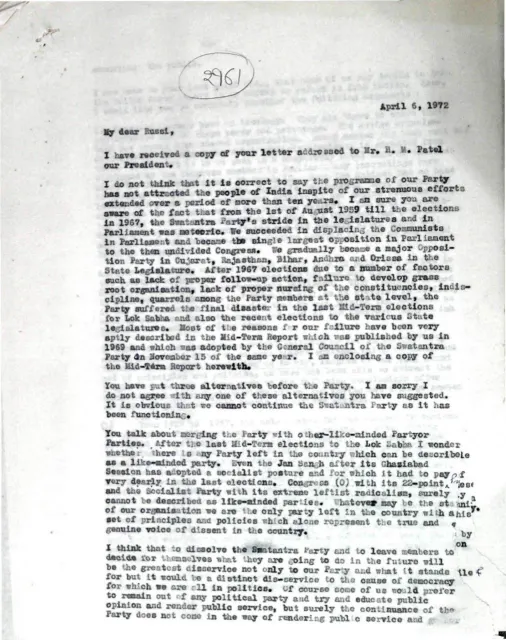
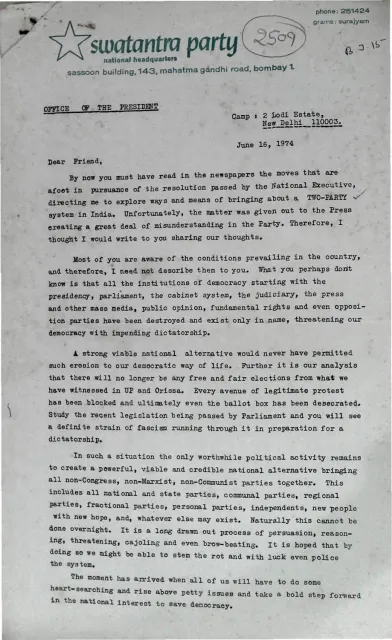
- It argues that the opposition has missed opportunities to unite and has been weakened by internal rivalry, electoral bargaining, and compromise.
- Mehta rejects an immediate merger of existing opposition parties, describing it as a potentially superficial exercise that would put old wine in new bottles.
- He proposes dissolving the existing parties and forming a new organisation with a new programme and leadership.
- The principal practical recommendation is to suspend election-oriented politics for several years and turn Swatantra into a service organisation dedicated to defending democracy and fighting corruption and black marketing.
- The document presents Swatantra’s principles as a future alternative to both Marxism and Congress-style politics, invoking Gandhi and Rajaji as models of individual initiative, sacrifice, and national service.
Metadata and summary are AI-extracted from the source PDF and reviewed for editorial accuracy. The original work is available via the Read PDF tab above (where present); paragraph-level citation inside the PDF is deferred to a future engagement.