pamphlet
Am I Wrong?
5 pages
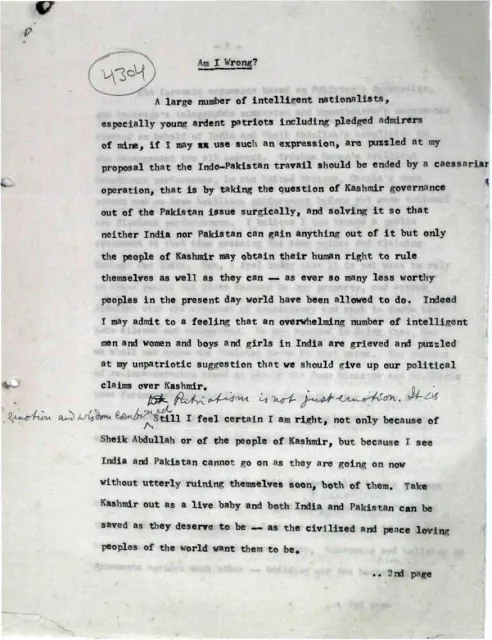
Summary
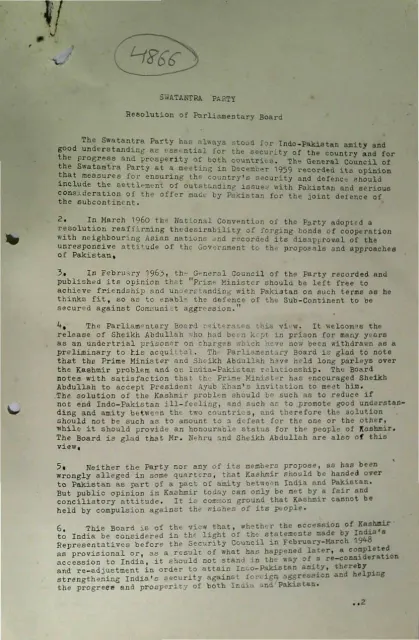
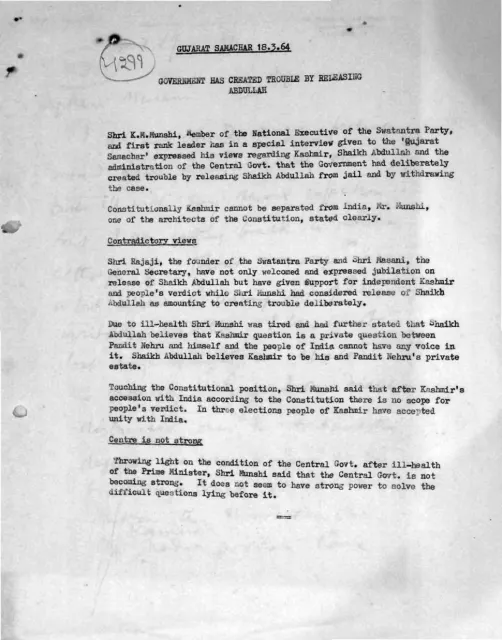
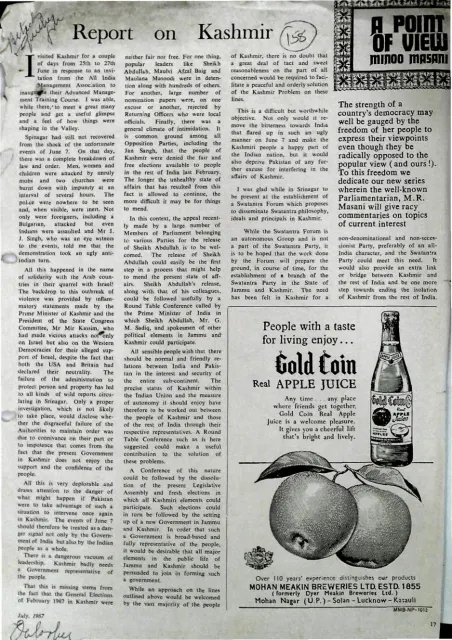
In the rendered five pages, this pamphlet argues that India should end the Indo-Pakistan quarrel by removing Kashmir from the bilateral dispute and allowing the people of Kashmir to determine their political future through a broad democratic process. It acknowledges the legal and diplomatic arguments supporting India’s claim—including Pakistan’s aggression, the Maharaja’s accession, Mountbatten’s acceptance, and Sheikh Abdullah’s role—but contends that maintaining a property-like claim over Kashmir will not resolve the underlying conflict. The text instead proposes letting Sheikh Abdullah contest a free election against opposing Kashmiri leaders and accepting the people’s verdict.
In the rendered pages, the argument is also framed as an economic and strategic case against continued hostility. The pamphlet warns that anti-Pakistan nationalism, an arms race involving Pakistan and China, heavy taxation, and dependence on foreign borrowing will impoverish India and Pakistan alike. It presents Indo-Pakistan reconciliation as necessary for peace, development, and resistance to communism in the subcontinent and Asia, and closes by urging calm thought, an end to intimidation, and a victory for wisdom over fanaticism and prejudice.
Key points
- The pamphlet proposes ending the Indo-Pakistan dispute through a political settlement of Kashmir.
- It distinguishes between the legal case for India’s claim and the practical wisdom of continuing to assert Kashmir as Indian property.
- It supports a democratic election in Kashmir in which Sheikh Abdullah can seek a popular mandate.
- It argues that hostility between India and Pakistan is economically ruinous because it drives taxation, borrowing, and arms expenditure.
- It warns that a two-front confrontation involving Pakistan and China would be strategically and financially unsustainable.
- It presents reconciliation as a precondition for peace, development, and a stronger Asian response to communism.
- It criticizes threats and intimidation directed at Sheikh Abdullah and appeals for a less passionate public debate.
Metadata and summary are AI-extracted from the source PDF and reviewed for editorial accuracy. The original work is available via the Read PDF tab above (where present); paragraph-level citation inside the PDF is deferred to a future engagement.