Summary
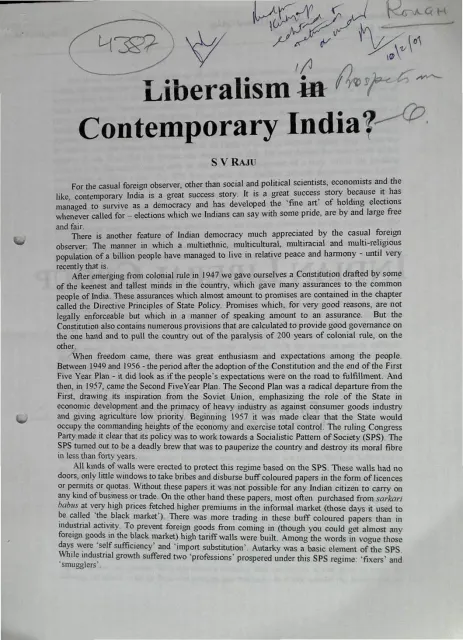
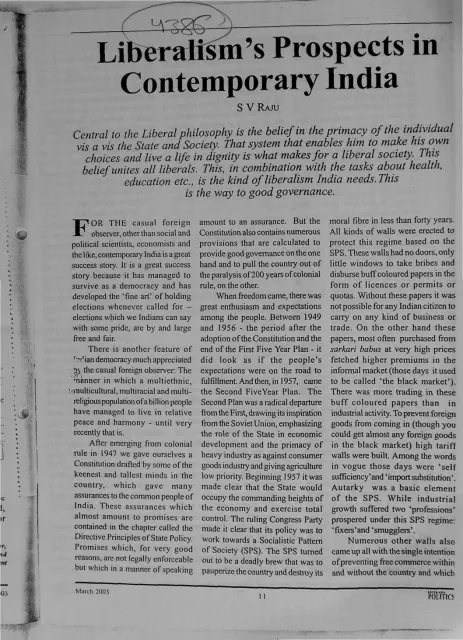
In the rendered pages, S. V. Raju argues that India’s post-independence political and economic difficulties stem largely from the Socialist Pattern of Society (SPS), which expanded state control through planning, import substitution, licensing, zonal restrictions, and bureaucratic discretion. In the rendered pages, he connects this regime to corruption, weak agricultural performance, black markets, politicised administration, declining legislative credibility, and the displacement of merit by money and criminal influence in elections. He also notes that the 1989 economic reforms had produced higher growth but, in the rendered pages, had become constrained by populism and political survival.
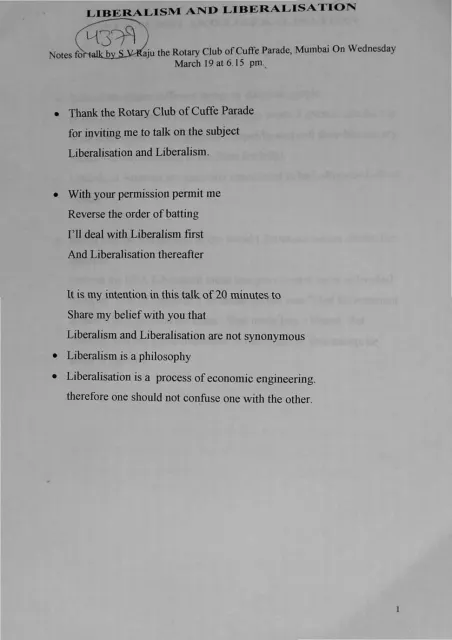
In the rendered pages, Raju presents liberalism as a philosophy centred on individual choice, responsibility, tolerance, social justice, equality of opportunity, and a state limited in some economic functions but still responsible for basic services such as health, education, water, and infrastructure. He argues that India does not primarily need another conventional political party: it needs a broad liberal movement capable of restoring character and credibility to public institutions. The Swatantra Party and the Indian Liberal Group are presented as important precedents, while the article closes by calling on liberals to organise as effectively as they argue.
Metadata and summary are AI-extracted from the source PDF and reviewed for editorial accuracy. The original work is available via the Read PDF tab above (where present); paragraph-level citation inside the PDF is deferred to a future engagement.