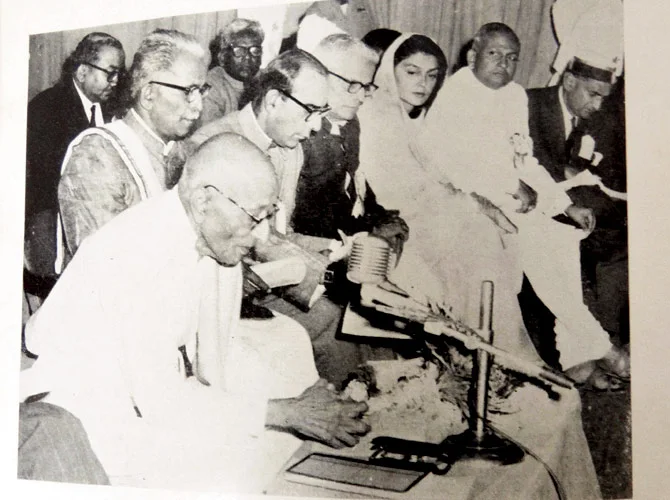
speech
RAJAJI
The Bhishma of Indian Politics
By H. M. Patel
Published by the Rajaji Foundation and Printed by it at the States’ People Press, Bombay-1. · Bombay-1 · 1978
6 pages
Summary
In this speech, H. M. Patel presents C. Rajagopalachari (Rajaji) as a morally grounded statesman whose influence rested on intellectual force, integrity, and public service rather than a mass political base. Patel highlights Rajaji’s closeness to Mahatma Gandhi, his work for temple entry, the removal of untouchability, khadi, village industries, and prohibition, and his willingness to endure opposition when conscience required it. Rajaji’s proposal in 1942 to accept partition in principle is described as an unpopular but purposeful attempt to secure the immediate transfer of power to Indian hands.
Key points
- Patel characterises Rajaji as a dominant intellectual and moral presence in Indian public life despite lacking a conventional mass political following.
- Rajaji is portrayed as a close associate and conscientious disciple of Mahatma Gandhi who also retained the independence to dissent from him.
- The speech emphasises Rajaji’s commitment to moral values, national interest, and political conduct free from personal ambition or lobbying.
- As administrator, Rajaji distinguished political decision-making from civil-service implementation and defended civil servants against political interference.
- Rajaji’s liberal philosophy is described as combining Upanishadic wisdom with British liberalism and prioritising individual dignity, freedom, and self-realisation.
- The address links Rajaji’s opposition to controls and licences with a broader critique of state expansion, corruption, oligarchy, and the erosion of individual liberty.
- Patel also celebrates Rajaji’s writing in Tamil and English, especially his literary retellings of the Ramayana and Mahabharata and his accessible public style.
Metadata and summary are AI-extracted from the source PDF and reviewed for editorial accuracy. The original work is available via the Read PDF tab above (where present); paragraph-level citation inside the PDF is deferred to a future engagement.