
speech · parliamentary
Mr. M. R. Masani's speech in the Lok Sabha on December 4, 1963
By Minoo Masani
1963
4 pages
Summary
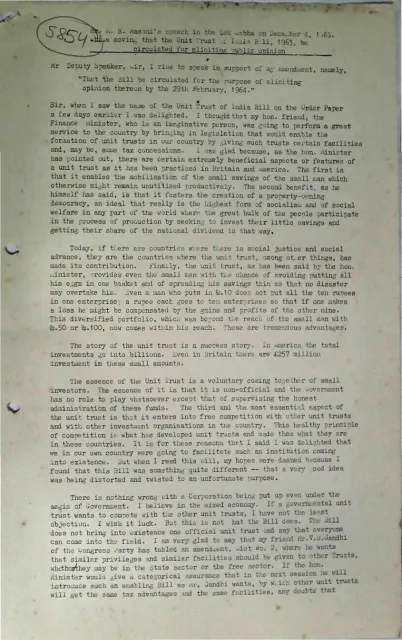
In this four-page Lok Sabha speech, M. R. Masani supports the motion to circulate the Unit Trust of India Bill, 1963, for public opinion but argues that the Bill seriously distorts the successful unit-trust model used in Britain and the United States. He explains that unit trusts can mobilise small savings, broaden property ownership, diversify risk for small investors, and encourage productive investment. The proposed legislation, however, would create what he calls a state capitalist monopoly by placing the corporation under effective government control and denying comparable tax advantages and facilities to other trusts.
Masani warns that bureaucratic management would lack the entrepreneurial judgment required to invest profitably, while political control could produce patronage, corruption, arbitrary investment decisions, and pressure on companies seeking credit. He also argues that tax concessions could divert funds from more productive private enterprises toward a less productive state-sponsored institution. He concludes by urging a slower and more careful legislative process, proposing that the measure be referred to a Select Committee rather than rushed through Parliament.
Key points
- Masani endorses the principle of unit trusts as a means of mobilising small savings and widening participation in ownership.
- He cites the diversification of small investors’ holdings as a major protection against losses.
- He argues that the Unit Trust of India Bill would create an official state capitalist monopoly rather than an open and competitive unit-trust sector.
- He questions whether government nominees and bureaucrats possess the entrepreneurial judgment needed to invest profitably.
- He warns that political influence could lead to patronage, corruption, arbitrary lending decisions, and a coercive use of credit.
- He contends that tax concessions may divert capital from more productive private enterprises.
- He calls for public discussion and Select Committee scrutiny before the Bill is enacted.
Metadata and summary are AI-extracted from the source PDF and reviewed for editorial accuracy. The original work is available via the Read PDF tab above (where present); paragraph-level citation inside the PDF is deferred to a future engagement.
People in this work
Related across the archive
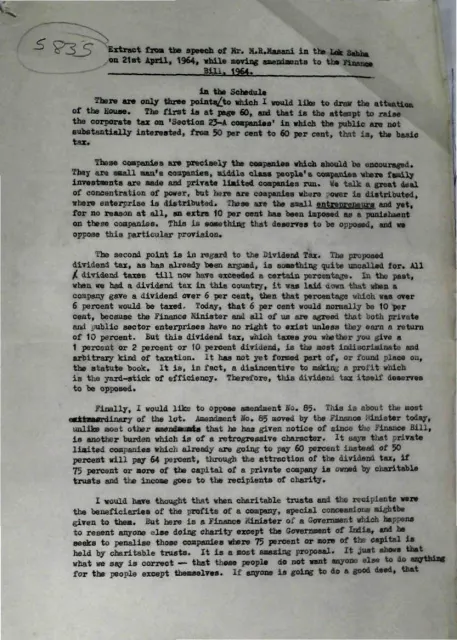 Primary workExtract from the speech of Mr. M.R.Masani in the Lok Sabha on 21st April, 1964, while moving amendments to the Finance Bill, 1964.
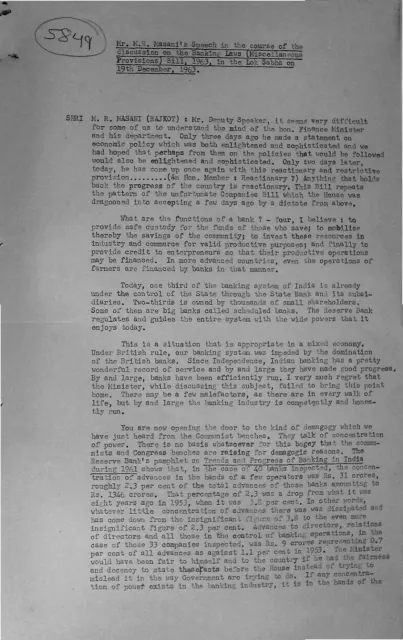 Primary workMr. M.R. Masani's Speech in the course of the discussion on the Banking Laws (Miscellaneous Provisions) Bill, 1963, in the Lok Sabha on 19th December, 1963.
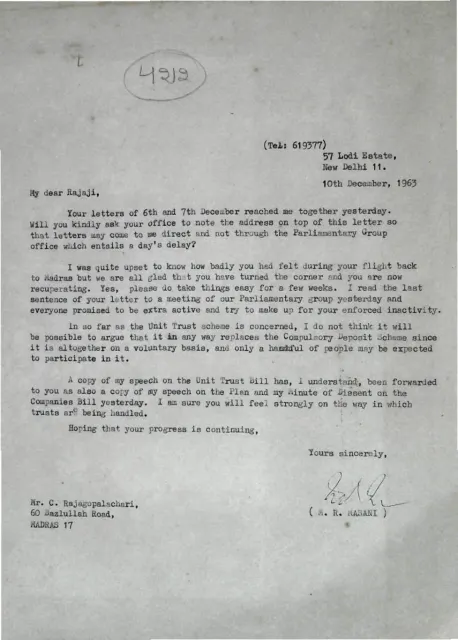 Primary workLetter to C Rajagopalachari
 ExcerptThe Budget Versus The People
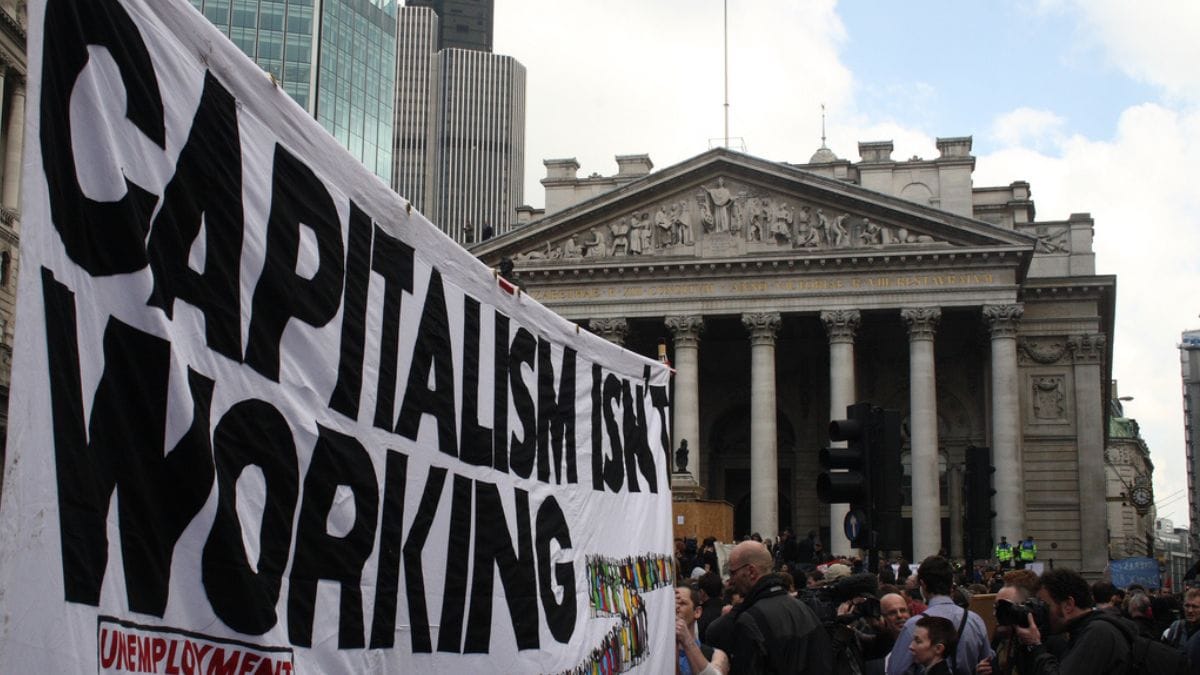 ThePrintCapitalism isn’t responsible for mass unemployment. Look at Japan, Singapore: BS Iyer