
speech
Lecture Notes.
1960
6 pages
Summary
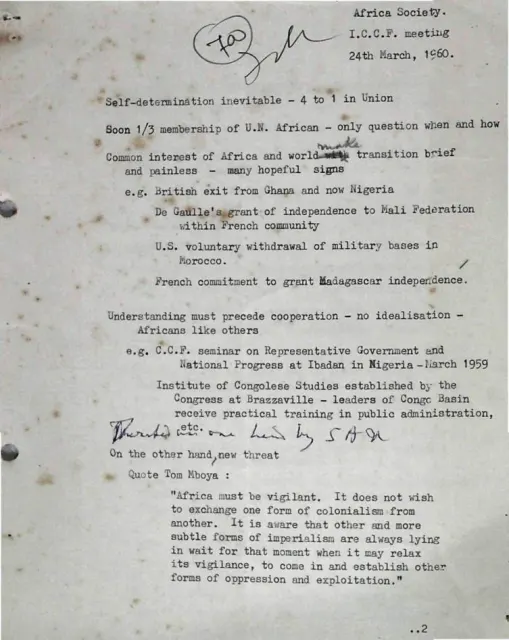
These six pages comprise English-language typescript and handwritten notes from several political meetings and lectures in 1960. The Africa Society/ I.C.C.F. meeting notes dated 24 March 1960 argue that African self-determination is inevitable and describe decolonisation as potentially peaceful, citing British withdrawal from Ghana and Nigeria, France’s commitments in West Africa and Madagascar, and the United States’ withdrawal of military bases in Morocco. The notes stress that cooperation requires understanding rather than idealisation, while warning that Soviet, Chinese, and other forms of imperial influence could replace European colonialism. They advocate multiracial democracy, federal arrangements, vigilance against coercion, and resistance to communist propaganda and “united front” tactics.
The pages headed “Lecture Notes” turn to Indian political organisation, especially Bihar and a proposed party associated with C. R. leadership. They emphasise Bihar’s organisational capacity, impatience with existing politics, opposition to statism and a controlled economy, and the need to build a mass base among peasants and middle classes. The notes also record a proposed Patna convention, questions about forming a united front, opposition to cooperation with the Communist Party of India, and a preference for new political faces and voices. The final handwritten pages are difficult to read and appear to contain further meeting notes on democracy, external and internal politics, and organisational strategy.
Key points
- African self-determination is presented as inevitable, with the remaining issue being when and how it will occur.
- The notes cite recent decolonisation and military-policy developments as evidence that African independence can proceed through peaceful transition.
- They distinguish practical cooperation with Africans from idealisation, while warning against Soviet, Chinese, and other imperial influence.
- Tom Mboya’s warning is used to frame the danger of replacing European colonialism with new forms of imperialism and exploitation.
- The notes propose multiracial democracy and federation as legitimate political goals for Africa.
- The Indian lecture notes focus on organisation rather than policy, especially the political potential of Bihar.
- The proposed party is described as opposing statism and a controlled economy and seeking support among peasants and middle classes.
- The Patna notes reject an immediate united front with the Communist Party of India and call for political education and organisation.
Metadata and summary are AI-extracted from the source PDF and reviewed for editorial accuracy. The original work is available via the Read PDF tab above (where present); paragraph-level citation inside the PDF is deferred to a future engagement.
Related across the archive
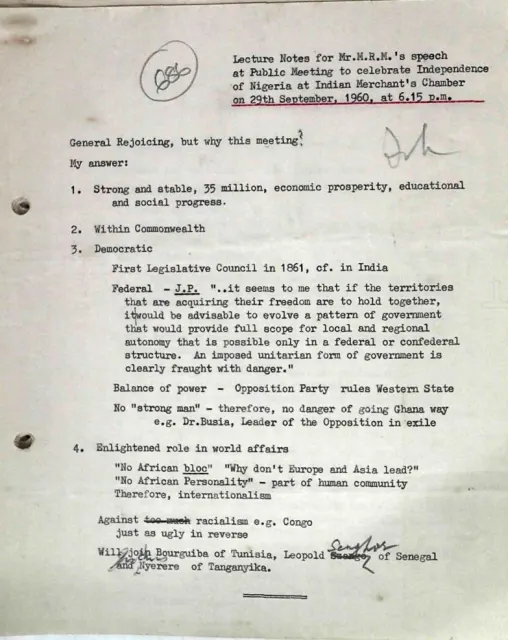 Primary workLecture Notes for Mr.M.R.M.'s speech at Public Meeting to celebrate Independence of Nigeria at Indian Merchant's Chamber on 29th September, 1960, at 6.15 p.m.
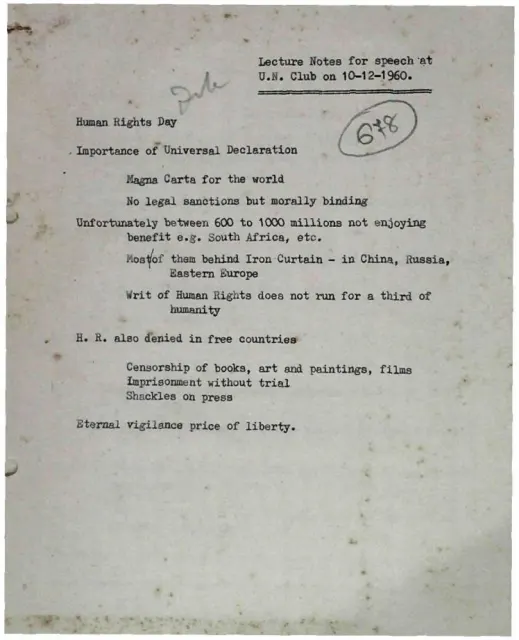 Primary workLecture Notes for speech at U.N. Club on 10-12-1960
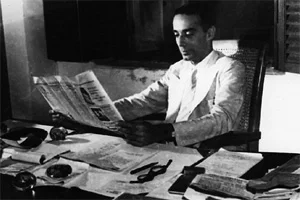 OpinionMinoo Masani : From Socialism to Liberal Swatantra Party
 ExcerptNational Priorities for 1970