interview
IL Explainer - Ep 6 | Why Are Fundamental Rights Not Amendable?
2022
Summary
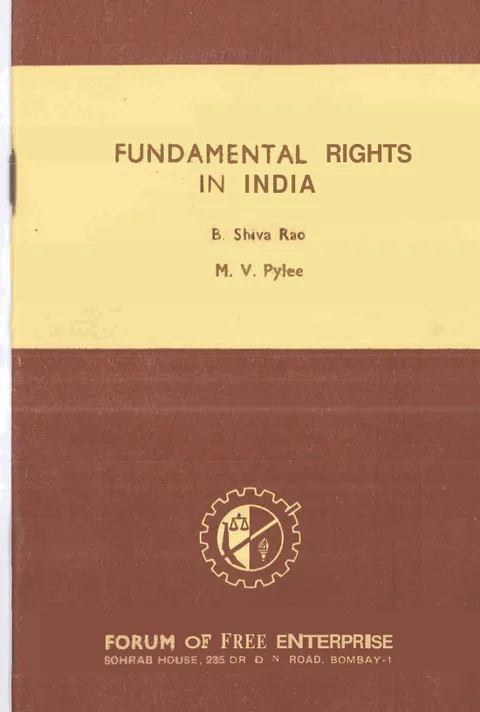
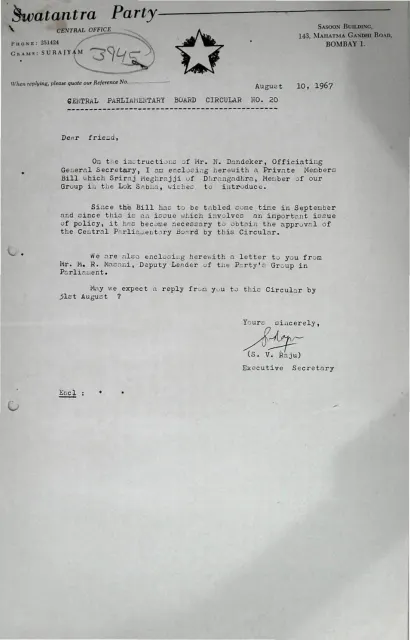
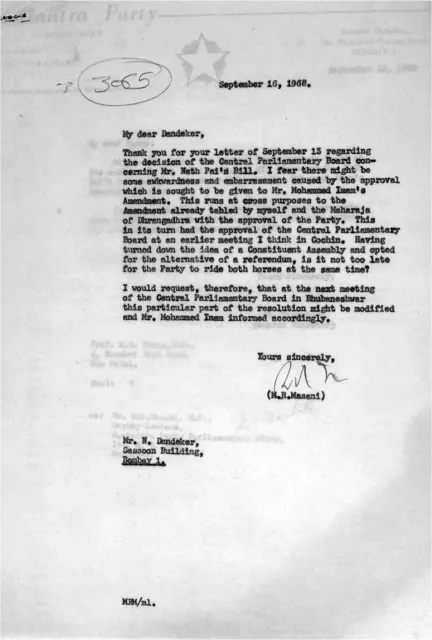
This IL Explainer episode reconstructs the 1967 constitutional debate over whether Parliament can amend the Fundamental Rights in Part III of the Indian Constitution. Following the Supreme Court's Golak Nath v. State of Punjab judgement — in which Justice Hidayatullah held that Parliament could not abridge or take away fundamental rights — MP Nath Pai introduced a bill to vest that very amending power in Parliament, arguing that an elected body of representatives should hold it. Swatantra Party MP Sriraj Meghrajji countered with an amending bill of his own, proposing that any change to Part III be put to a referendum.
The narrator unpacks Meghrajji's reasoning: India's framers deliberately went beyond a merely political constitution to entrench the 'fundamental constitution of society,' insulating natural rights from both the state and the legislature. Citing Ambedkar to show that ordinary amendments require only a two-thirds majority while Part III was deliberately walled off, Meghrajji argued Parliament has no mandate from voters to assume constituent-assembly powers over the entire gamut of fundamental rights. The episode frames his referendum proposal as the liberal safeguard against legislative encroachment on citizens' supreme rights.
Key points
- Golak Nath v. State of Punjab (1967) held that Parliament cannot abridge or take away fundamental rights guaranteed in Part III.
- Nath Pai's April 1967 bill sought to vest in Parliament the power to amend fundamental rights, on the ground that Parliament is the elected representative body.
- Sriraj Meghrajji (Swatantra Party MP) tabled an amending bill in September 1967 requiring any change to fundamental rights to be ratified by referendum.
- Meghrajji argued the framers deliberately wrote both a political constitution and the 'fundamental constitution of society,' entrenching natural rights against the state.
- He cited Ambedkar to show that ordinary articles can be amended by two-thirds majority, while Part III was deliberately placed beyond Parliament's amending power.
- Meghrajji asserted Parliament's role is to uphold the Constitution, not to assume constituent-assembly powers expressly denied to it.
- He challenged MPs to show that any of them had sought an explicit electoral mandate to amend the entire gamut of fundamental rights.
Transcript
IL Explainer - Ep 6 | Why Are Fundamental Rights Not Amendable?
Source: https://www.youtube.com/watch?v=XhJlE9kIgbU Duration: 356.8s
Narrator (00:02): In a 1967 case, see Golak Nath versus the State of Punjab, Justice Hidayatullah, former Chief Justice of India, declared that it was — it was not within the powers of the Parliament to abridge or take away fundamental rights of a citizen. Said, our liberal constitution has given the individual all that he should have, freedom of speech, of association, of assembly, of religion, of promotion, and locomotion, of property, trade, and profession. Now now in addition, it has made the state incapable of abridging or taking away these rights to the extent guaranteed and itself shown how far enjoyment of these rights can be curtailed. It has given guaranteed right to the person affected to move the court. The guarantee is worthless if the rights are capable of being taken away. What followed was very interesting. In April 1967, then member of parliament, Nath Pai, proposed a bill which was — which aimed at securing these rights for the Parliament or these powers for the Parliament. What were these powers? This is the power to amend the fundamental rights mentioned in Part Three of the Indian Constitution. Now following which later the same year, in September 1967, an amendment to this bill was proposed, which was admitted as a bill by Shri Raj Mehra. Now Shri Raj Mehra was then a member of Parliament and a member of the Swatantra Party. His bill proposed that any amendment to the fundamental rights should be a subject of referendum. Now Shri Raj Mehra defended this, this line of thought of why it should be a subject of referendum. But before that, we must understand that Nath Pai aimed at securing those powers for the Parliament because he believed that the Parliament was an elected body of people’s chosen representatives. And therefore, any amendment to fundamental rights or any amendments to Part Three of the Constitution would have been made by people’s chosen representatives. Now Shri Raj Mehra did agree with this line of thought and then he still proposed that we think about it in — we we think about when we think about amending or abridging or taking away fundamental rights, we must make it a subject of referendum. Why? This was because as we explained, yes, the part — the Constitution is a dynamic amendable document, and it is — it it is not completely rigid in — in being an amendable document but it is partly rigid. And before I get into how it’s partly rigid, let’s think about the Constitution for a second. Constitutions in many parts of the world, whether written or unwritten, may be political — may may comprise the political constitution and may not extend to the fundamental constitution of society or of a people. What does this mean? That a lot of the things that — or a lot of the rights that are mentioned in our fundamental rights may be seen as natural rights in most democrats. And legal protection for these natural rights would be normal in most countries or in most democratic countries. But Shri Raj Mehra argued that our far seeing framers of the Constitution — of the Constituent Assembly — was was mindful when they put the fundamental rights in our written Constitution. They went beyond the political constitution and really included the fundamental constitution of the society of the people. They — in doing so, they also protected these rights from legislative action. They protected these — lie — rights from the state and the Parliament as citizens’ rights for supreme. And the supremacy of of the fundamental rights compared to other part — amendable parts of the Constitution is well reflected in — in a court by Ambedkar. Shri Raj Mehra quoted Ambedkar. He said, if the future Parliament wishes to amend any particular article, which is not mentioned in Part Three, all that is necessary for them is to have two thirds majority, then they can amend it. Clearly states that Part Three, that is the fundamental rights of the Constitution, are not amendable by the Parliament. Shri Raj Mehra then went down to point out to the members of the Parliament present there that it was the responsibility of the Parliament to promote and protect the interests of the people. It was the responsibility of the Parliament to uphold the Constitution. He said, by what right can the Parliament turn itself into a sort of constituent assembly and so assume itself the powers which the Constitution has expressly denied. This clearly pointed out that not only is — is Part Three of the Constitution amendable. The power of amending it has not been given to the Parliament, but also it has actively been denied to the Parliament. The state or legislative bodies do not have the right to take away people’s fundamental rights. He ended his powerful statements by asking the Parliament, has any honorable member put the issue of his elect — put this issue to his electorate that in clear and explicit terms, if elected, he will try to procure for Parliament the comprehensive power to amend not this or that right, but the entire gamut of fundamental rights embodied in Part Three of the Constitution. If anyone has, he alone has the right to support Nath Pai’s bill.
Notable passages
"His bill proposed that any amendment to the fundamental rights should be a subject of referendum."
"They protected these — lie — rights from the state and the Parliament as citizens' rights for supreme."
"has any honorable member put the issue of his elect — put this issue to his electorate that in clear and explicit terms, if elected, he will try to procure for Parliament the comprehensive power to amend not this or that right, but the entire gamut of fundamental rights embodied in Part Three of the Constitution."
"Nath Pai aimed at securing those powers for the Parliament because he believed that the Parliament was an elected body of people's chosen representatives."
"Clearly states that Part Three, that is the fundamental rights of the Constitution, are not amendable by the Parliament."
"our liberal constitution has given the individual all that he should have, freedom of speech, of association, of assembly, of religion, of promotion, and locomotion, of property, trade, and profession."
Metadata and summary are AI-extracted from the source PDF and reviewed for editorial accuracy. The original work is available via the Read PDF tab above (where present); paragraph-level citation inside the PDF is deferred to a future engagement.