book
Poshindyanchi Lokshahi
पोशिंद्यांची लोकशाही
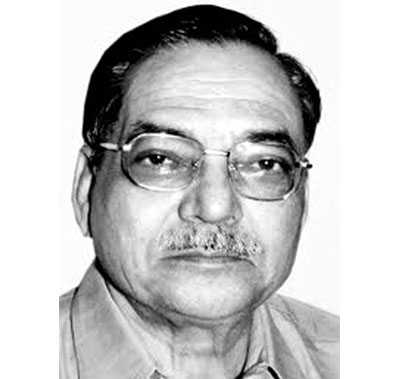
By Sharad Joshi
जनशक्ती वाचक चळवळ, पिनाक, २४४-समर्थनगर, औरंगाबाद-४३१००१ · औरंगाबाद · 2010
179 pages
Summary
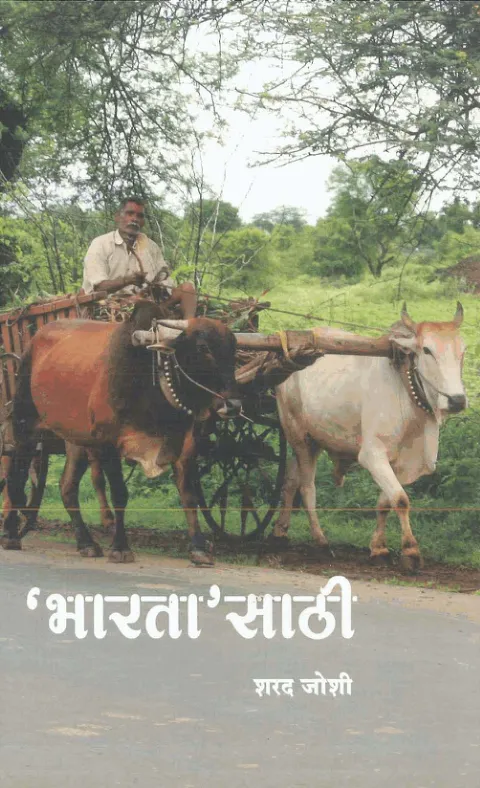
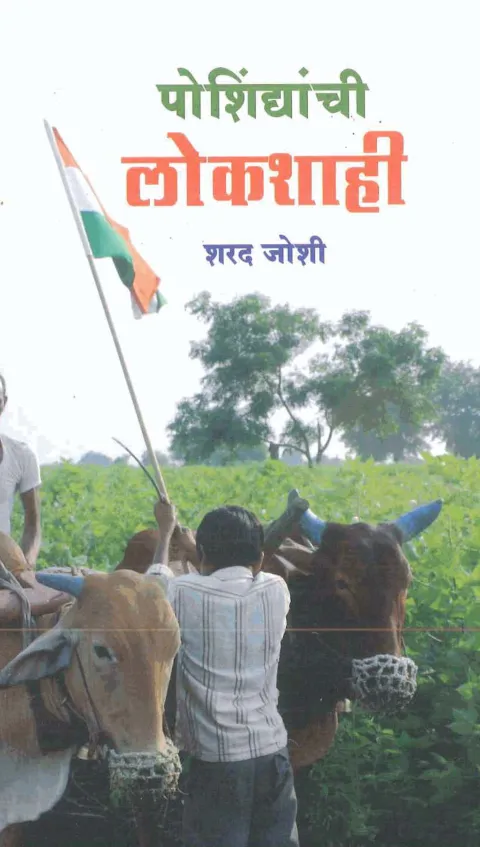
Poshindyanchi Lokshahi (पोशिंद्यांची लोकशाही, “The Democracy of the Providers”) collects thirty-nine political essays by Sharad Joshi, the economist who founded the Shetkari Sanghatana, Maharashtra’s farmers’ movement. It was published by Janshakti Vachak Chalval of Aurangabad, the first edition released on 10 November 2010 at the Shetkari Mahamelava in Shegaon, priced at Rs. 300, with a cover photograph by Shrikrishna Umarikar of a farmer raising the national flag over a bullock team. The publisher’s note, प्रकाशकाचे मनोगत (“the publisher’s reflection”), signed by Shrikant Anant Umarikar, explains that the volume completes the project of issuing Joshi’s collected writings begun for his amritmahotsav, and that it follows fourteen earlier books. Umarikar records that the Sanghatana’s decision to enter politics drew heavier criticism than any other part of its work, that a small booklet compiled by Ajit Narde in 1994 had gathered the movement’s political resolutions but none of Joshi’s own writing, and that this collection is meant to let readers judge that record from the source.
The table of contents, लेखानुक्रम, sets out the shape of the whole book: thirty-nine numbered pieces running to page 344 and beyond, organised around successive elections. It opens with आढावा दहा वर्षांच्या राजकारणाचा (“a survey of ten years of politics”), moves through the 1989 and 1991 Lok Sabha polls, the panchayat raj elections, the Vajpayee years and the 2004 verdict, and closes on देशपातळीवरील निकालाचा अर्थ (“the meaning of the national result”) for the 2009 Lok Sabha election. Items 19 to 24 form a self-contained six-part series of manifesto essays for the Swatantra Bharat Paksha, marked स्व. भा. प. जाहीरनामा लेखांक (“Swatantra Bharat Paksha manifesto, article no.”), on coalition versus stable government, reserved constituencies, reserved seats for women, a uniform civil code and the socialist structure written into the Constitution. The dated pieces in the part of the book available here run from 6 February 1991 to 21 June 1994.
Only the first quarter of the scan is legible to this entry, chapters 1 to 11 across book pages 9 to 85, so what follows is confined to those. The opening survey argues that the nation state has been overtaken by events, that power has drained away from presidents and prime ministers towards multinational companies, and that the single most revolutionary development of the preceding decade was the collapse of what Joshi calls the dictatorship of Marxist left thought, a collapse he credits to Ronald Reagan and Margaret Thatcher, quoting in English “The world owes you nothing” and calling for a democracy of those who own property rather than a dictatorship of the dispossessed. He reads Indian politics through Jotiba Phule’s question of whether India was ever a “unified people” at all, and treats caste exploitation as the country’s oldest and most persistent history. Later chapters in this stretch cover the Sanghatana’s plan to post constituency monitoring groups to record breaches of the model code of conduct in 1991; the five Sanghatana MLAs who split from the Janata Dal group in the Maharashtra assembly on 30 December 1993; P. V. Narasimha Rao as the मध्यममार्गी पंतप्रधान (“middle-path prime minister”) and his equivocation at Davos; स्वतंत्र भारताचे नैतिक दर्शन (“the moral vision of a free India”), which argues that the French Revolution’s ordering of liberty and equality was reversed to liberty’s cost and that each person’s uniqueness is the true ground of equality; काँग्रेसला पर्याय नाही? (“Is there no alternative to the Congress?”), which attacks first past the post as a दीड दांडीचा तराजू, a balance with one and a half arms, and sets French run-off and German proportional voting against it; and पंचायत राज निवडणुका व शेतकरी महिला आघाडी (“Panchayat raj elections and the Shetkari Mahila Aghadi”), on the thirteen-year delay in holding those elections and on the thirty per cent reservation for women that Joshi reads as a device for making the other seventy per cent safe for incumbents.
Key points
-
The book gathers thirty-nine political essays by Sharad Joshi and is presented by its publisher as the concluding volume of his collected writings, following fourteen earlier books.
-
Janshakti Vachak Chalval of Aurangabad issued the first edition on 10 November 2010, releasing it at the Shetkari Mahamelava at Shegaon at a price of Rs. 300.
-
The publisher’s note states that the volume answers the criticism directed at the Shetkari Sanghatana for entering electoral politics, a record previously represented only by a 1994 booklet of movement resolutions compiled by Ajit Narde.
-
The contents page shows the essays arranged around elections from the late 1980s through to the 2009 Lok Sabha result, with a six-part manifesto series for the Swatantra Bharat Paksha at items 19 to 24.
-
The opening survey argues that the nation state has been overtaken by the rise of multinational companies and that the decade’s decisive event was the collapse of Marxist intellectual authority, which Joshi credits to Reagan and Thatcher.
-
Joshi frames Indian politics through Jotiba Phule’s question of whether the country was ever a “unified people”, and treats caste exploitation rather than class conflict as its governing history.
-
स्वतंत्र भारताचे नैतिक दर्शन sets out the moral case for the Swatantra Bharat position: liberty was subordinated to equality after the French Revolution, and the uniqueness of each person is the real foundation of equality.
-
काँग्रेसला पर्याय नाही? attacks the first-past-the-post system as a दीड दांडीचा तराजू, a balance with one and a half arms, and points to French run-off and German proportional voting as fairer alternatives.
Metadata and summary are AI-extracted from the source PDF and reviewed for editorial accuracy. The original work is available via the Read PDF tab above (where present); paragraph-level citation inside the PDF is deferred to a future engagement.