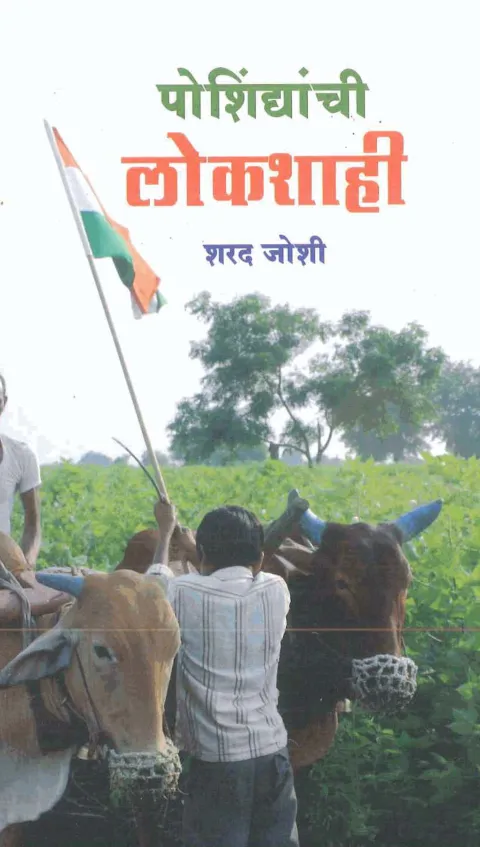
book
Bharatasathi
'भारता'साठी
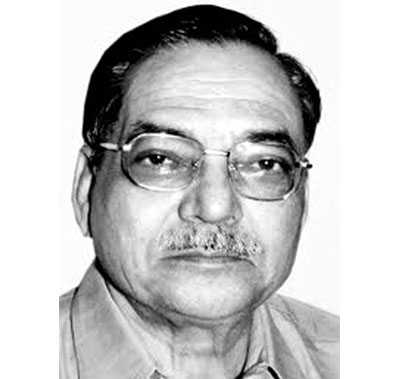
By Sharad Joshi
जनशक्ती वाचक चळवळ, पिनाक, २४४-समर्थनगर, औरंगाबाद-४३१००१ · औरंगाबाद · 2010
171 pages
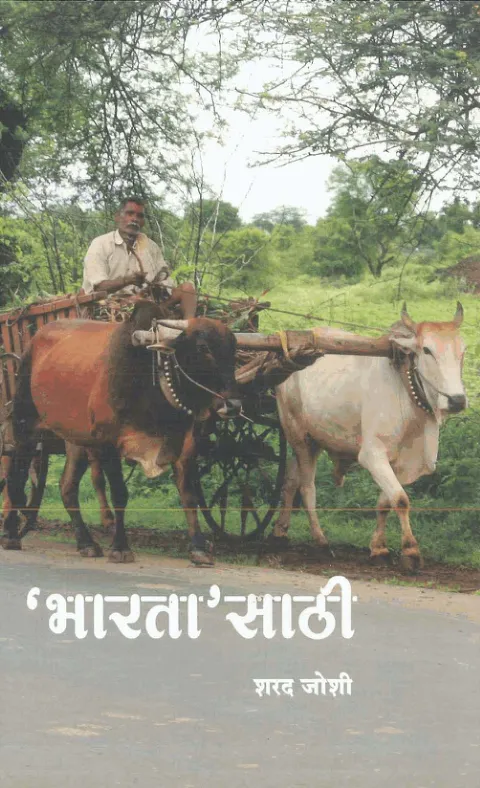
Bharatasathi
‘भारता’साठी (“For Bharat”) by Sharad Joshi
Summary
‘भारता’साठी (Bharatasathi, “For Bharat”) is a collection of forty-four Marathi articles by Sharad Joshi, founder of the Shetkari Sanghatana, issued by जनशक्ती वाचक चळवळ (Janshakti Vachak Chalwal) of Aurangabad in a first edition dated 10 November 2010 and released at the शेतकरी महामेळावा (farmers’ grand assembly) at Shegaon. The publisher’s foreword, प्रकाशकाचे मनोगत, signed by Shrikant Anant Umarikar, explains how the volume was assembled: while gathering Joshi’s collected writings into book form the publishers set seventy-four articles apart under the title ‘भारता’साठी, then divided them in two, sending the pieces on the economy, industry, trade and labour to a companion volume and keeping here the articles on reservations, electricity tariffs, small states and social questions. Umarikar records that the house has published fifteen Sharad Joshi titles in all, that Joshi wrote chiefly for the fortnightly शेतकरी संघटक (Shetkari Sanghatak) and also for the dailies Lokmat and Deshonnati, and that Marathi renderings of his English columns in The Hindu Business Line are distributed across these books.
The opening quarter of the book, the part read for this note, shows what the “For Bharat” frame does when Joshi turns it on questions that are not directly about crop prices. The volume opens with राखीव जागा: समाज-अर्थशास्त्रीय अर्थ (“Reserved places: the socio-economic meaning”), written as the Mandal Commission recommendations were being implemented from 7 August 1990 and the anti-reservation agitations were spreading through Bihar, Madhya Pradesh and Delhi. Joshi records that the Shetkari Sanghatana instructed its workers to keep both the pro-reservation and the anti-reservation agitations out of the villages, traces the question back through the 1953 Kaka Kalelkar committee and the confusion between class and caste in the constitutional text, and notes that the Kalelkar report’s own chairman sent a thirty-page letter to the President doubting the effectiveness of reservation. He then attacks the merit argument directly: examination marks reward rote learning, and comparing a savarna candidate’s 92 per cent with a backward-class candidate’s 45 per cent ignores that the two were weighed on a lop-sided scale, the difference between a runner on a clear track and a runner who must cover the same distance over hurdles. Writing of himself as a boy born into a poor Brahmin household, he says the educated atmosphere at home still put him two steps ahead of his classmates. If posts were to be filled by measured merit alone, he argues, throwing the British out was itself a mistake, since the answer given then was that the thirst for स्वराज्य (self-rule) is not quenched by सुराज्य (good government), and the same answer holds for the backward classes now.
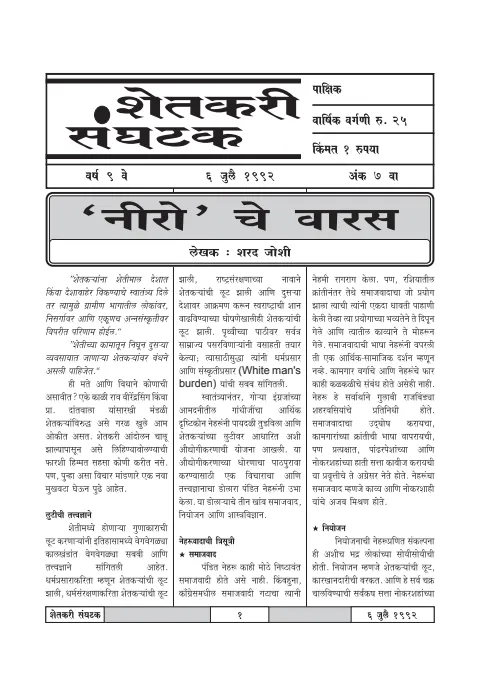
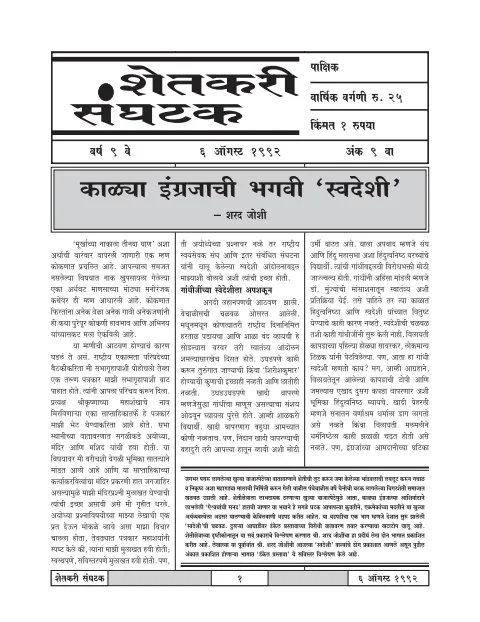
The articles that follow keep to that method of taking an argument seriously and then turning it over. समुद्राला मीठ हरवून चालणार नाही (“The sea cannot afford to lose its salt”) answers workers who ask why the Sanghatana runs no counter-agitation against aggressive campaigning by other communities, and does so through the word स्वधर्म (one’s own dharma): the maxim is धारयति इति धर्मः, that which sustains is dharma, not that which sustained once in the past. खोटा निधर्मवाद आणि दुष्ट राष्ट्रवाद (“False secularism and vicious nationalism”) sets out the Hindutva case that Indian secularism is a Western import, then tests it against the evidence of a state that is anything but indifferent to religion, from the mahapuja at Pandharpur to the televised Hindu last rites of prime ministers. ‘भारता’च्या मानगुटी नेहरूवादाचे भूत (“The ghost of Nehruism on Bharat’s back”) asks why statues of Lenin and Stalin have come down while airports and institutions are still being named after Nehru, and answers with Nehru’s personal fortune and princely bearing. ‘नीरो’चे वारस (“Nero’s heirs”) argues that environmentalism has become a philosophical apparatus for keeping the anti-farmer system and its bureaucracy in business, the same purpose once served by the din of socialism and planning. काळ्या इंग्रजाची भगवी ‘स्वदेशी’ (“The black Englishman’s saffron swadeshi”) recalls the 1986 Rajiv Gandhi textile policy, the suicide of the Yavatmal farmer Saheborao Karpe Patil with his family, and the bonfire of राजीववस्त्र at the Rahuri conference, where Pramod Mahajan swore an oath and reversed himself within forty-eight hours. दुसरे गणराज्य की यादवी? (“A second republic or civil war?”) concludes that the first republic has collapsed and that power itself must be made unattractive, since government belongs in the house the way a lavatory does and has no business in the drawing room. नकली आणि करंटा राष्ट्राभिमान (“Counterfeit and wretched national pride”) defends the Dunkel proposals on the ground that Nehru belonged to India and Dunkel belongs to Bharat. The remaining thirty-two articles, running to page 328, are listed in the लेखानुक्रम but were not read; their titles take in Killari, family planning, electricity tariff rises, बळीराज्य मराठवाडा and बळीराज्य विदर्भ, the Cancún talks, the ninth schedule, the diamond jubilee of independence and Narasimha Rao’s tenure, and the volume closes with स्वतंत्रते भगवती (“Goddess freedom”).
Key points
-
The book gathers forty-four articles, running from page 7 to page 328, drawn mainly from Joshi’s columns in the fortnightly शेतकरी संघटक and from the dailies Lokmat and Deshonnati, with datelines in the opening quarter running from 1990 to 1993.
-
The publisher’s foreword states that seventy-four articles were first set apart under the title ‘भारता’साठी and then split, with the economic, industrial, trade and labour pieces going elsewhere and the reservations, tariff, small-states and social-question pieces kept in this volume.
-
The imprint page gives the publisher as जनशक्ती वाचक चळवळ of Aurangabad, the printer as Rudrayani, the cover as the work of Shrikrishna Umarikar, the first edition as 10 November 2010 at the Shegaon शेतकरी महामेळावा, and the price as Rs 300.
-
The opening article on Mandal rejects the merit defence of open competition, arguing that examination marks measure rote learning and that a backward-class candidate’s marks were earned on a lop-sided scale, over hurdles rather than on a clear track.
-
Joshi extends the swaraj argument to reservation: since Indians did not accept British rule merely because it governed competently, competence alone cannot be the test of who staffs the state now.
-
Several articles attack Nehruvism as the root of the system Joshi opposes, holding that under it those who toil and produce cannot rise while those who hold power command everything, and that planning, and later environmentalism, have served to keep that system and its bureaucracy intact.
-
On religion and nationalism Joshi refuses both camps: he treats the Hindutva critique of constitutional secularism as a serious argument that deserves examination rather than slogans, while insisting that स्वधर्म means what sustains now, not what sustained in the past.
-
The volume argues for a second republic built on autonomous institutions rather than centralised power, with welfare of the destitute returned to compassion and religious institutions rather than left to leaders who grew rich on it.
Metadata and summary are AI-extracted from the source PDF and reviewed for editorial accuracy. The original work is available via the Read PDF tab above (where present); paragraph-level citation inside the PDF is deferred to a future engagement.