speech
WHITHER INDIAN URBANISATION?
By F. P. Antia
FORUM OF FREE ENTERPRISE, PIRAMAL MANSION, 235 DR. D. N. ROAD, BOMBAY 400 001. · Bombay · 1977
20 pages
WHITHER INDIAN URBANISATION?
By DR. F. P. ANTIA
Summary
Dr. F. P. Antia’s pamphlet, built from two lectures delivered at Punjab University’s Department of Commerce & Business Management at Chandigarh and issued by the Forum of Free Enterprise in 1977, opens with the proposition that shelter is, after food, life’s most basic essential, and that the housing structure has from earliest times been bound up with civic dignity, productivity, and a household’s sense of privacy. From this premise he moves to the 1971 Census, which counted 109 million Indians as urban out of 548 million, and shows that, despite a modest urbanisation ratio of 20 per cent, India already commands the world’s third-largest urban population, with Calcutta, Bombay, and Delhi sitting among the world’s twenty-five largest cities. Antia argues that this urban population has been congregating ever more densely into the biggest centres while the quality of life in those centres has collapsed.
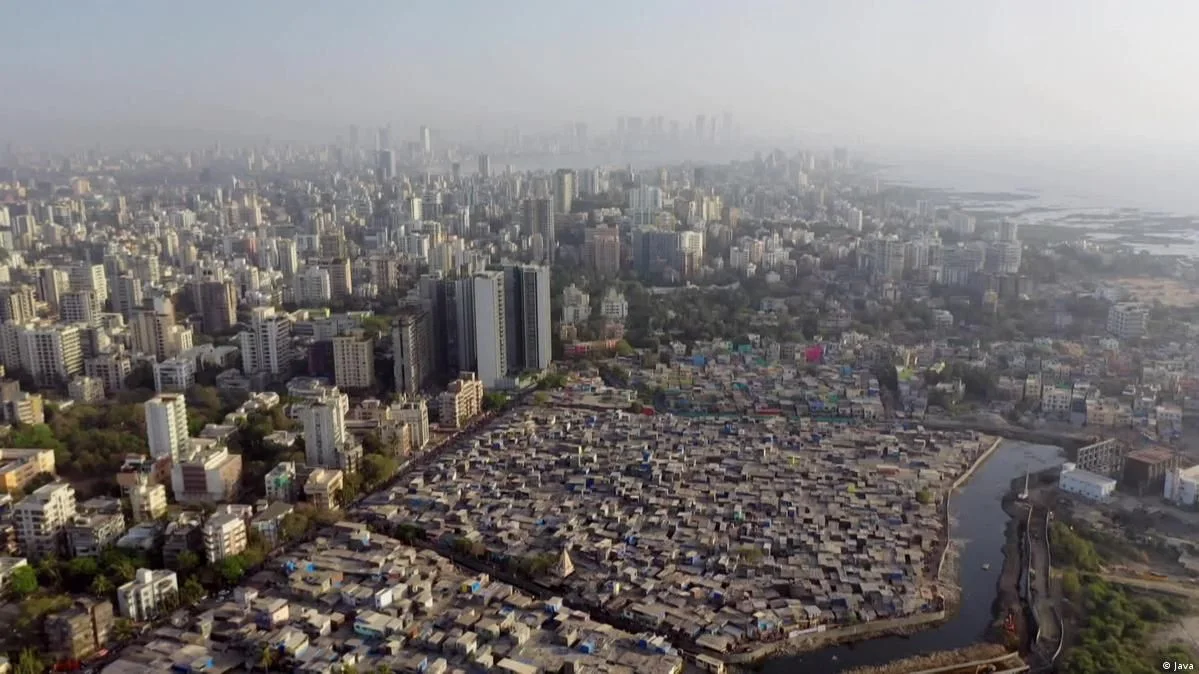
The middle of the pamphlet summarises survey work by D. T. Lakdawala, V. K. Rao, and J. F. Bulsara — and the Rajwade and Gadgil committees — on housing in Bombay, Calcutta, Delhi, and Madras. Antia parades the statistics: 78.6 per cent of Bombay’s surveyed families crammed into multi-tenement chawls; 75.7 per cent of households of three or more sharing a single room; 49 per cent of pucca-area families without independent water taps; only 8.1 per cent of Bombay’s pucca-area households owning their own homes; and the late ICS officer S. G. Barve’s 1959 portrait of 43 lakhs of Bombay residents living single, deprived of domestic life, locked in a ‘cold war’ with landlords, and commuting an hour and a half each way through ‘choked trains.’ Antia insists conditions have only worsened since.
The second half of the booklet is a thirteen-point prescription. He calls for regulation of migration into cities of 100,000-plus; for rural livelihoods through minor irrigation, contour bunding, road-building, animal husbandry, dairying, and cottage industries; for regional plans modelled on the four metropolitan exercises but extended to every city above a hundred thousand; for the scrutiny of 74 already-submitted town plans; for the consolidation of scattered hamlets into viable units of 3,000–5,000; for group layout of new industrial towns rather than the bisected Durgapur pattern; for defined and enforced population ceilings citing Aristotle, Ebenezer Howard’s garden-city units, the Reith Committee, and the Gadgil Committee; for a Chandigarh-style hierarchical neighbourhood layout capped at 75 persons per acre; for social planning to combat the loneliness of new towns; against dormitory suburbs, long commutes, and the ‘recent misdirected enthusiasm’ for underground railways in the four metros; for small communities to limit ecological and wartime risks; for communal acquisition of urban land at agricultural prices so that planning gains accrue to the public purse; for a Regional Planning Authority superior to local bodies; and for the same team to both prepare and execute the regional plan. He closes by quoting Lewis Mumford that the final test of an economic system is the sort of men and women it nurtures.
Key points
-
Frames housing not as mere shelter but as the focal part of the economic and social milieu in which a citizen functions, making urban policy inseparable from the housing question.
-
Marshals 1971 Census data: 109 million urban out of 548 million Indians (20 per cent), with India ranking third globally in urban population behind the USA and USSR and increasingly concentrating into cities above 100,000.
-
Synthesises survey findings by Lakdawala (Bombay), V. K. Rao (Delhi), J. F. Bulsara, and the Rajwade and Gadgil committees on overcrowding, tenancy rates, water taps, and water closets across Bombay, Calcutta, Delhi, and Madras.
-
Quotes S. G. Barve’s 1959 Greater Bombay study at length to argue that 43 lakhs of the city’s residents endure an ‘Urban Prima in India’ of squalor, ‘cold war’ between tenants and landlords, and 1½-to-2-hour commutes — and that nothing has improved since.
-
Proposes regulated migration to cities of 100,000-plus combined with rural employment programmes (minor irrigation, contour bunding, road-building, dairying, cottage industries) so that village livelihood eliminates the raison d’être for drift to cities.
-
Calls for regional plans for every city above 100,000, scrutiny of the 74 town plans already submitted, and consolidation of tiny hamlets into viable units of 3,000–5,000 served by the Zilla Parishad or State.
-
Endorses Chandigarh’s hierarchical neighbourhood layout (1,000–1,200 cluster → 4,000–5,000 residential area → 12,000–15,000 neighbourhood → 75,000–2,50,000 town) capped at 75 persons per acre, citing Aristotle, Ebenezer Howard, the Reith Committee, and the Gadgil Committee on optimum town size.
-
Rejects dormitory suburbs, long commutes, and the ‘recent misdirected enthusiasm’ for underground railways costing Rs. 1,000–1,500 crores; advocates communal acquisition of urban land at agricultural prices and a Regional Planning Authority superior to municipalities, zilla parishads, and gram panchayats.
Generated by the v1.5 extraction pipeline. Awaiting editorial review.
Metadata and summary are AI-extracted from the source PDF and reviewed for editorial accuracy. The original work is available via the Read PDF tab above (where present); paragraph-level citation inside the PDF is deferred to a future engagement.