edited volume
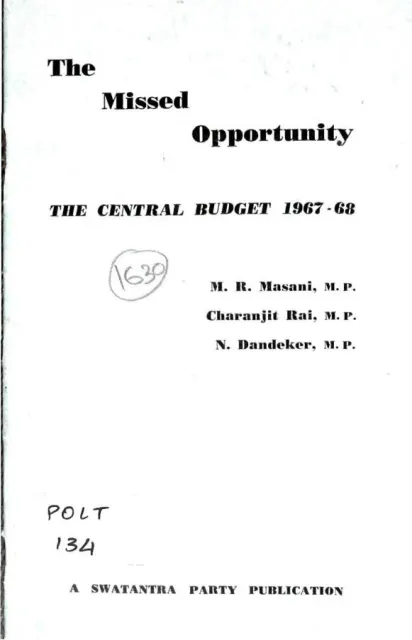
The Missed Opportunity
THE CENTRAL BUDGET 1967-68
A SWATANTRA PARTY PUBLICATION · 1967
47 pages
Summary
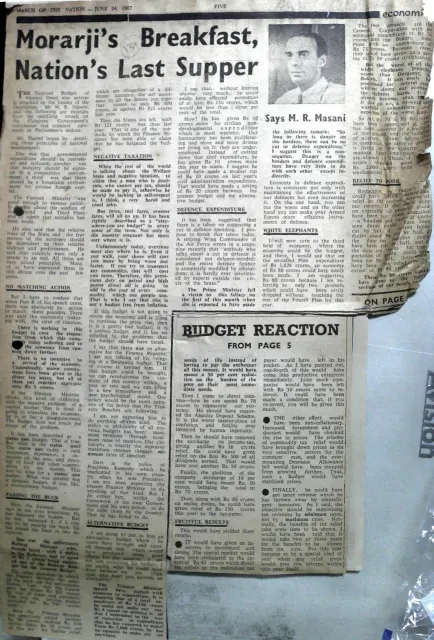
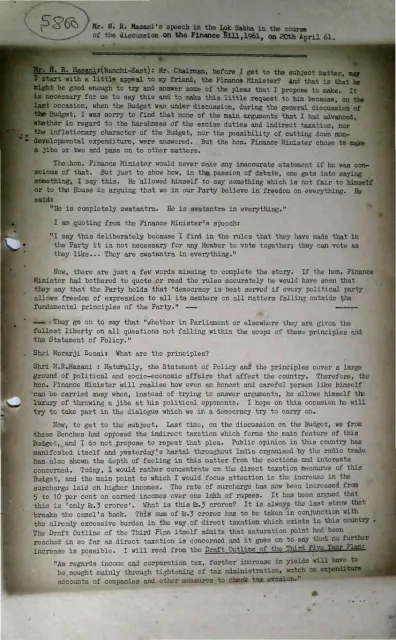
In the rendered pages, The Missed Opportunity presents a Swatantra Party critique of the Central Budget for 1967–68, beginning with M. R. Masani’s parliamentary speech. In the rendered pages, Masani accepts the Finance Minister’s diagnosis of food shortages, rising prices, industrial stagnation, and weak exports, but argues that the budget responds with inadequate tax adjustments rather than structural reform. In the rendered pages, he portrays the budget as inflationary and stagnant, criticizing indirect taxes, inadequate expenditure cuts, inefficient public-sector projects, excessive defence waste, and the diversion of resources into unproductive state enterprises.
In the rendered pages, Masani proposes an alternative centred on lower expenditure and lower taxation. In the rendered pages, he recommends savings in civil administration and defence, postponing projects such as Bokaro Steel, abandoning a proposed tractor factory, reducing excise duties, abolishing the annuity deposit scheme, raising the lower-middle-class exemption threshold, and reducing income-tax surcharges. In the rendered pages, he argues that these measures would relieve poorer taxpayers, stimulate investment and production, moderate inflation, and increase future revenue. In the rendered pages, the speech concludes that the government missed an opportunity because of habit, conservatism, attachment to past policies, and the prioritisation of party interests over national economic needs.
Metadata and summary are AI-extracted from the source PDF and reviewed for editorial accuracy. The original work is available via the Read PDF tab above (where present); paragraph-level citation inside the PDF is deferred to a future engagement.