essay
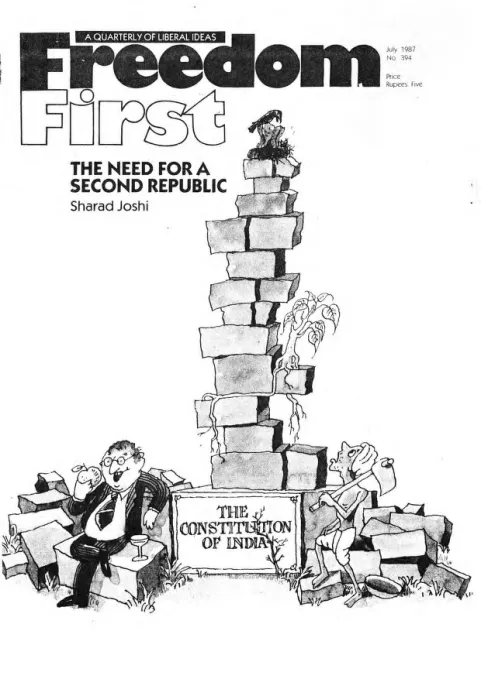
The Need for a Second Republic
Freedom First · Bombay
10 pages
Summary
In “The Need for a Second Republic,” Sharad Joshi argues that India’s constitutional framework was weakened because the Republic began with a socially fragmented nation and a colonial, dualistic economy, while post-independence policy deepened rather than resolved those divisions. He describes the erosion of federalism, parliamentary authority, judicial independence, and administrative accountability, presenting the concentration of power in the Prime Minister’s office as a central institutional failure. The essay also links political disintegration to economic stagnation, state intervention, licensing, planning, and policies that disadvantaged producers, particularly farmers.
Key points
- Joshi contends that India’s institutions have been damaged by excessive centralisation and the weakening of the states.
- He criticises Parliament as a forum for patronage and ratification rather than deliberative decision-making.
- The essay links communal, caste, linguistic, and regional conflict to economic deprivation and competing material interests.
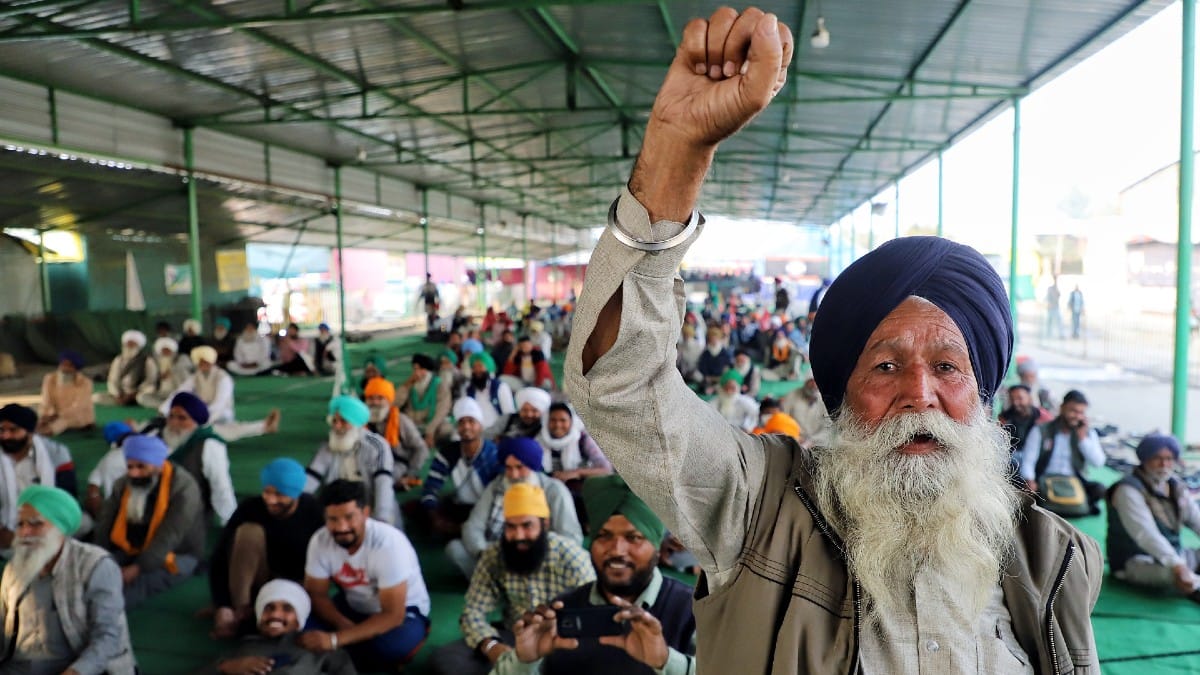
- Joshi argues that agrarian grievances, especially in Punjab, cannot be separated from questions of national integration.
- He rejects the view that moral decline alone explains institutional collapse, favouring economic and structural explanations.
- The Constitution is not treated as the primary cause of failure; the problem is its misuse by self-interested political actors.
- The proposed second Republic would be more federal, decentralised, secular, and economically oriented toward the interests of the nation as a whole.
- Joshi calls for decision-making closer to the grassroots and for limits on Prime Ministerial power, including possible rotation of the office.
Metadata and summary are AI-extracted from the source PDF and reviewed for editorial accuracy. The original work is available via the Read PDF tab above (where present); paragraph-level citation inside the PDF is deferred to a future engagement.