

Summary
In this five-page pamphlet, M. R. Masani explains the Swatantra Party’s opposition to the nationalisation of fourteen Indian banks. He argues that the Government had not demonstrated a public-interest case, that less drastic measures such as social control were available, and that nationalisation would either be pointless and expensive or politically motivated and dangerous. The pamphlet advocates a mixed economy in which state and private enterprises compete on equal terms, with the burden of proving the need for nationalisation resting on the Government.
Key points
- The pamphlet restates the Swatantra Party’s 1967 opposition to bank nationalisation and argues that the Government failed to justify the measure.
- Masani presents social control and other regulatory measures as alternatives to state ownership.
- The pamphlet argues that nationalisation threatens monetary stability, savings, competition and depositor choice.
- It criticises the compensation offered to shareholders, citing undervalued property, unrecognised goodwill and inadequate interest.
- It argues that bank employees would lose collective-bargaining, strike and bonus rights.
- Small depositors are portrayed as vulnerable to politically directed and wasteful investment, with only the first Rs. 5,000 guaranteed.
- The pamphlet links nationalisation to concentration of economic power, monopoly and corruption, contrasting this with Gandhi’s preference for decentralisation.
Metadata and summary are AI-extracted from the source PDF and reviewed for editorial accuracy. The original work is available via the Read PDF tab above (where present); paragraph-level citation inside the PDF is deferred to a future engagement.
People in this work
Related across the archive
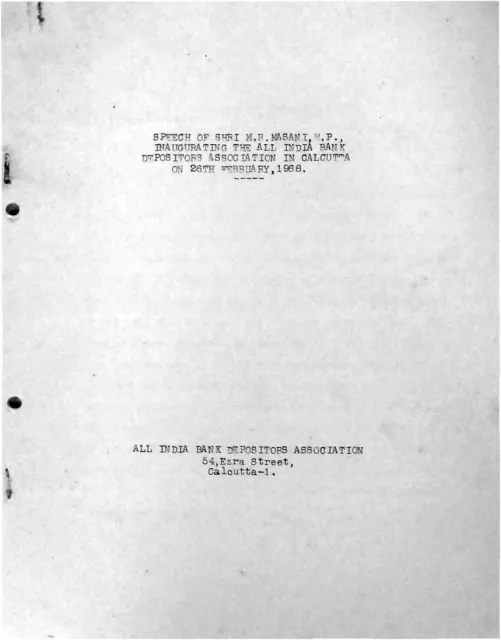 Primary workSPEECH OF SHRI M.R. MASANI, M.P., INAUGURATING THE ALL INDIA BANK DEPOSITORS ASSOCIATION IN CALCUTTA ON 26TH FEBRUARY,1968.
 Primary workBank Nationalisation and Jana Sangh
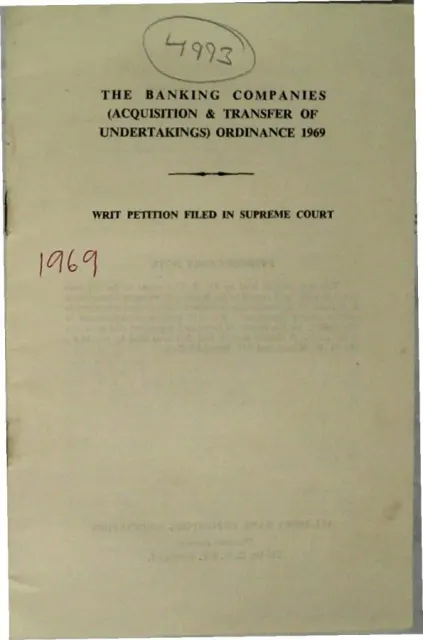 Primary workTHE BANKING COMPANIES (ACQUISITION & TRANSFER OF UNDERTAKINGS) ORDINANCE 1969
 ThePrintBank nationalisation will be a blow to India’s mixed economy, lead to totalitarianism: Phiroze Shroff
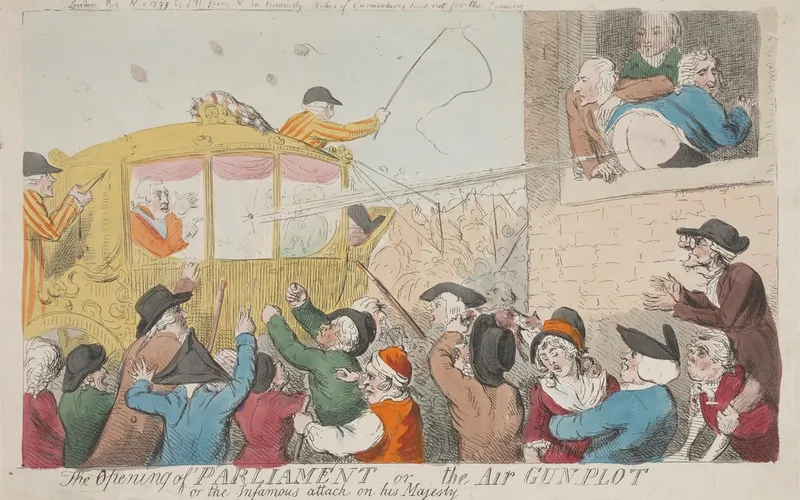 ExcerptDemocracy in India