non liberal
John Kenneth Galbraith
1908–2006
Also known as: Galbraith, Professor Galbraith, J.K. Galbraith
How John Kenneth Galbraith is discussed in this archive
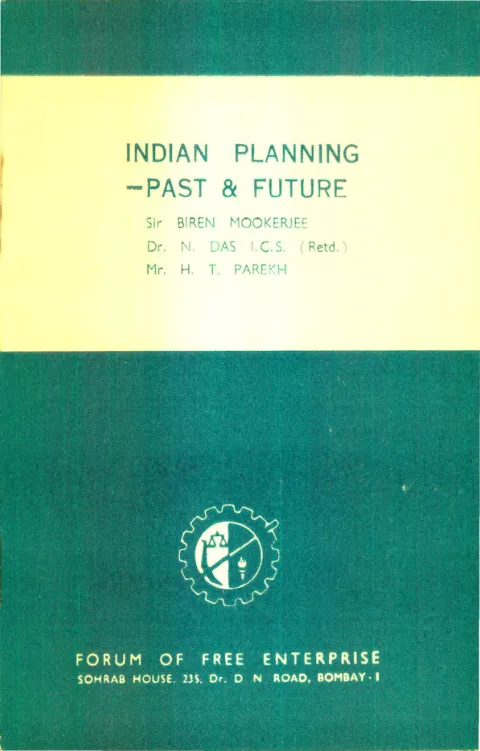
Referenced in 10 other works , including INDIAN PLANNING —PAST & FUTURE , Indian Planning at the Cross-Roads , and The Indian Libertarian .
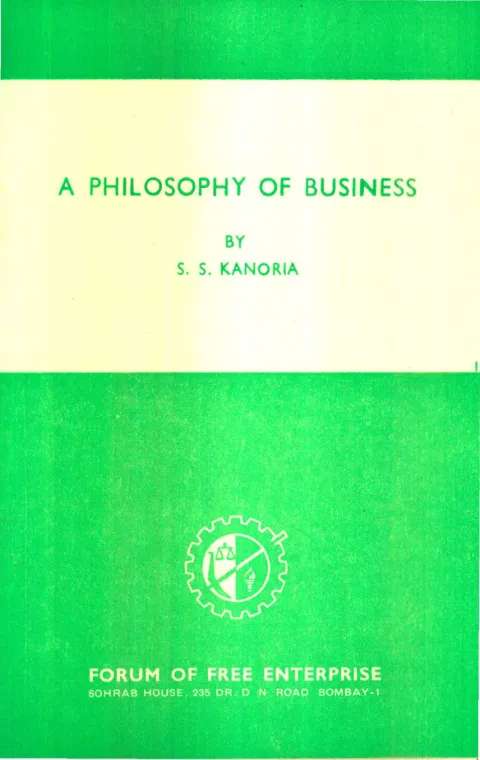
In A PHILOSOPHY OF BUSINESS : Galbraith's New Industrial State is cited as the intellectual framework within which Kanoria welcomes the rise of professional management as a positive evolution in capitalism.
In INDIAN PLANNING —PAST & FUTURE : Das builds his statistical indictment of fifteen years of planning by applying Galbraith's consumption criterion to Indian data, using it as a benchmark to show that the average Indian's diet is only three-quarters of the index for poor countries excluding India.
In India Needs A Practical Economic Policy : Agarwala cites Galbraith (alongside Schumpeter, Fortune, Douglas McGregor, Douglas Jay, John P.
In Indian Planning at the Cross-Roads : Mehta dismisses further public-sector steel plants, petro-chemical complexes and the Cochin shipyard as Galbraithian 'symbolic modernism' — using Galbraith's coinage as the polemical label for showpiece investments.
In EFFICIENCY IN STATE ENTERPRISES IN INDIA : Galbraith is cited by Das as an authority on how government officials serving on corporate boards undermine enterprise autonomy, reinforcing Das's structural critique of the public sector's management problems.
Mentioned in (54)
Primary works (49)

Show all 49
- A PHILOSOPHY OF BUSINESS · 1972
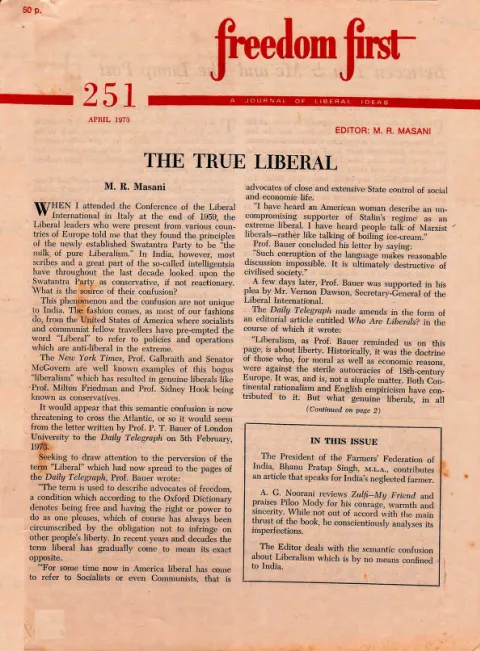
- "Echoing Galbraith's New Industrial State, he welcomes the rise of professional management" · Galbraith's analysis of managerial capitalism is drawn on to update the vision of private enterprise beyond the owner-entrepreneur model
- INDIAN PLANNING —PAST & FUTURE · 1966
- "Drawing on Galbraith's consumption criterion, Sukhatme's nutrition studies, USAID findings, and Colin Clark's investment-employment ratio, Das concludes that planning has failed to achieve even minimum human needs for food, clothing, and shelter, and calls for a fundamental reappraisal of planning strategy." · Das's statistical indictment lists Galbraith first among the analytic authorities he marshals against the Plans
- "Applies Galbraith's consumption criterion and Sukhatme's nutrition data to show that the average Indian's diet is only three-quarters of the index for poor countries (excluding India), and that 250 million Indians are undernourished or malnourished." · key-points summary deploys Galbraith's criterion to produce the booklet's headline malnutrition figure
- India Needs A Practical Economic Policy · 1965
- "Citing Schumpeter, Fortune, J. K. Galbraith, Douglas McGregor, Douglas Jay, John P. Lewis and S. S. Khera, he argues that India's planners suffer less from a shortage of ideas than from a shortage of "implementation input"" · Galbraith is named among the international authorities Agarwala marshals to diagnose Indian implementation failure
- Indian Planning at the Cross-Roads · 1965
- "closer scrutiny of further petro-chemical complexes, additional public-sector steel plants and the long-delayed Cochin shipyard, which he treats as instances of what "Prof. Galbraith would call symbolic modernism"" · Galbraith's phrase 'symbolic modernism' is the rhetorical device Mehta turns against Plan showpieces
- "Treats further petro-chemical complexes, new public-sector steel plants and the Cochin shipyard as Galbraithian "symbolic modernism"" · key-points restatement of the Galbraithian framing
- EFFICIENCY IN STATE ENTERPRISES IN INDIA · 1963
- "He invokes Galbraith on how officials on boards destroy enterprise autonomy, the World Bank Mission's verdict that the Government had not helped strengthen the Public Sector" · Galbraith deployed as an authority on why state-board membership damages enterprise management
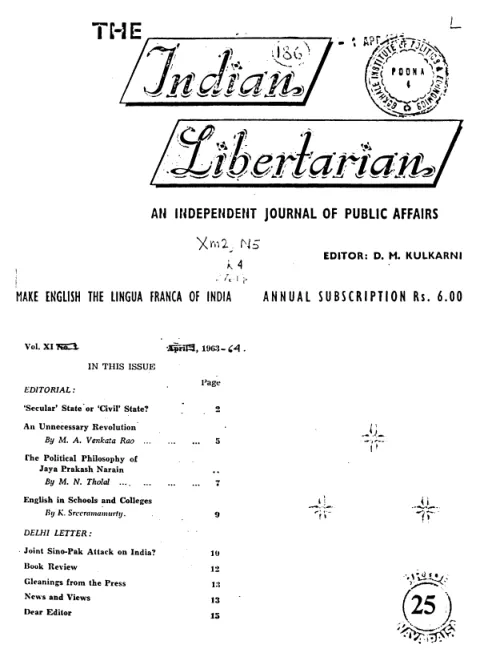
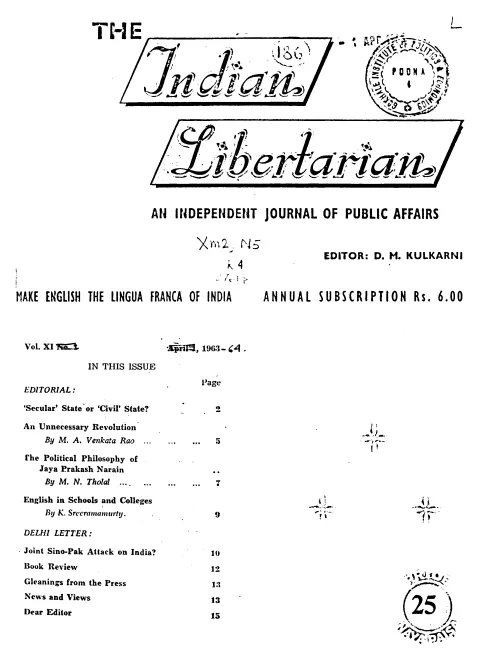
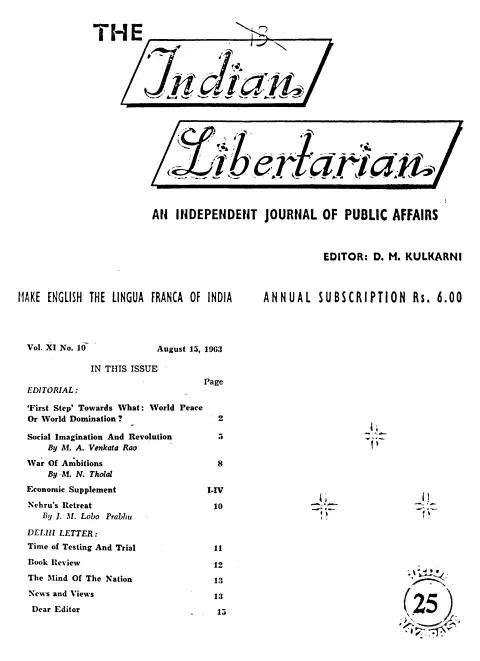
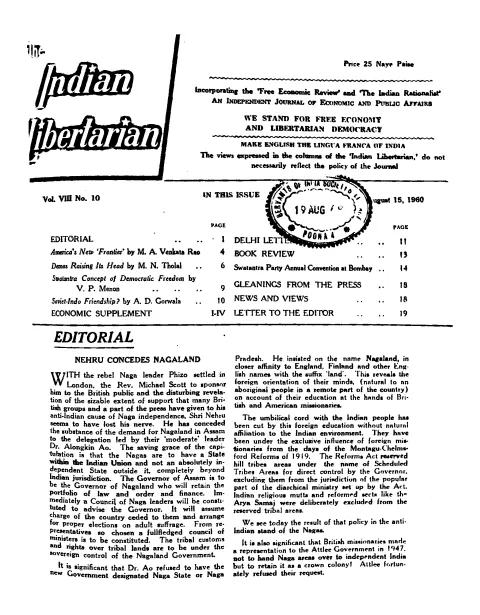
- The Indian Libertarian · 1963
- "a report on the US $240 million interest-free loan to India for the Third Five-Year Plan signed by Ambassador John Kenneth Galbraith" · identifies Galbraith's official role in the news item
- "US $240 million interest-free loan to India announced; Galbraith quoted on its unprecedented scale." · records his quoted commentary on the loan's significance
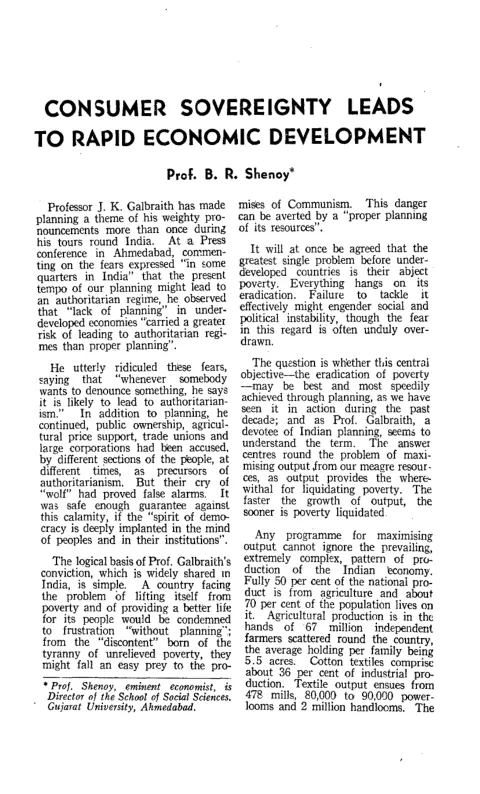
- CONSUMER SOVEREIGNTY LEADS TO RAPID ECONOMIC DEVELOPMENT · 1962
- "B. R. Shenoy's July 1962 Forum of Free Enterprise leaflet is a direct riposte to J. K. Galbraith, whose pronouncements during his tours of India had cast doubt on those who criticised central planning" · Galbraith is the named intellectual antagonist whose authority Shenoy is directly challenging
- "the imported authority of Galbraith, Millikan, Rostow, Ward, Balogh, Bettelheim, Lange and Robinson still props up the dirigiste consensus" · Galbraith heads the list of Western advisers whose authority sustains Indian planning ideology




Excerpts (3)
- CONSUMER SOVEREIGNTY LEADS TO RAPID ECONOMIC DEVELOPMENT
- "Prof B.R. Shenoy counters Prof J.K. Galbraith's (Canadian-American economist) claim that planning is crucial to economic development." · Galbraith's pro-planning thesis is explicitly named as the target of Shenoy's counter-argument for consumer sovereignty
- Forty-Three Years of Independence
- "Ambassador John Kenneth Galbraith remarked that while he had seen poverty in many countries of the world, he found one unusual attribute among the poor of India - ''There is richness in their poverty."" · Galbraith's observation supports Palkhivala's argument that India's human capital exceeds its economic statistics
- Making Indian Industry Globally Competitive
- "Ambassador J. K. Galbraith remarked that while he had seen poverty in many countries of the world, he found an uncommon attribute among the poor of lndia - a richness in their poverty." · Galbraith's observation is used as a testimony to Indian civilisational resilience